
Crawl Space Cleaning — Complete Guide
Crawl space cleaning is the physical work of clearing out debris, removing contaminated materials, and treating a dirty or mold-affected crawl space so it can actually be fixed. For Charleston-area homeowners, that musty smell drifting up through the floors usually starts down there, where coastal humidity and high water tables do steady damage out of sight. This guide explains what a proper cleanout involves, why Lowcountry crawl spaces get dirty faster than most, and why cleaning should come before encapsulation, insulation, or mold remediation. By the end, you will know what to expect from a cleaning crew and how to judge whether a quote covers the work that matters.
What You'll Find in This Guide
What Crawl Space Cleaning Actually Involves
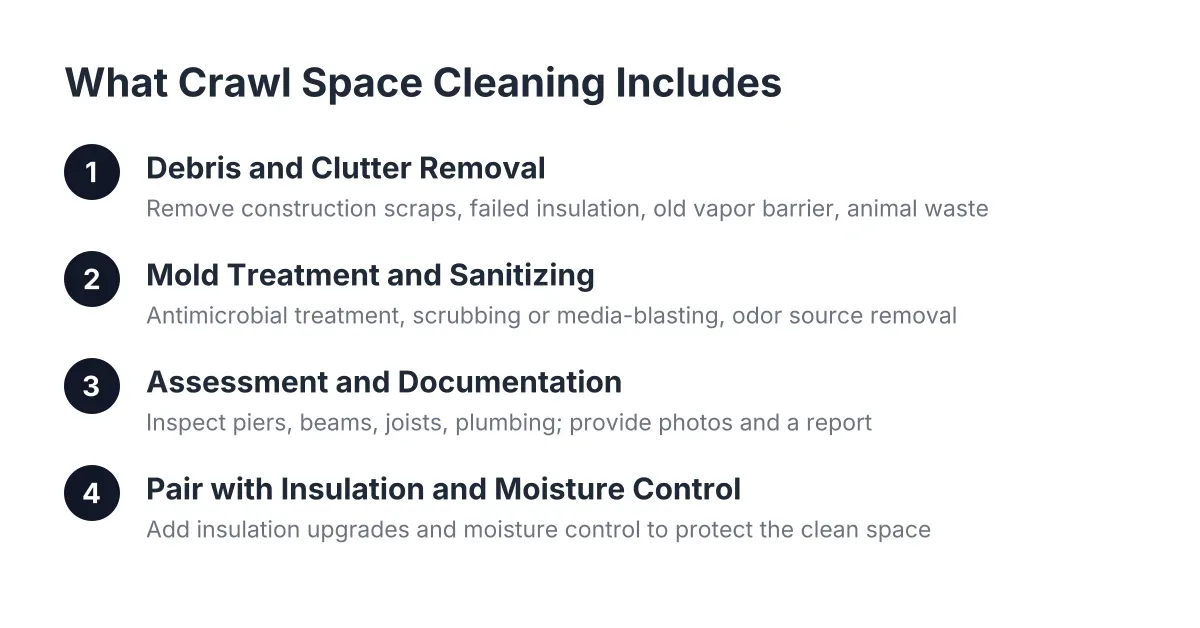
To put it simply, crawl space cleaning means getting everything out of the space that should not be there. That includes construction debris left behind by past contractors, fallen insulation, old vapor barrier scraps, standing trash, animal nesting material, and anything stored down there that moisture has ruined. A crew works section by section, bags the material, hauls it out through the access door, and disposes of it properly.
However, a real cleanout goes further than hauling trash. Crews also address the contamination that debris leaves behind. Wet fiberglass insulation sagging from the subfloor is a common find in older Charleston homes, and it usually comes down because it holds moisture against the wood above it. Similarly, rodent or raccoon droppings need removal and sanitizing, not just a quick sweep. If mold has taken hold on joists or subfloor, the cleaning phase identifies it so a remediation plan can follow.
What a Thorough Cleanout Should Include
A quote worth taking seriously will spell out the scope. In practice, you should expect these elements:
- Removal of all loose debris, trash, and stored items from the crawl space
- Tear-out of damaged, wet, or fallen insulation
- Removal of old, torn, or dirt-covered vapor barrier material
- Cleanup and sanitizing of animal waste and nesting material
- Documentation of mold, standing water, or structural concerns found during the work
Beyond that, a good crew photographs what they find. Because you cannot easily get under the house yourself, photos are your window into the space. Ask for before-and-after images of every section, not just the area near the access door.
What Cleaning Is Not
That said, cleaning alone does not solve a moisture problem. It removes the symptoms sitting on the ground, but it does not stop humid air from entering through vents or groundwater from seeping up through exposed soil. This distinction matters when you compare quotes. Some proposals bundle cleaning with moisture control work, while others stop at debris removal. Neither approach is wrong, but you should know which one you are buying. If the terminology in those proposals gets confusing, the plain-English glossary of crawl space cleaning terms breaks down the language so you can compare scopes line by line.
Why Charleston Crawl Spaces Get Dirty Faster Than Most
Lowcountry homes face conditions that most of the country never deals with. Charleston sits at low elevation, on sandy soil, with a water table that rises close to the surface on many lots. Add year-round humidity and a hurricane season that pushes moisture cycles through the summer and fall, and you have a crawl space environment that works against you every month of the year.
The numbers back this up. According to NOAA Tides and Currents, Charleston set a record of 17 high-tide flood days during the 2023–24 meteorological year. When tidal flooding reaches a lot, the crawl space is the first part of the house to feel it. Even homes that never see standing water deal with ground moisture evaporating upward into the space. More broadly, the American Society of Home Inspectors reports that more than 60% of U.S. homes have had water or moisture problems in their basement or crawl space. In a coastal flood-zone market, your odds run higher than that national figure suggests.
How Older Charleston Construction Makes It Worse
Many older Charleston homes sit on raised pier-and-beam foundations with vented crawl spaces. Builders designed those vents to let the space breathe. Unfortunately, in a humid coastal climate, the vents mostly let moisture in. During summer, warm humid air flows through the vents, hits cooler surfaces under the house, and condenses on wood framing, ductwork, and insulation. As a result, insulation absorbs water, sags, and eventually falls to the dirt floor. Wood stays damp long enough for mold to establish itself.
This cycle also attracts the debris problem. Damp, dark, sheltered spaces draw rodents, raccoons, and insects. They drag in nesting material, leave waste behind, and tear up what insulation remains. Meanwhile, decades of owners and contractors leave their own layer: cut lumber, pipe scraps, old ductwork, and plastic sheeting from past repair attempts. For example, it is common to find two or three generations of failed vapor barrier layered on the soil, each one trapping moisture underneath it.
With this in mind, a Charleston crawl space is rarely just dusty. It is usually a mix of wet insulation, degraded plastic, animal contamination, and surface mold that has accumulated over years. That is why a quick sweep never fixes the musty smell upstairs, and why a full cleanout is the honest starting point.
Cleaning First: The Foundation for Encapsulation, Insulation, and Mold Work
If you are weighing bigger projects like encapsulation, new insulation, or mold remediation, cleaning is not a separate decision. It is step one of all of them. Every downstream improvement depends on starting with a clear, decontaminated space, and skipping that step undermines the work you pay for later.
Consider encapsulation. A sealed liner system needs clean, level ground and clear access to piers and walls. Installing a new liner over debris, old plastic, and contaminated soil traps the problem underneath the new surface. Likewise, new insulation stapled up next to moldy joists inherits the moisture problem immediately. Mold remediation crews need physical access to every affected surface, which is impossible when fallen insulation and trash block the way.
The Order of Operations That Protects Your Investment
In practice, crawl space work follows a logical sequence. First comes inspection and cleanout, which reveals the true condition of the space. Next comes moisture correction: drainage, grading, sump pumps, or dehumidification as the conditions require. Mold treatment follows once surfaces are accessible and moisture is under control. Only then do encapsulation, vapor barriers, and insulation go in, because those finishing layers perform as designed in a dry, clean environment.
This order matters for your budget too. A contractor who inspects a cleaned-out space can quote the remaining work accurately, because nothing is hidden under debris. Conversely, quotes written before a cleanout often carry padding for unknowns, or they miss problems entirely and lead to change orders later. The cleanout buys you clarity before you commit to larger spending.
Questions to Ask Before You Hire
Because cleaning sets up everything that follows, vet the company doing it. Ask whether the crew is licensed and insured, and ask how they handle contaminated material like moldy insulation or animal waste. Ask whether they document the space with photos before and after. Additionally, ask how they separate the cleaning scope from any recommended follow-up work, so you can evaluate each phase on its own merits. The EPA's guidance on mold and moisture in homes is a useful independent reference for understanding what mold findings mean and how remediation should proceed.
One more point worth knowing: about 15% of American homes have a crawl space foundation, according to JSE Labs. That means most contractors nationally build their business around basements and slabs. In the Lowcountry, crawl spaces are the norm, so look for a company that treats them as a specialty rather than a sideline.
How to Tell Your Crawl Space Needs Cleaning
You do not have to crawl under the house to spot the warning signs. Most of them show up inside your living space first, and the musty smell is the classic one. That odor is crawl space air moving up through the floor system, carrying whatever is happening below. If the smell gets stronger in humid weather or after rain, the source is almost certainly under the house.
Other signs point the same direction. Cupping or buckling hardwood floors suggest moisture rising from below. Cold floors in winter can mean insulation has fallen or soaked through. Allergy-like symptoms that ease when you leave the house may track with indoor air quality, since a meaningful share of the air you breathe on the first floor comes up from the crawl space. However, resist the urge to self-diagnose from symptoms alone. The honest answer comes from a flashlight inspection at the access door or, better, a professional assessment with photos.
What an Inspection Should Tell You
A good inspection report describes the condition of the vapor barrier, the insulation, the wood framing, and the soil surface. It notes standing water, efflorescence on masonry, visible mold, and animal activity. It should also flag structural concerns, because sagging beams and failing piers often hide behind the same debris a cleanout removes. If the report uses jargon you do not recognize, the crawl space cleaning glossary can help you decode it before you sign anything.
Timing matters as well. Charleston's wettest, most humid months reveal problems that a dry January inspection might miss. That said, do not wait for the perfect season. A crawl space that smells bad in March will be worse by August, and debris on the ground degrades further with every moisture cycle it absorbs.
Ready to Get Started?
Low Country Crawl Space Repair handles crawl space cleanup, debris removal, mold remediation, moisture control, encapsulation, and structural repair for homeowners in Charleston and its surrounding communities. If your crawl space smells musty, holds old debris, or shows signs of mold, we can inspect it, document what we find, and walk you through what the space actually needs. Call us or send a request to set up an inspection.