Crawl Space Mold Removal Terms Explained: A Plain-English Glossary
If you own a Charleston home with a damp or musty crawl space, the quotes and inspection reports can read like a foreign language. This crawl space mold removal glossary translates the jargon into plain English so you can read an estimate line by line, ask sharper questions, and spot problems before they grow. Every entry starts with a simple definition, then explains why the term matters to you as a homeowner. Nothing here requires a construction background, just a few minutes of your time.
- Mold Remediation: cleaning up mold and stopping it from coming back
- Mold Removal: physically getting mold off surfaces
- Encapsulation: sealing the crawl space with a heavy liner
- Vapor Barrier: plastic sheeting that blocks ground moisture
- Relative Humidity: how much moisture the air is holding
- Condensation: water forming on cool surfaces
- Wood Moisture Content: how wet your floor joists are
- Dehumidifier: a machine that dries crawl space air
- Sump Pump: a pump that moves standing water out
- French Drain: a gravel trench that redirects water
- HEPA Filtration: fine air filtering used during cleanup
- Containment: sealing off the work area during remediation
- Antimicrobial Treatment: a coating that discourages mold regrowth
- Soda or Media Blasting: scrubbing mold off wood with abrasive spray
- Scope of Work: the written list of what a job includes
- Clearance or Post-Remediation Verification: checking the job actually worked
- Musty Smell: the odor that usually signals a moisture problem
- Vented Crawl Space: the older open-vent design common in Charleston
Mold and Moisture Basics
These are the terms that describe the problem itself. Understand them and the rest of any crawl space mold removal glossary, quote, or inspection report gets easier to follow.
Glossary of Mold Remediation and Crawl Space Removal
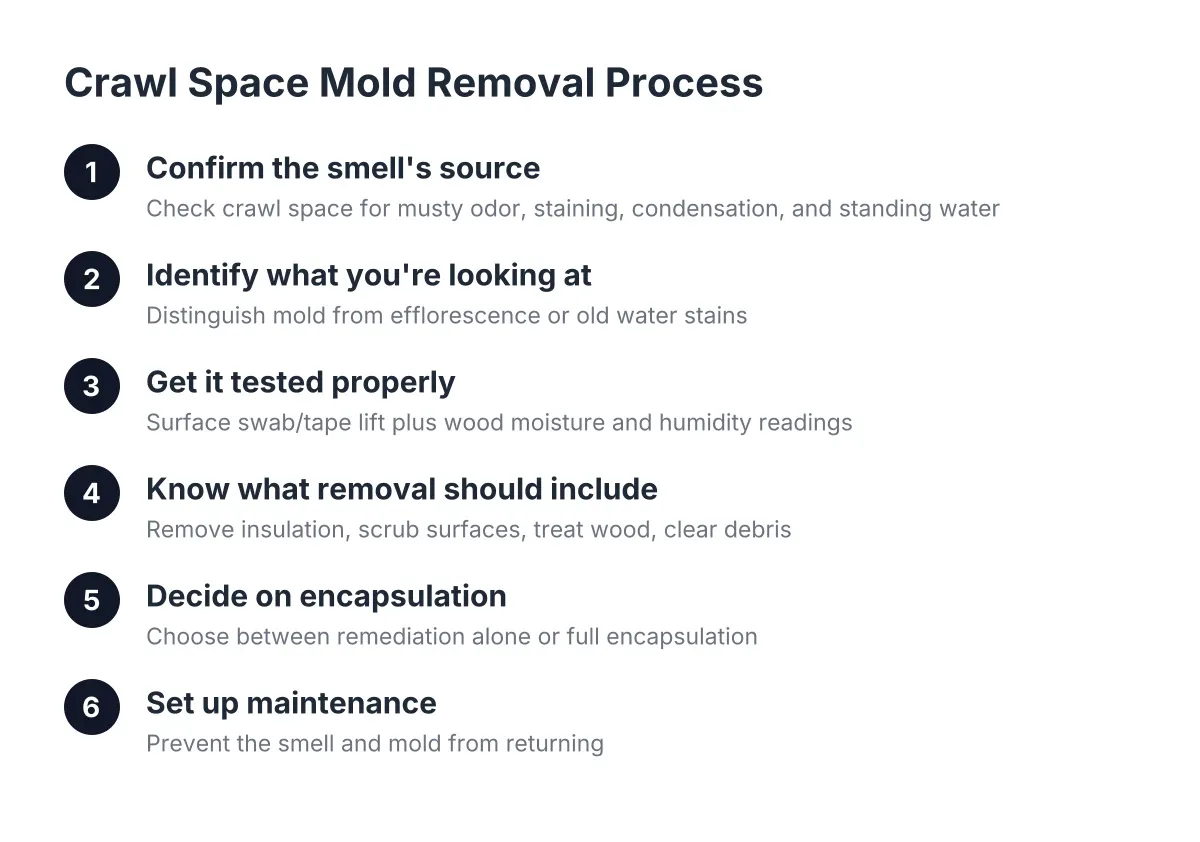
Mold remediation is the full process of removing mold and fixing the moisture conditions that let it grow. It goes beyond wiping surfaces clean; it includes containing the work area, cleaning or treating affected wood, and correcting the water source. If a quote says "remediation" but never mentions moisture control, ask what happens when the humidity returns. In the Lowcountry, mold without a moisture fix is a repeat customer.
Mold Removal and Crawl Space Treatment
Mold removal means physically taking mold off surfaces, usually by scrubbing, sanding, blasting, or vacuuming affected wood and materials. It is one step inside remediation, not the whole job. A provider who quotes crawl space mold removal alone, with no plan for drainage or humidity, is treating the symptom and leaving the cause. Costs vary with how much of the crawl space is affected, which is why estimates differ so much; this cost guide for crawl space mold removal walks through the main factors.
Musty Smell
A musty smell is the damp, earthy odor produced by mold and mildew growing in a wet space. In Charleston homes it often drifts up through the floor from the crawl space, especially in summer when humidity peaks. Treat it as an early warning, not just a nuisance. If the smell fades after rain-free weeks and returns in wet months, that points to a moisture problem below your floors.
Relative Humidity
Relative humidity is the amount of moisture in the air compared to the most it could hold at that temperature, shown as a percentage. Mold growth becomes likely when crawl space humidity stays high for long stretches, which is common near the coast. Providers often quote a target humidity level they aim to hold with a dehumidifier. If your estimate mentions humidity readings, that is a good sign the contractor measured instead of guessed.
Condensation
Condensation is water that forms when warm, humid air touches a cooler surface, like ductwork or floor joists in a vented crawl space. Charleston's humid outside air pouring through open vents in summer is a classic condensation setup. Those wet surfaces feed mold even when no water ever leaks in. This is why many local fixes involve sealing vents rather than adding more of them.
Wood Moisture Content
Wood moisture content is the percentage of water inside wood, measured with a handheld meter pressed into joists and beams. Wood that stays wet supports mold growth and, over time, rot that can lead to sagging floors. A thorough inspection should include moisture readings, not just a flashlight look. Ask for the numbers; they tell you whether the wood is drying or staying saturated.
Vented Crawl Space
A vented crawl space is a foundation design with open vents in the walls, meant to let air flow under the house. Many older raised Charleston homes were built this way. In a humid coastal climate, those vents often pull in moist air that condenses under the floor instead of drying things out. That is why moisture control plans here frequently involve closing vents and encapsulating rather than ventilating harder.
The Fix: Equipment and Systems
Encapsulation and Crawl Space Mold Removal Solutions
Crawl space encapsulation is the process of sealing the crawl space with a heavy plastic liner on the floor and walls, closing the vents, and controlling the air inside. Think of it as turning a damp dirt pit into a clean, dry, semi-conditioned space. Encapsulation is usually paired with a dehumidifier, and sometimes drainage, so the sealed space stays dry. If mold was removed first, encapsulation is what keeps it from returning.
Vapor Barrier
A vapor barrier is a sheet of plastic laid over the crawl space floor to block moisture rising from the ground. Thickness is measured in mils; heavier liners resist tears from crawling and stored items. A thin liner tossed loosely over dirt is not the same as a sealed, overlapped, taped installation. When comparing quotes, ask about liner thickness and whether seams and piers get sealed.
Dehumidifier
A crawl space dehumidifier is a machine that pulls moisture out of the air and drains the water away, keeping humidity below the level where mold thrives. In Charleston's climate, an encapsulated crawl space without a dehumidifier can still trap humid air. Ask how the unit drains, since a dehumidifier that empties into a bucket under your house is not a real plan. Most drain to a pump or to the outside.
Sump Pump
A sump pump is an electric pump set in a low basin that collects water and pushes it out of the crawl space through a pipe. On Charleston's high water table and flood-prone lots, groundwater can rise into the crawl space even without a plumbing leak. A sump pump handles that water automatically. If your crawl space ever holds standing water, expect a pump to appear on the estimate.
French Drain
A French drain is a gravel-filled trench with a perforated pipe that collects groundwater and carries it to a sump pump or a discharge point. Inside a crawl space, it runs along the footing to intercept water before it spreads across the floor. Drainage matters because mold removal on a crawl space that still floods is temporary work. Pairing drainage with encapsulation addresses both liquid water and humid air.
Process, Cleanup, and Paperwork
Containment
Containment means sealing off the work area with plastic sheeting and controlled airflow so mold spores stirred up during cleanup do not spread into your living space. Reputable remediation crews set up containment before disturbing moldy material. If a provider plans to scrub joists with the crawl space wide open to the house above, ask why. Containment is a marker of a careful process.
HEPA Filtration
HEPA filtration is air filtering fine enough to capture mold spores, used in vacuums and air scrubbers during remediation. Crews run HEPA equipment while they work so disturbed spores get captured instead of settling elsewhere. Seeing "HEPA vacuum" or "air scrubber" on a quote signals the contractor follows standard remediation practice. Its absence is worth a question.
Soda or Media Blasting
Soda or media blasting is a cleaning method that sprays a fine abrasive, such as baking soda, at moldy wood to strip growth off the surface. It reaches into grain and corners that hand scrubbing misses, which matters on rough-sawn joists in older homes. Blasting adds labor and cleanup, so quotes that include it tend to run higher than wipe-and-spray jobs. The tradeoff is a more thorough result on heavily affected wood.
Antimicrobial Treatment
An antimicrobial treatment is a liquid applied to cleaned wood to discourage mold from growing back. It is a finishing step, not a substitute for removing mold or fixing moisture. Be cautious of any pitch that leans on spray alone; a coating cannot outlast constant dampness. Treatment plus dry conditions is the combination that holds.
Scope of Work
A scope of work is the written section of a quote that lists exactly what the contractor will do, where, and with what materials. It is the single most useful page in any estimate. Compare scopes, not just totals, because a cheaper bid may skip drainage, dehumidification, or debris removal that a fuller bid includes. A vague scope invites disputes later; a detailed one protects you. The Charleston mold removal and remediation service page shows what a complete job typically covers.
Clearance or Post-Remediation Verification
Clearance, sometimes called post-remediation verification, is an inspection after the work to confirm the mold was handled and conditions have improved. It can include a visual check, moisture readings, or air sampling by a third party. Ask upfront how the contractor will show the job succeeded. A provider willing to have results checked is telling you something good.
Using These Terms
You now have the working vocabulary a first-time buyer needs. Read your next estimate carefully, reviewing this crawl space mold removal glossary and circling anything missing from the scope of work, then ask how the plan controls moisture, not just mold. A contractor worth hiring will welcome those questions.
If you need crawl space encapsulation, Low Country Crawl Space Repair can help.
Prefer to talk it through? Call +18542013678 — a quick call is usually the fastest way to get a straight answer for your situation.