What Mold Smells Like in a Crawl Space and How to Trace a Mildew Smell to Its Source
A persistent mildew smell in your house has a signature: earthy, damp, and stubborn. It fades when you open windows and comes back stronger when the AC kicks on or after a hard rain. In Charleston, that smell traces back to the crawl space more often than any other spot in the home. This guide walks you through confirming the crawl space is truly the source before you spend a dollar on a fix, then shows you the steps that eliminate the odor for good instead of masking it.
If a home inspector just flagged "moisture intrusion" or "evidence of mold" under your house and a buyer is waiting on answers, the same diagnostic steps apply. You need to know exactly what is causing the smell so the repair receipt you hand the buyer's agent addresses the actual problem, not a symptom.
What Does Mold Smell Like in a Crawl Space?
Mold in a crawl space smells earthy and damp, like wet soil, rotting leaves, or an old book left in a garage. Mildew smells similar but sharper and more sour. Some homeowners describe an ammonia or cat urine note, which points to mold or bacteria growing on debris trapped under old plastic sheeting.
The smell itself comes from gases mold releases as it grows. That matters for one practical reason: if you can smell it, the mold is active and moisture is feeding it right now. A dormant patch of old staining does not usually produce a strong odor. A strong, persistent smell means the moisture problem is ongoing.
When is it a concern? Treat any persistent musty smell as a signal worth chasing down, not a reason to panic. Ongoing mold growth can aggravate allergies and stuffiness for some people, and it damages wood framing over time. The bigger risk in Charleston homes is structural: the same dampness that feeds mold also rots floor joists and beams, which is why sagging floors and musty smells so often show up together.
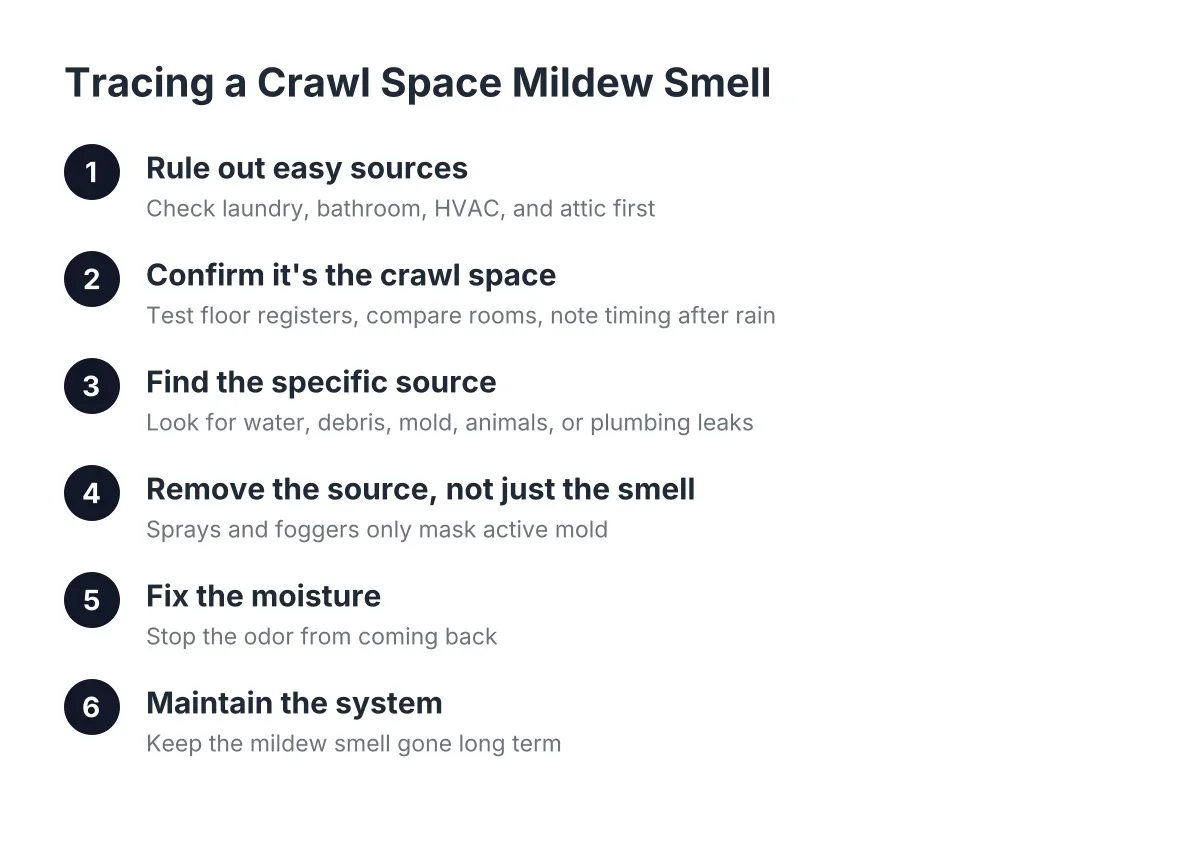
Step 1: Rule Out the Easy Sources First
Before you blame the crawl space, spend 30 minutes eliminating the common indoor culprits. A skeptic's checklist saves money, and it also strengthens your documentation if you are selling and need to show a buyer you diagnosed the problem properly.
Check these first:
- Washing machine and laundry. A mildew smell in a washing machine or in clothes left damp is contained to the laundry area. Run an empty hot cycle and sniff again.
- Bathroom. Grout, shower curtains, and under-sink cabinets hold mildew. The smell stays local to the room.
- HVAC system. A mildew smell from the AC when it first turns on can come from a dirty coil or clogged condensate drain. However, in homes with ductwork running through the crawl space, the AC often just delivers crawl space air upstairs.
- Attic and roof leaks. Check ceilings for staining after rain.
Here is the key distinction. A localized smell that stays in one room points to that room. A whole-house smell that is strongest at floor level, worst in the mornings, and stronger after rain points down, not up.
Step 2: Confirm the Mildew Smell Is Coming From the Crawl Space
Confirm the crawl space is the source with three simple tests before opening the access door. First, smell at the floor registers when the HVAC starts; a musty puff at startup means the system is pulling crawl space air. Second, compare rooms; odor concentrated in rooms over the crawl space, not over a slab addition, points below. Third, note timing after rain.
The rain test matters most in the Lowcountry. Charleston sits on high water tables and tidal lots, and NOAA Tides and Currents recorded 17 high-tide flood days here during the 2023-24 meteorological year. If your crawl space smell spikes for two or three days after a storm or a king tide, groundwater is getting under the house.
Next, open the crawl space access and take a direct smell test at the opening. Do not crawl in yet. If the odor at the hatch matches the odor upstairs, you have your confirmation. This is common: according to the American Society of Home Inspectors, more than 60% of U.S. homes have had water or moisture problems in their basement or crawl space.
Step 3: Find the Specific Source Under the House
With a flashlight, a respirator mask, and clothes you do not mind ruining, inspect the crawl space for the specific odor source. You are looking for five things, in this order:
- Standing water or damp soil. Puddles, mud, or a sump area holding stagnant water. Water trapped between layers of an old multi-layer vapor barrier also produces a strong smell.
- Organic debris. Old cardboard, scrap lumber, carpet remnants, or construction trash. These materials soak up moisture and hold odor for years. Debris trapped under loose plastic is a classic source of the cat urine smell.
- Visible mold on wood. White, green, or black growth on joists, beams, and subfloor, especially near the perimeter and around ductwork.
- Dead animals or droppings. Rodents find vented crawl spaces easily, and the smell is distinct: sharper and more rancid than mildew.
- Plumbing or sewer leaks. A slow drain line leak keeps soil wet permanently and adds a sewage note to the musty base smell.
Photograph everything. If you are selling, these photos plus the repair invoice become the documentation package the buyer's agent will ask for. If you cannot safely access the space, or you find widespread mold or structural rot, stop and bring in a crawl space specialist for a proper inspection. Diagnosing rot depth and mold extent from a flashlight sweep is where DIY assessment reaches its limit.
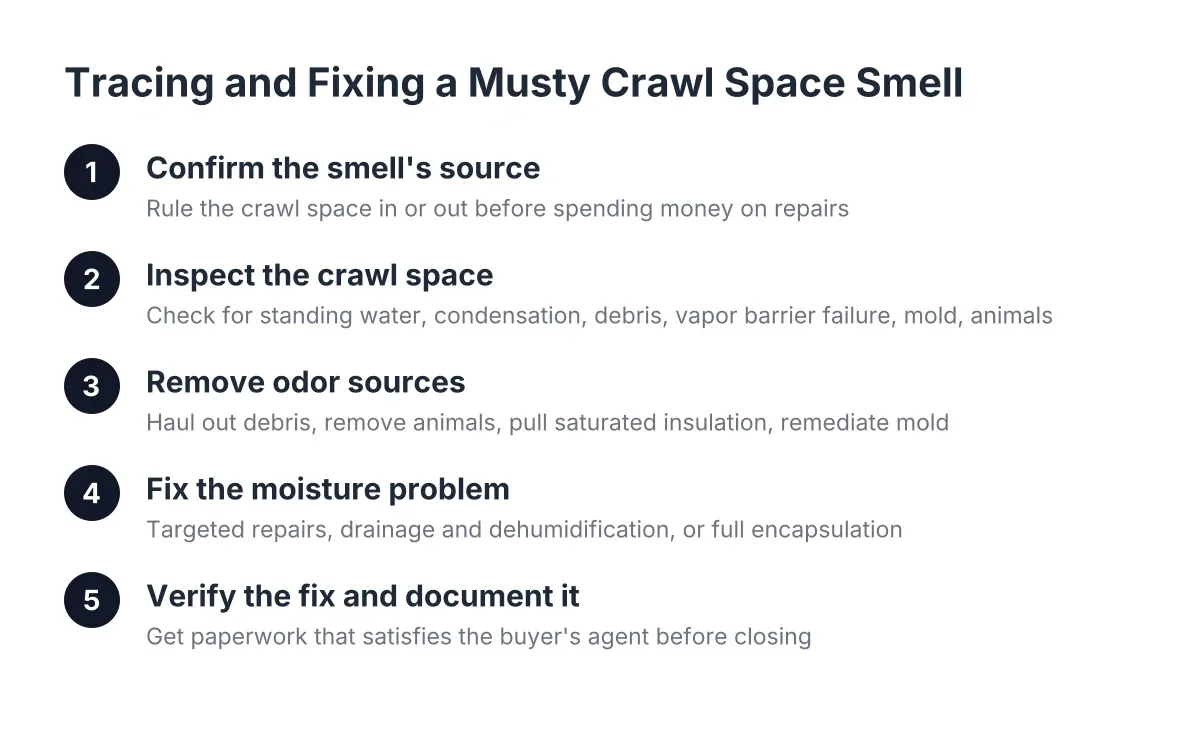
Step 4: Remove the Source, Not Just the Smell
Eliminate the odor by removing what produces it. Sprays, foggers, and charcoal bags mask a mildew smell for a week or two; they do nothing about active mold. Effective crawl space odor removal follows a fixed order: clean out, treat, then dry out.
Start with cleanup and debris removal. Every piece of cardboard, carpet, and rotted lumber comes out, along with any old, torn plastic sheeting and whatever is trapped beneath it. Then comes mold remediation on the framing. Professional crews commonly use peroxide-based cleaners, which disinfect effectively without the harsher chemicals older methods relied on. Contaminated insulation gets pulled and replaced rather than treated.
If you found standing water, drainage comes before anything else. That can mean grading the crawl space soil to slope toward a perimeter drain, adding a French drain, and installing a sump pump at the low point. According to Building America Solution Center (PNNL/DOE), sloping the soil toward the drain keeps water moving to the sump instead of pooling in the middle.
Step 5: Fix the Moisture So the Odor Cannot Come Back
Keep the smell gone by controlling humidity permanently, because Charleston's coastal air will restart mold growth within a season if you skip this step. In a vented crawl space, warm humid outside air hits cool framing and ductwork, condenses, and feeds mold all over again. Cleanup without moisture control is a temporary fix.
Does encapsulation stop musty smell for good? Yes, when it is done as a complete system. Crawl space encapsulation, per the U.S. Department of Energy, means running heavy plastic sheeting across the entire floor and sealing it to the stem walls and around support piers, not laying loose plastic on the dirt. A sealed vapor barrier cuts off ground moisture, a crawl space dehumidifier holds humidity in the safe range, and insulation at the stem walls and rim joists keeps coastal air from condensing on cool surfaces.
One caveat: sealing is not optional halfway. A loosely sealed space with a running dehumidifier fights a losing battle against outside air. Also check local requirements; some jurisdictions require a termite inspection strip near the top of the foundation wall to stay uncovered by the vapor barrier, according to Stego Industries.
For sellers on a deadline, suppose your inspection report came back ten days before closing with "moisture and evidence of mold" in the crawl space. In that scenario, a specialist can usually complete cleanup, mold remediation, and moisture control in days, then provide an invoice describing exactly what was found and corrected. That paperwork is what satisfies a buyer's agent; an air freshener receipt is not.
Step 6: Maintain the System So the Mildew Smell Stays Gone
Protect the fix with an annual maintenance rhythm, because the equipment doing the work needs attention. About 15% of American homes sit on a crawl space foundation, according to JSE Labs, and in Charleston's climate the ones that stay dry are the ones that get checked.
If you already have an encapsulated crawl space, put these on the calendar:
- Dehumidifier service. Clean or replace the filter and confirm the humidity setpoint before summer humidity arrives.
- Sump pump test. Pour a bucket of water into the basin each spring and before hurricane season to confirm the pump kicks on.
- Vapor barrier check. Look for tears, loose seams, or separation at the walls once a year.
- Post-storm inspection. After any flooding event or hurricane, check for water intrusion before odors have time to develop.
A musty smell returning in an encapsulated crawl space is a signal, not a mystery. It usually means a failed dehumidifier, a torn barrier, or water finding a new path in. Catching it at the annual check costs far less than re-remediating mold, and it keeps the air in the rooms above dry and clean.
If you need crawl space encapsulation, Low Country Crawl Space Repair can help.
Prefer to talk it through? Call +18542013678 — a quick call is usually the fastest way to get a straight answer for your situation.