Crawl Space Odor Removal Terms Explained: A Plain-English Glossary
If you are getting quotes to fix a musty smell under your Charleston home, the paperwork can read like a foreign language. This crawl space odor removal glossary translates the terms you will hear from contractors into plain English. Use it to understand what each line on a quote means, ask sharper questions, and spot the difference between a real fix and a cover-up. Every definition stands on its own, so you can jump straight to the word that confused you.
- Musty Smell: the earthy, damp odor itself
- Crawl Space Encapsulation: sealing the space with a liner
- Vapor Barrier: the plastic sheet over the dirt
- Dehumidifier: a machine that dries the air
- Relative Humidity: how damp the air is
- Moisture Control: keeping water and dampness out
- Sump Pump: pumps out standing water
- French Drain: a gravel trench that moves water away
- Mold Remediation: removing mold the right way
- Microbial Growth: contractor-speak for mold and mildew
- Antimicrobial Treatment: a spray that kills mold spores
- Vented Crawl Space: the old open-vent design
- Standing Water: pooled water under the house
- Wood Rot: moisture damage to floor framing
- Crawl Space Inspection: the look-under before the quote
- Scope of Work: the list of what a quote includes
- Air Quality Testing: measuring what is in your air
The Smell and What Causes It
Start here, because most homeowners search this crawl space odor removal glossary after noticing one thing: a smell they cannot place.
Musty Smell and Crawl Space Odor Removal
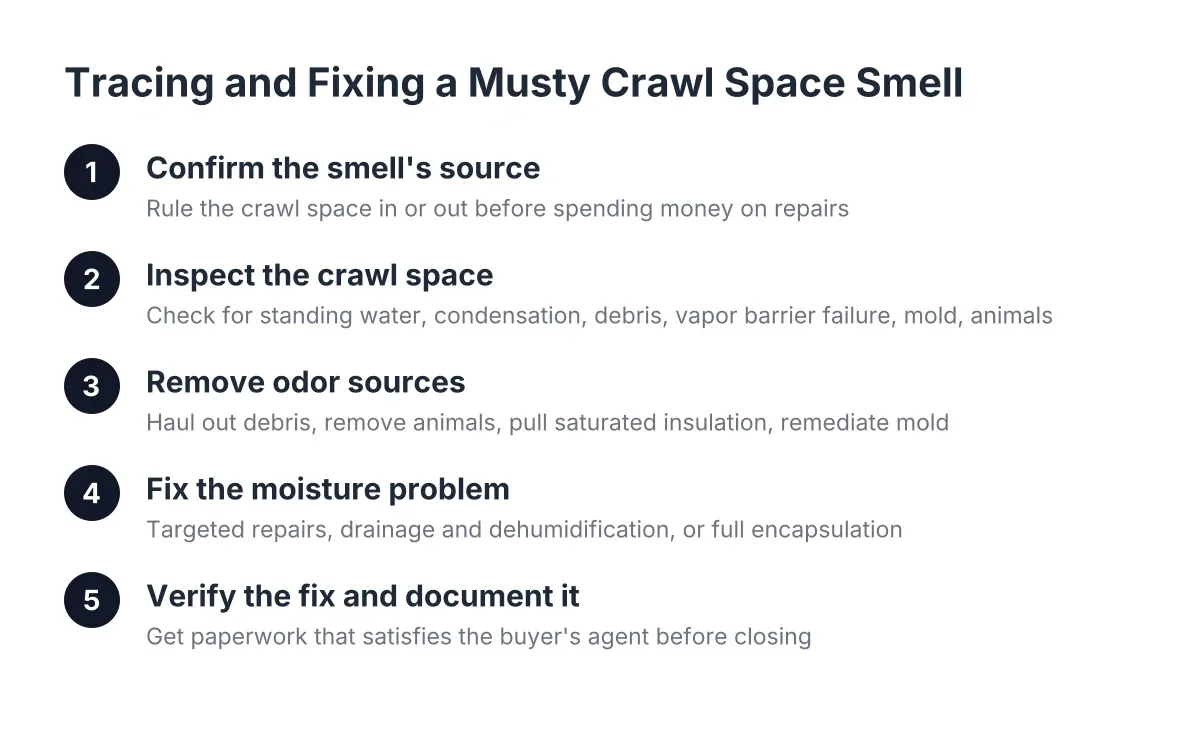
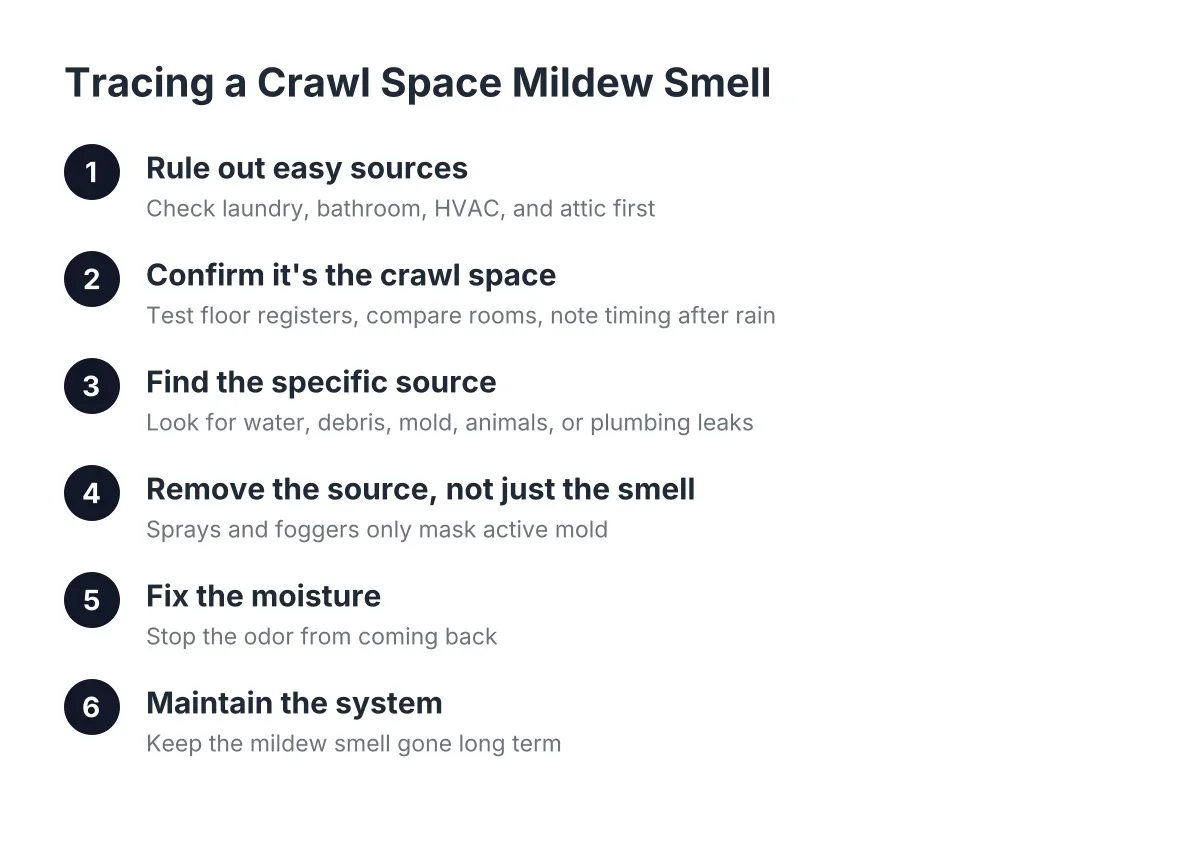
A musty smell is the damp, earthy odor produced by mold, mildew, and rotting organic material in a wet space. In Charleston homes it usually drifts up from a humid crawl space through gaps in the floor. The smell itself is a symptom, not the problem; the moisture feeding the mold is the problem. If a provider only offers deodorizers or air fresheners without addressing moisture, the smell will come back.
Relative Humidity
Relative humidity is the amount of moisture in the air compared to the maximum it could hold at that temperature, shown as a percentage. Crawl space pros aim to keep it low enough that mold cannot grow, and in the Lowcountry that takes work, since coastal humidity runs high year-round. A contractor who measures relative humidity during an inspection is doing it right. One who never mentions a number is guessing.
Microbial Growth
Microbial growth is the term contractors and inspectors use for mold, mildew, and bacteria growing on surfaces. When a quote says "visible microbial growth on floor joists," it means mold is growing on the wood under your house. The phrase sounds clinical, but it points to the same fix: remove the growth and stop the moisture that feeds it.
Wood Rot
Wood rot is the breakdown of wood fibers caused by fungus that grows in damp conditions. In a crawl space, rot attacks floor joists, beams, and subfloor, which can lead to soft spots and sagging floors upstairs. Rot also adds to the odor problem, since decaying wood smells. If an inspection finds rot, expect the quote to include structural support or beam repair alongside the odor work.
Standing Water
Standing water is any pooled water sitting on the crawl space floor instead of draining away. On Charleston's flat, high-water-table lots, it shows up after heavy rain and during hurricane season. Standing water feeds mold, breeds odor, and can undermine foundation piers over time. A provider who finds it should talk about drainage, a sump pump, or waterproofing, not just a dehumidifier.
Fixes and Equipment
These are the products and systems that show up as line items on a quote.
Crawl Space Encapsulation and Odor Removal Glossary
Crawl space encapsulation means sealing the crawl space from ground moisture and outside air with a heavy liner on the floor and walls, sealed vents, and usually a dehumidifier. It turns a damp, vented space into a dry, controlled one. Encapsulation is the most complete moisture fix and typically the largest line item on a quote. For older raised Charleston homes with open vents, it is often the step that finally kills a persistent musty smell.
Vapor Barrier
A vapor barrier is a durable plastic sheet laid over the crawl space floor to block moisture rising from the soil. Thickness matters; thin liners tear and let ground moisture through. A vapor barrier alone is lighter in scope than full encapsulation, since it covers the ground but does not seal vents or condition the air. Ask which one your quote actually includes, because the two get confused on paper.
Dehumidifier
A dehumidifier is a machine that pulls moisture out of the air and drains the water away. In a crawl space, it holds humidity at a level where mold cannot thrive. In Charleston's climate, a sealed crawl space almost always needs one, because sealing out humid outside air is only half the job. A quote that includes encapsulation without dehumidification deserves a follow-up question.
Sump Pump
A sump pump is an electric pump set in a pit at the low point of the crawl space that pushes collected water outside. It handles the water that drainage lines gather, especially during heavy Lowcountry rain. If your lot sits low or floods during storms, a sump pump is often the difference between a dry liner and a swimming pool under your plastic.
French Drain
A French drain is a gravel-filled trench with a perforated pipe that collects groundwater and carries it away from the crawl space. It works with a sump pump to keep water from pooling under the house. On tidal and flood-zone lots around Charleston, interior drainage like this is common in odor jobs, because you cannot dry a space that keeps refilling with water.
Antimicrobial Treatment
An antimicrobial treatment is a spray or fog applied to crawl space surfaces to kill mold spores and slow regrowth. It is a finishing step after mold removal, not a substitute for it. If a quote lists only an antimicrobial spray with no moisture control, the mold and the smell will return once the humidity climbs back up.
Process, Inspection, and Paperwork
Crawl Space Inspection
A crawl space inspection is an in-person look under your home to find moisture, mold, damaged wood, and drainage problems before anyone writes a quote. A thorough inspector checks humidity levels, the condition of any existing vapor barrier, and signs of standing water. Be wary of any firm quoting crawl space odor removal sight unseen; the source of the smell decides the scope, and the scope decides the cost. Our odor removal cost guide walks through how those factors stack up.
Mold Remediation
Mold remediation means removing mold from surfaces and fixing the conditions that let it grow, rather than just wiping or painting over it. In a crawl space, that usually means cleaning or treating floor joists and subfloor, then controlling moisture so the mold cannot come back. Remediation is the correct word to look for on a quote. "Mold treatment" alone can mean anything from full removal to a quick spray.
Moisture Control
Moisture control is the overall strategy of keeping water and humidity out of a crawl space using drainage, a vapor barrier, sealing, and dehumidification together. No single product does the whole job. When a provider talks about moisture control as a system instead of pushing one gadget, that is a good sign they understand why your crawl space smells in the first place.
Vented Crawl Space
A vented crawl space is the traditional design with open vents in the foundation walls, meant to let air flow through and dry the space out. In a humid coastal climate like Charleston's, those vents often do the opposite: they pull in damp outside air that condenses on cool surfaces and feeds mold. Many odor fixes here involve sealing those vents as part of encapsulation. If your home is an older pier-and-beam house, you likely have this design.
Air Quality Testing
Air quality testing means sampling the air in your home or crawl space to measure mold spores and other contaminants. It can confirm whether crawl space mold is affecting the air you breathe upstairs and give a before-and-after comparison once the work is done. Testing is optional on many jobs, so ask whether it is included in your quote or billed separately.
Scope of Work
A scope of work is the written list in a quote that spells out exactly what the contractor will do, from debris removal to liner installation to equipment setup. It is the most important page in any proposal. Compare scopes line by line when you get multiple quotes; a cheaper price often just means a smaller scope. If odor is your main complaint, make sure the scope addresses the moisture source, not only the smell.
Using These Terms
What this crawl space odor removal glossary gives you is the vocabulary to read a quote line by line instead of taking it on faith. You can now ask a provider whether they are quoting a vapor barrier or full encapsulation, how they plan to handle standing water, and what their scope of work covers. Those are the questions that separate a lasting fix from a repeat visit.
If you need crawl space encapsulation, Low Country Crawl Space Repair can help.
Prefer to talk it through? Call +18542013678 — a quick call is usually the fastest way to get a straight answer for your situation.