Crawl Space Dehumidifiers Terms Explained: A Plain-English Glossary
If you own a Charleston-area home with a damp, musty crawl space, the quotes and inspection reports you get back can read like another language. This crawl space dehumidifiers glossary breaks down the terms you will actually meet, in plain English, so you can read a proposal line by line and ask sharp questions. Use it to compare bids, spot what a contractor is really proposing, and understand why one fix costs more than another. Nothing here requires a background in construction, just a few minutes of your time.
- Dehumidifier: the machine that pulls water from the air
- Relative Humidity (RH): how full of moisture the air is
- Pints Per Day (PPD): how much water a unit removes daily
- Condensate Pump: pushes collected water uphill to a drain
- Ducted Dehumidifier: one unit drying several zones through ducts
- Hygrometer: the gauge that measures humidity
- Crawl Space Encapsulation: sealing the crawl space from ground and outside air
- Vapor Barrier: the plastic liner that blocks ground moisture
- Vented Crawl Space: the older open-vent design common in Charleston
- Sealed Crawl Space: a closed, conditioned crawl space
- Sump Pump: removes standing water before it becomes a humidity problem
- French Drain: a gravel-and-pipe channel that moves water away
- Condensation Line: the drain hose that carries water out
- Mold Remediation: removing existing mold, not just drying the air
- Dew Point: the temperature where moisture in the air turns to water
- Grain Depth (Grains Per Pound): a precise measure of moisture in air
- Scope of Work: the written list of exactly what a contractor will do
- Moisture Reading: the numbers an inspector records before quoting
Equipment Terms
These are the words that describe the machine itself and the numbers on its spec sheet. If you only learn one section of this crawl space dehumidifiers glossary, make it this one, because equipment specs drive most of the price difference between quotes. For a sense of what those differences mean in dollars, see our guide to how much crawl space dehumidifiers cost.
Dehumidifier
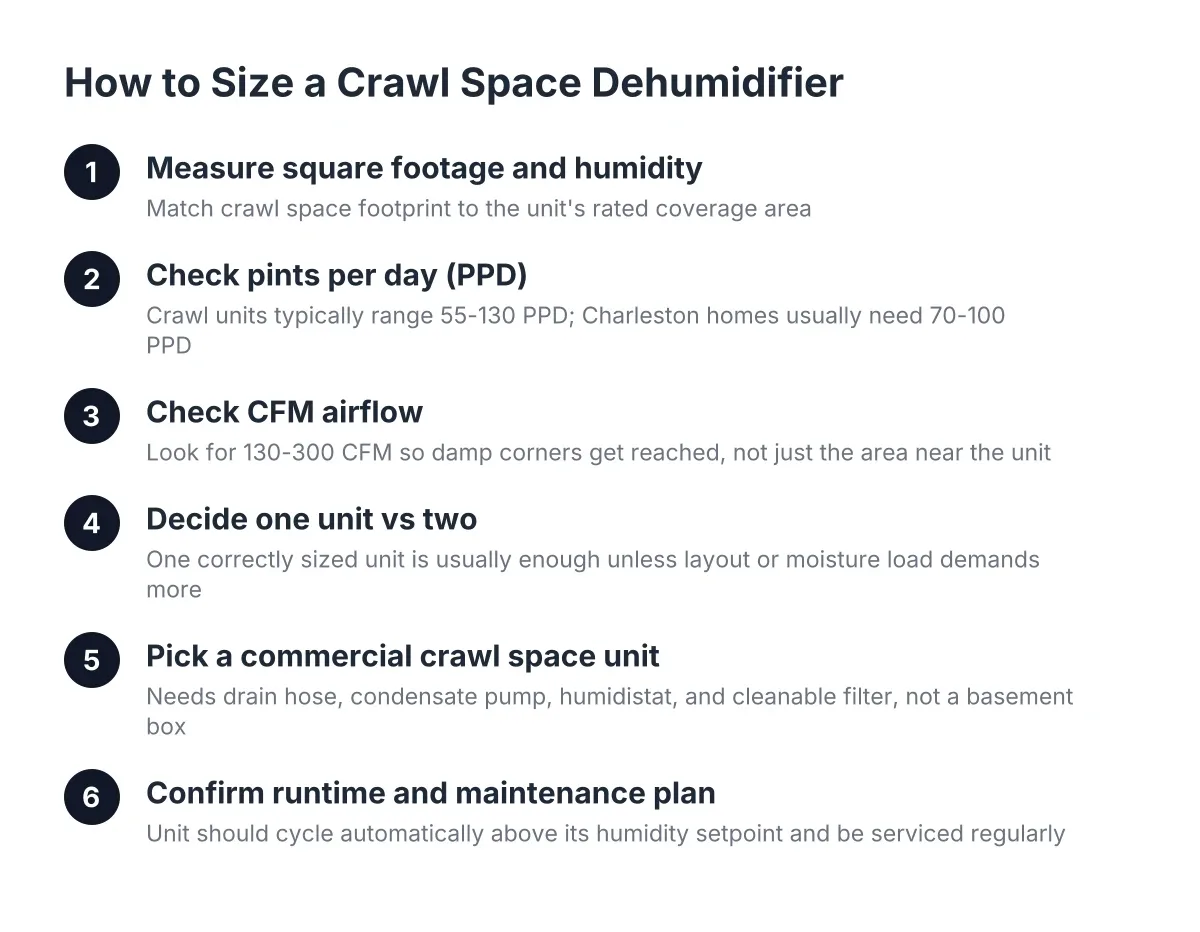
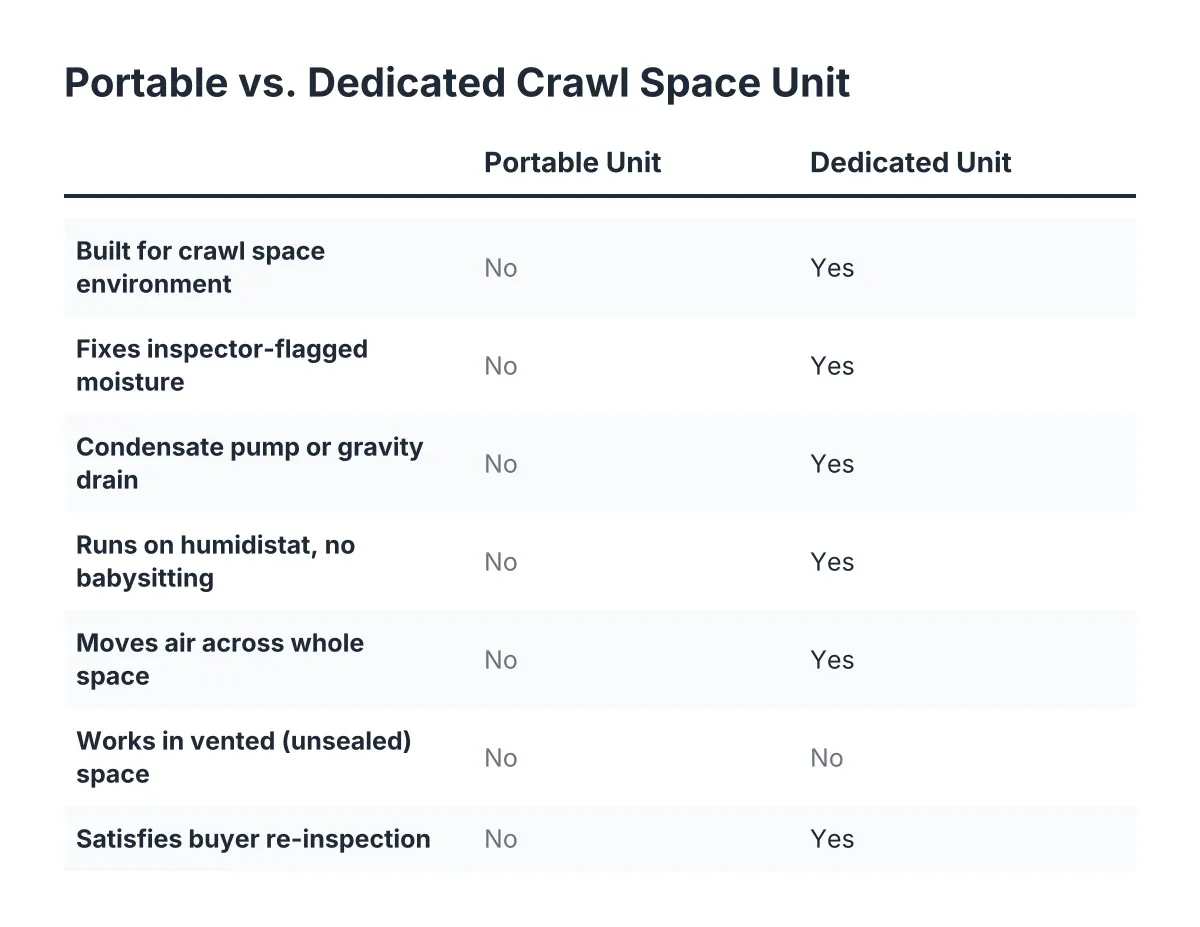
A dehumidifier is a machine that pulls moisture out of the air and collects it as water, which then drains away. In a crawl space, it runs automatically to hold humidity at a set level instead of letting Charleston's coastal air soak your floor joists. Crawl space dehumidifiers are built tougher than the portable units sold for bedrooms; they handle cooler temperatures and run for years in a dirty, low space. If a quote lists a "commercial-grade" or "crawl space rated" unit, that is why it costs more than a box-store model.
Relative Humidity (RH)
Relative humidity is the percentage of moisture the air is holding compared to the most it could hold at that temperature. Most crawl space pros aim to keep RH below about 60 percent, because mold and wood rot pick up above that line. In the Lowcountry, outdoor RH runs high most of the year, which is why a vented crawl space here stays damp. When a contractor talks about "holding 50 percent RH," they mean the dehumidifier's target setting.
Pints Per Day (PPD)
Pints per day is the amount of water a dehumidifier can remove from the air in 24 hours under test conditions. A bigger PPD number means a stronger unit, sized for a larger or wetter crawl space. Sizing matters: an undersized unit runs constantly and still loses the battle, while an oversized one costs more up front than you need. A good installer sizes PPD to your square footage and how wet your space actually is.
Condensate Pump
A condensate pump is a small pump that pushes the water a dehumidifier collects up and out to a drain when gravity alone will not carry it there. Many Charleston crawl spaces sit low, with no downhill path to daylight, so the pump does the lifting. If your quote includes one, the installer has checked your drainage path and found no gravity option. It is a normal add, not padding.
Ducted Dehumidifier
A ducted dehumidifier is a single unit connected to ducts that spread dry air across several sections of a crawl space. It solves the problem of a long or divided crawl space where one machine in one corner cannot reach the far end. If your home has additions or a chopped-up foundation footprint, expect this term in your proposal. It usually costs more than a single open unit but less than two machines.
Hygrometer
A hygrometer is an instrument that measures humidity in the air. Inspectors carry handheld ones, and many installed systems include a remote sensor so you can check your crawl space humidity from inside the house. Ask whether monitoring is included; it is the easiest way to confirm the system is working without crawling under your home.
Moisture Control and Dehumidifiers Glossary for Crawl Space Systems
A dehumidifier rarely works alone. These terms describe the sealing, draining, and cleanup work that often appears on the same quote.
Crawl Space Encapsulation
Crawl space encapsulation means sealing the crawl space off from ground moisture and outside air with a heavy liner on the floor and walls, sealed vents, and usually a dehumidifier. It turns a damp, vented space into a dry, controlled one. In Charleston, encapsulation is the standard fix for the pier-and-beam homes that were built vented and have fought humidity ever since. A dehumidifier without encapsulation still helps, but it works harder and costs more to run.
Vapor Barrier
A vapor barrier is a thick plastic sheet laid over the crawl space floor, and often up the walls, to block moisture rising from the ground. Bare Lowcountry soil releases water vapor year round, especially on lots with a high water table. Barrier thickness is measured in mils; thicker liners resist tears from crawling and stored items. If two quotes differ, check the mil rating and whether seams and piers are sealed, not just covered.
Vented Crawl Space
A vented crawl space is the traditional design with open vents in the foundation walls, meant to let outside air dry the space. In humid coastal climates that logic backfires: summer air enters warm and wet, hits cooler surfaces under the house, and leaves moisture behind. Most older Charleston homes were built this way, which is why so many develop a musty smell. Sealing the vents is usually step one of a moisture control plan.
Sealed Crawl Space
A sealed crawl space is one with vents closed, a vapor barrier installed, and humidity controlled mechanically, usually with a dehumidifier. It is the end state of encapsulation. The payoff is stable humidity, less musty smell in the house above, and drier wood framing. If a contractor proposes sealing without any way to control humidity afterward, ask how moisture will get out.
Sump Pump
A sump pump is a pump set in a low basin that collects standing water and pumps it away from the house. Dehumidifiers handle water vapor in the air; sump pumps handle liquid water on the ground. On flood-prone or tidal-influenced Charleston lots, both often show up in one proposal. If water pools under your home after storms, a dehumidifier alone will not solve it.
French Drain
A French drain is a gravel-filled trench with a perforated pipe that collects groundwater and carries it away from the crawl space. It works with a sump pump to keep liquid water from reaching the space in the first place. Seeing this on a quote means the inspector found water coming in, not just humid air. That is a drainage problem, and it must be fixed before a dehumidifier can do its job.
Condensation Line
A condensation line is the hose or pipe that carries the water a dehumidifier collects to a drain, a sump basin, or the outside. It needs a downhill slope or a condensate pump to move the water. A poorly routed line is one of the most common service calls, so ask where yours will terminate. Water should end up well away from the foundation, not dumped beside it.
Mold Remediation
Mold remediation means removing existing mold growth from surfaces, not just stopping new growth. A dehumidifier prevents future mold by keeping wood dry, but it does not clean what is already there. If your crawl space already smells musty or shows visible growth on joists, expect mold removal as a separate line item before encapsulation. Skipping it means sealing the problem in.
Numbers, Inspections, and Paperwork: Crawl Space Dehumidifiers Glossary Guide
These terms show up in inspection reports and written quotes. Knowing them keeps the conversation honest.
Dew Point
The dew point is the temperature at which moisture in the air condenses into liquid water. When warm, humid outside air meets cooler ductwork or floor framing under your home, it can hit its dew point and sweat, like a glass of iced tea in July. This is why vented crawl spaces in Charleston drip in summer. Controlling humidity keeps surfaces above the dew point and dry.
Grain Depth (Grains Per Pound)
Grains per pound is a precise measure of how much water vapor a pound of air carries, used by moisture professionals instead of relative humidity when they need exact numbers. You may see it in an inspection report comparing air inside and outside the crawl space. You do not need to calculate it; you just need to know it is a legitimate measurement, not jargon meant to confuse you.
Scope of Work
A scope of work is the written section of a quote that lists exactly what the contractor will do: cleanup, liner thickness, vent sealing, drainage, dehumidifier model class, and warranty terms. Two quotes with different prices often have different scopes, not different markups. Compare scopes line by line before comparing bottom lines. Anything discussed verbally but missing from the scope is not part of the job.
Moisture Reading
A moisture reading is a measurement of water content, taken in the air with a hygrometer or in the wood itself with a moisture meter. A thorough inspection records readings before quoting, so you have a baseline to compare against after the work. Ask for the numbers, not just "it's wet down there." Wood moisture content above roughly 19 percent is where rot fungi can take hold, so readings near or above that level explain an urgent recommendation.
Using These Terms
You can now read a crawl space quote the way a contractor writes one: equipment sized in pints per day, sealing described in mils, and drainage listed separately from dehumidification. What this crawl space dehumidifiers glossary gives you is the vocabulary to ask why each line item is there and what happens if you skip it. When the answers are specific and measurable, you have found someone who knows the Lowcountry ground under your house.
If you need crawl space encapsulation, Low Country Crawl Space Repair can help.
Prefer to talk it through? Call +18542013678 — a quick call is usually the fastest way to get a straight answer for your situation.