Crawl Space Drainage Systems Terms Explained: A Plain-English Glossary
If you own a Charleston-area home with a damp or musty crawl space, the quotes and inspection reports you get back can read like a foreign language. This crawl space drainage systems glossary translates the jargon into plain English so you can read a bid line by line, ask sharper questions, and spot a problem before it turns into sagging floors. Each entry starts with a simple definition, then explains why the term matters for your home and your budget. No sales pitch, just the words you will actually meet.
- French drain: a gravel trench that moves water away
- Sump pump: the pump that ejects collected water
- Sump pit (basin): the hole where water collects
- Discharge line: the pipe carrying water outside
- Check valve: keeps pumped water from flowing back
- Perimeter drain: a drain running along the foundation walls
- Vapor barrier: the plastic liner blocking ground moisture
- Crawl space encapsulation: sealing the whole space from moisture
- Dehumidifier: a machine that pulls humidity from the air
- Standing water: pooled water that will not drain on its own
- Water table: the level of groundwater under your lot
- Hydrostatic pressure: groundwater pushing against your foundation
- Grading: the slope of the soil around your house
- Efflorescence: white mineral stains left by moisture
- Moisture reading: a measured number, not a guess
- Scope of work: the itemized list of what a quote covers
- Battery backup: keeps the sump pump running in an outage
The Equipment: Drains, Pumps, and Pipes in Your Crawl Space Drainage Systems Glossary
These are the physical parts of crawl space drainage systems, and the items most likely to show up as line items on a quote.
French Drain
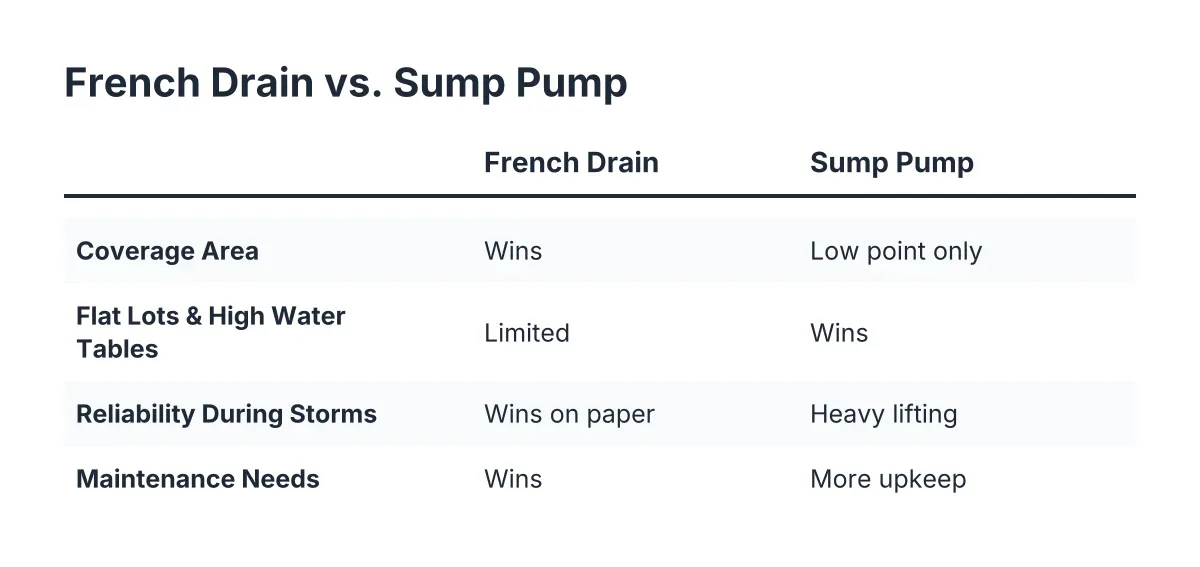
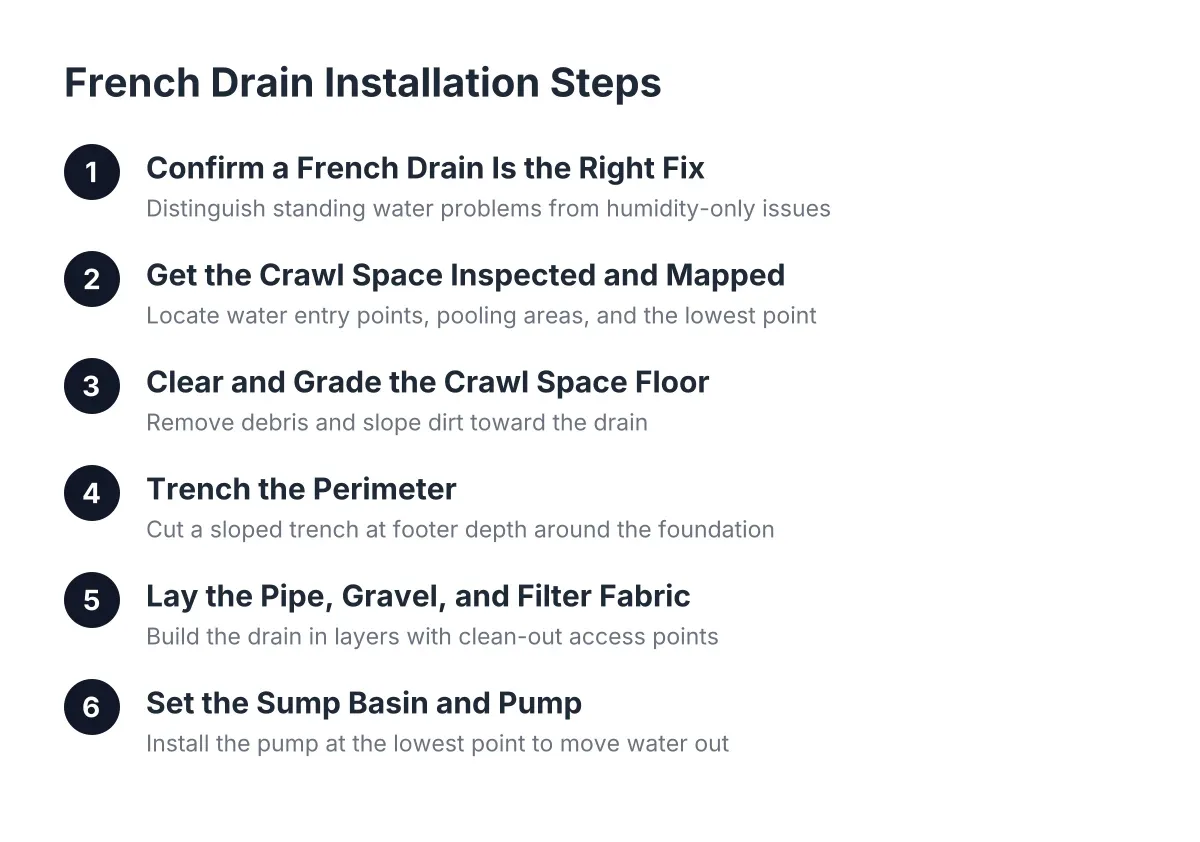
A French drain is a shallow trench filled with gravel and a perforated pipe that collects groundwater and carries it away from your home. Inside a crawl space, it is usually dug along the low points or the perimeter, where water naturally collects. The pipe has small holes that let water in, and gravity or a sump pump moves that water out. If a contractor recommends one, it means water is entering through the soil or foundation walls, not just condensing from humid air. That distinction matters, because a dehumidifier alone will not fix groundwater intrusion.
Sump Pump
A sump pump is an electric pump that sits in a pit at the lowest point of your crawl space and pushes collected water outside through a pipe. On flat, low-lying Charleston lots, gravity often cannot drain water on its own, so the pump does the lifting. When a quote includes a sump pump, expect the price to reflect the pump itself, the pit, the discharge piping, and an electrical connection. Ask whether the pump has a battery backup, since storms that flood crawl spaces are the same storms that knock out power. For a sense of what full systems run, see our guide to crawl space drainage system costs.
Sump Pit (Basin)
A sump pit, also called a sump basin, is the lined hole in the crawl space floor where water collects before the pump sends it out. Drain lines slope toward the pit so water arrives there instead of pooling under your floors. A pit with a sealed lid keeps debris out of the pump and keeps moisture from evaporating back into the crawl space. If your quote lists a pit but no lid, ask about it.
Discharge Line
A discharge line is the pipe that carries water from the sump pump to a spot outside your home where it can drain safely. Where that pipe ends matters as much as the pump itself. If it dumps water right beside the foundation, the water can soak back into the soil and return to the crawl space. A good installer routes the line well away from the house and downhill from it where the lot allows.
Check Valve
A check valve is a one-way valve on the discharge line that stops pumped water from flowing back into the sump pit when the pump shuts off. Without one, the same water gets pumped over and over, which wears out the pump early. It is a small, inexpensive part, and its presence on a quote is a sign the installer thinks about the long life of the system, not just the install day.
Perimeter Drain
A perimeter drain is a drainage channel that runs along the inside edge of the crawl space, following the foundation walls to intercept water where it enters. It is the standard layout when water seeps in from more than one side, which is common on high-water-table lots near the coast. A perimeter drain almost always feeds a sump pit. If your inspection report shows water entry on multiple walls, expect this term in the proposal.
Battery Backup
A battery backup is a secondary power source that keeps a sump pump running when the electricity goes out. In the Lowcountry, heavy rain and power outages tend to arrive together during hurricane season, which is exactly when your pump has the most work to do. A backup adds cost up front but protects the whole investment when it counts.
Moisture Control Terms in Your Crawl Space Drainage Systems Glossary
Drainage handles liquid water, but Charleston's humidity means most quotes pair it with moisture control. These terms explain that half of the job.
Vapor Barrier
A vapor barrier is a heavy plastic sheet laid over the crawl space floor to block moisture rising from the ground into the air under your home. Even soil that looks dry releases water vapor constantly, and in a vented Charleston crawl space that vapor feeds mold and musty smells. Thickness is measured in mils, and thicker liners resist tears from crawling and stored items. A vapor barrier controls vapor, not standing water, so it works alongside drainage rather than replacing it.
Crawl Space Encapsulation
Crawl space encapsulation means sealing the entire crawl space, including floor, walls, and vents, with a vapor barrier and sealed seams, usually paired with a dehumidifier. Think of it as turning a damp, vented dirt space into a clean, dry, conditioned one. Drainage often comes first, because sealing a crawl space with active water intrusion traps the problem inside. If a provider quotes encapsulation without addressing visible water, ask how the water gets out.
Dehumidifier
A dehumidifier is a machine that pulls water vapor out of the air and drains it away, keeping crawl space humidity at a safe level. Charleston's coastal air stays humid most of the year, so even a well-drained crawl space can grow mold from airborne moisture alone. In most setups, the dehumidifier drains into the sump pit or a dedicated line. It handles what drains and pumps cannot: the moisture already in the air.
Standing Water
Standing water means visible pooled water in the crawl space that does not drain away on its own. It is the clearest sign that you need drainage, not just moisture control. Standing water soaks wooden beams, feeds mold, and draws pests. If an inspector notes it, expect the proposal to include a drain system and sump pump rather than a vapor barrier alone. Local details on how installers handle it are covered in our Charleston drainage service overview.
Site and Diagnosis Terms
These words describe why water gets into your crawl space in the first place. They show up in inspection reports more than in quotes.
Water Table
The water table is the level below ground where the soil is fully saturated with water. On many Charleston and Lowcountry lots, the water table sits high, sometimes only a few feet down, and it rises after heavy rain or during king tides. A high water table means water can push up into a crawl space even without a single drop of rain hitting the house. It is the main reason so many local homes need pumps instead of gravity drains.
Hydrostatic Pressure
Hydrostatic pressure is the force that water in saturated soil exerts against your foundation walls and floor. The wetter the soil, the harder it pushes, and water follows that pressure through any crack or joint it can find. Drainage systems work by giving that water an easier path, into a drain and out through a pump, before pressure forces it inside.
Grading
Grading is the slope of the ground around your house, and good grading slopes away from the foundation so rainwater runs off instead of pooling beside it. Flat or negative grading sends roof and yard runoff straight toward the crawl space. Sometimes a grading fix reduces how much water the interior system has to handle. An honest inspector will look at the yard, not just under the house.
Efflorescence
Efflorescence is the white, chalky mineral residue left on brick or concrete after water passes through it and evaporates. It is not mold, but it is evidence. If your foundation piers or walls show efflorescence, water has been moving through that masonry, even if the space looks dry on inspection day.
Moisture Reading
A moisture reading is a measurement of water content in wood or air, taken with a meter during an inspection. It replaces guesswork with a number, so you can compare conditions before and after the work. Ask for readings in your inspection report. A provider who measures moisture, rather than eyeballing it, gives you a baseline to hold the finished job against.
Scope of Work
A scope of work is the section of a quote that lists exactly what the contractor will do, item by item. For drainage jobs, look for the drain footage, the pump and pit, the discharge route, and any vapor barrier or dehumidifier included. Two quotes with different totals often cover different scopes, so compare the lists before comparing the prices.
Using These Terms
You now have what this glossary set out to give you: enough plain-English vocabulary to read a quote line by line and ask why each part is there. When a Charleston provider discusses crawl space drainage systems and their components, mentioning a perimeter drain, a check valve, or encapsulation, you will know what the term means and what it says about your home's specific problem. That makes every conversation shorter, clearer, and harder to pad.
Prefer to talk it through? Call +18542013678 — a quick call is usually the fastest way to get a straight answer for your situation.