Crawl Space Encapsulation Materials Terms Explained: A Plain-English Glossary
If you are collecting encapsulation quotes for a Charleston home and the paperwork reads like a foreign language, this crawl space encapsulation materials glossary is for you. It explains the products and terms contractors use, in plain English, so you can read a quote line by line and know what you are paying for. Use it to compare bids, ask sharper questions, and spot when something important is missing. No sales pitch, just the vocabulary of the trade.
- Vapor Barrier: the plastic liner that blocks ground moisture
- Mil Thickness: how thick that plastic actually is
- Encapsulation: sealing the whole crawl space
- Seam Tape: what joins the liner sheets together
- Termination Bar: metal strip that pins the liner to the walls
- Foundation Vents and Vent Covers: the old vents, sealed shut
- Drainage Matting: dimpled plastic that lets water flow under the liner
- Sump Pump: the pump that sends collected water outside
- French Drain: a gravel-and-pipe trench that gathers water
- Crawl Space Dehumidifier: a machine that dries the air year-round
- Rigid Foam Board Insulation: foam panels for crawl space walls
- Closed-Cell Spray Foam: sprayed foam that insulates and seals
- Rim Joist: the wood band around the edge of your floor frame
- Crawl Space Door and Access Well: the sealed entry point
- Mold Remediation: cleaning up mold before sealing anything
- Relative Humidity: the moisture number that tells you it worked
- Support Jacks: steel posts that fix sagging floors
The Liner and Sealing System
Most of the line items on an encapsulation quote come from this group. These are the core crawl space encapsulation materials glossary terms, the liner itself and everything that holds it in place.
Vapor Barrier
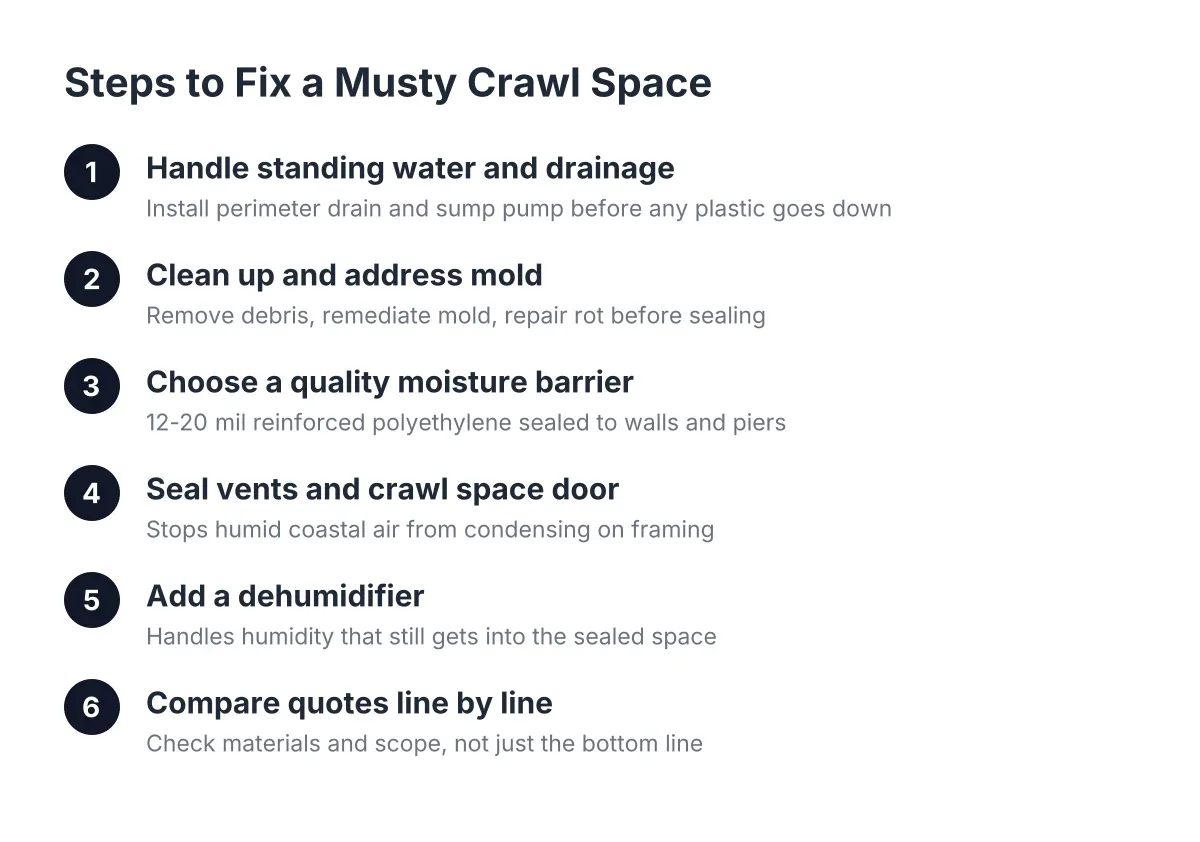
A vapor barrier is a heavy plastic sheet installed over the crawl space floor, and often up the walls, to block moisture rising from the ground. In the Lowcountry, damp soil and a high water table push moisture up into the crawl space year-round, and the vapor barrier is the first line of defense. A basic vapor barrier covers only the dirt floor; full encapsulation runs it up the foundation walls and seals it there. If a quote says "vapor barrier installation" but not "encapsulation," ask which one you are getting.
Mil Thickness
Mil thickness is the measurement of how thick a vapor barrier is, where one mil equals one thousandth of an inch. It is not a millimeter, which trips up a lot of homeowners. Thicker liners resist punctures better, which matters when installers, plumbers, or inspectors crawl over them for years. Two quotes with different mil ratings are not quoting the same job, so always compare that number. Our guide to what crawl space encapsulation materials cost explains how liner thickness drives price.
Encapsulation
Encapsulation means fully sealing the crawl space from the earth and outside air using a liner on the floor and walls, sealed seams, closed vents, and usually a dehumidifier. It turns a damp, vented crawl space into a dry, controlled one. This matters in Charleston because the old vented design pulls in humid coastal air most of the year, which is the opposite of what those vents were meant to do. Encapsulation is the whole system; a vapor barrier alone is one part of it.
Seam Tape
Seam tape is a wide, waterproof tape made to bond overlapping sheets of vapor barrier into one continuous surface. Gaps at the seams let ground moisture leak into the sealed space, so the tape matters as much as the liner. Good installers overlap the sheets several inches and tape every seam. If your quote does not mention sealed seams, ask how the sheets will be joined.
Termination Bar
A termination bar is a strip, usually plastic or metal, that mechanically fastens the top edge of the vapor barrier to the foundation wall. Adhesive alone can peel loose in Charleston's humidity, so a fastened bar keeps the liner attached for the long haul. Seeing this on a quote is a sign the installer plans to run the liner up the walls, which is real encapsulation rather than a floor-only cover.
Foundation Vents and Vent Covers
Foundation vents are the openings in a crawl space wall that were designed to air it out, and vent covers are the sealed panels that close them during encapsulation. In a humid coastal climate, open vents let in moist air that condenses on cool ducts and framing. Sealing them is standard practice in an encapsulated crawl space. If a bid seals the floor but leaves the vents open, the humidity problem will keep feeding itself.
Water and Humidity Control: Crawl Space Encapsulation Materials Glossary
Sealing out ground moisture only works if you also handle liquid water and damp air. These terms cover drainage and dehumidification.
Drainage Matting
Drainage matting is a dimpled plastic layer placed under the vapor barrier that creates a channel for water to flow toward a drain or sump pump. On tidal and flood-prone lots around Charleston, water can enter the crawl space during heavy rain or storm surge. Matting keeps that water moving under the liner instead of pooling on top of it. It usually appears on quotes for homes with a history of standing water.
Sump Pump
A sump pump is an electric pump set in a basin at the low point of the crawl space that pushes collected water out and away from the foundation. In a crawl space with drainage problems, the pump is the exit door for water the drains collect. Ask where the discharge line runs; water dumped next to the foundation just comes back. Many pumps offer battery backups, worth asking about in a hurricane-prone area where storms and power outages arrive together.
French Drain
A French drain is a gravel-filled trench with a perforated pipe that collects groundwater and carries it to a sump pump or a discharge point. Inside a crawl space, it runs along the footing where water tends to collect. If your lot sits low or floods during king tides and summer downpours, a French drain plus sump pump handles the liquid water so the encapsulation can handle the vapor. It adds cost, but skipping needed drainage undermines everything above it.
Crawl Space Dehumidifier
A crawl space dehumidifier is a machine built for low, unconditioned spaces that pulls moisture out of the air and drains it away automatically. Even a well-sealed crawl space in Charleston needs one, because some humidity always finds its way in. The dehumidifier holds the space at a steady moisture level so mold cannot get started and the musty smell stays gone. Look for a unit sized to your square footage and a drain line, not a bucket someone has to empty.
Relative Humidity
Relative humidity is the percentage of moisture the air is holding compared to the maximum it could hold at that temperature. It is the number that tells you whether the encapsulation is working. Sustained high readings feed mold growth and wood rot; a sealed and dehumidified crawl space holds a lower, steady reading. Ask your provider what target they set and how you can check it, since many dehumidifiers include a readout or a small remote sensor.
Insulation and Structure: Crawl Space Encapsulation Materials Glossary
Once the space is sealed and dry, insulation and structural items round out the job. These terms show up on fuller quotes and inspection reports.
Rigid Foam Board Insulation
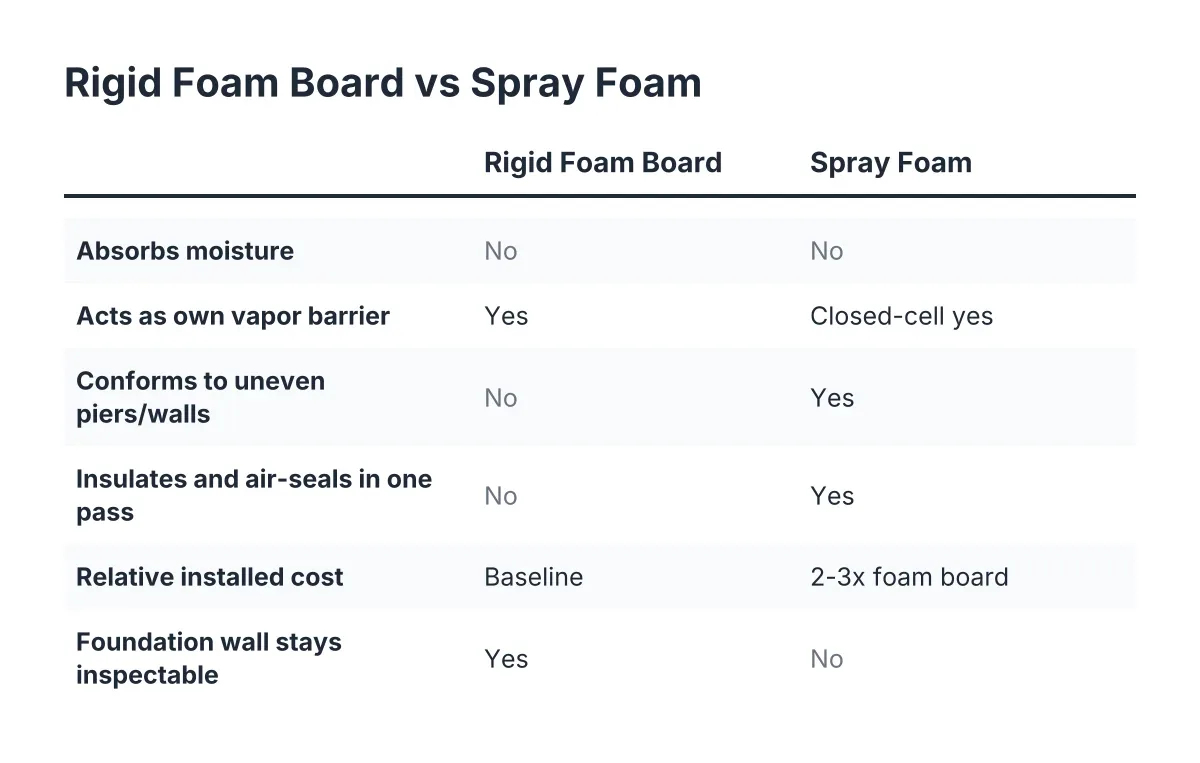
Rigid foam board insulation is a stiff foam panel attached to crawl space walls to keep the sealed space closer to the temperature of your home. In an encapsulated crawl space, insulating the walls usually replaces the old fiberglass batts stuffed between floor joists, which sag and hold moisture in humid climates. Wall insulation also helps the dehumidifier work less. If your quote includes removing old fiberglass, that is normal cleanup, not an upsell.
Closed-Cell Spray Foam
Closed-cell spray foam is a dense foam applied as a liquid that expands, hardens, and blocks both air and moisture. In crawl spaces it is often used on the rim joist and other leaky edges where board insulation cannot seal tightly. It costs more than foam board but insulates and air-seals in one step. Providers often combine the two, board on the walls and spray foam at the edges.
Rim Joist
The rim joist is the band of wood that runs around the outer edge of your floor framing, sitting on top of the foundation wall. It is a common leak point for humid outside air and a frequent spot for condensation and rot in older raised Charleston homes. Sealing and insulating it closes one of the last gaps in the building envelope. If an inspection flags rim joist damage, expect repair work before insulation goes on.
Crawl Space Door and Access Well
A crawl space door is the sealed, insulated panel covering the entry to the crawl space, and an access well is the framed pit or opening that houses it. The old plywood hatch on many Charleston homes leaks air and water and rots out. A sealed door keeps the encapsulation continuous at its weakest point. It is a small line item that makes a real difference in how dry the space stays.
Mold Remediation
Mold remediation means removing existing mold growth and treating the affected surfaces before the crawl space is sealed. Encapsulating over active mold traps the problem instead of fixing it, so remediation comes first when an inspection finds growth. A persistent musty smell upstairs is often the first sign homeowners notice. If a provider quotes encapsulation without inspecting for mold, ask why.
Support Jacks
Support jacks are adjustable steel posts installed under sagging beams or floor joists to lift and support them. Years of crawl space moisture can weaken wood framing, which shows up as sagging floors, bouncy spots, or doors that will not close. Jacks appear on quotes when an inspection finds structural damage, and they are a foundation repair item, not an encapsulation item. Fixing the moisture and supporting the structure often go together in older pier-and-beam homes.
Using These Terms
That is what this crawl space encapsulation materials glossary gives you: the vocabulary to read a quote line by line instead of trusting a lump sum. You can now ask about mil thickness, sealed seams, drainage, and dehumidifier sizing, and you will understand the answers. When two Charleston bids look different, these terms are how you find out why.
If you need crawl space encapsulation, Low Country Crawl Space Repair can help.
Related guide: crawl space encapsulation materials — Complete Guide
Prefer to talk it through? Call +18542013678 — a quick call is usually the fastest way to get a straight answer for your situation.