Crawl Space Vapor Barrier Terms Explained: A Plain-English Glossary
If you're reading quotes for crawl space work in Charleston and half the words look like they came from a different language, this crawl space vapor barrier glossary is for you. Each entry gives you a plain definition first, then tells you why the term matters when you compare bids or walk a contractor through your crawl space. Use it to read a quote line by line, ask sharper questions, and spot the difference between a real fix and a quick cover-up.
- Vapor barrier: the plastic sheet that blocks ground moisture
- Mil thickness: how thick the plastic is
- Encapsulation: sealing the whole crawl space
- Moisture barrier vs. vapor barrier: mostly the same thing
- Relative humidity: how damp the air is
- Ground moisture / vapor drive: water rising from the soil
- Condensation: air moisture turning into water drops
- Seam tape and overlap: how sheets connect
- Mechanical fasteners: pins that hold plastic to walls
- Vent sealing: closing off foundation vents
- Dehumidifier: a machine that dries the air
- Sump pump: pumps out standing water
- French drain: a gravel trench that moves water away
- Vapor barrier vs. full encapsulation (scope): two different job sizes
- Crawl space inspection: the look-before-you-quote step
- Mold remediation: cleaning up existing mold first
- Structural support / sagging floors: fixing moisture-weakened framing
Crawl Space Vapor Barrier Glossary: Materials and Specs
These are the terms you'll see on the materials line of a quote, and they decide how long the work lasts. This part covers the plastic itself and the terminology you need to understand the specs.
Vapor Barrier
A vapor barrier is a heavy plastic sheet laid over the dirt or concrete floor of a crawl space to stop ground moisture from rising into your home. In Charleston, where the water table sits high and coastal humidity runs year-round, the soil under your house releases moisture constantly. The barrier blocks that moisture before it can dampen your floor joists, insulation, and air. If a quote mentions a crawl space vapor barrier as the main line item, the job centers on covering the ground, not sealing the whole space. Our installation page explains what a proper install includes.
Mil Thickness
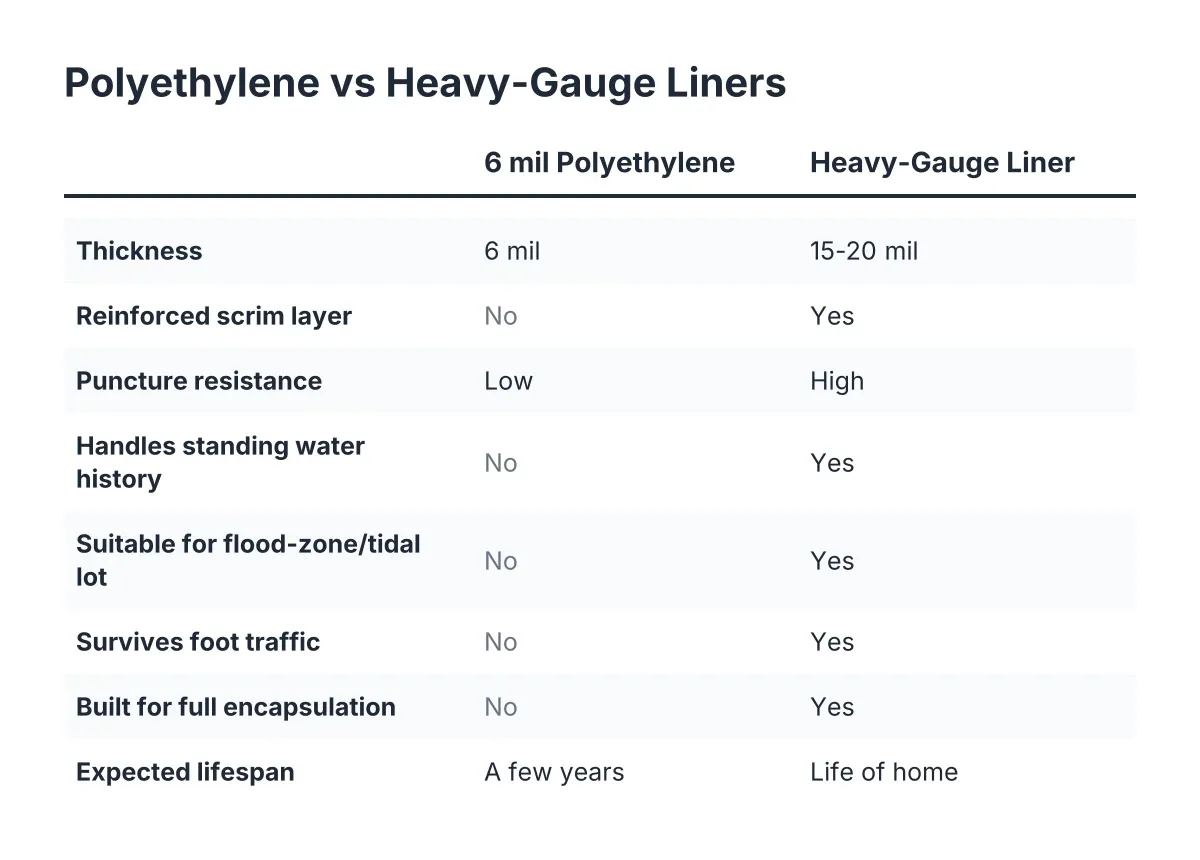
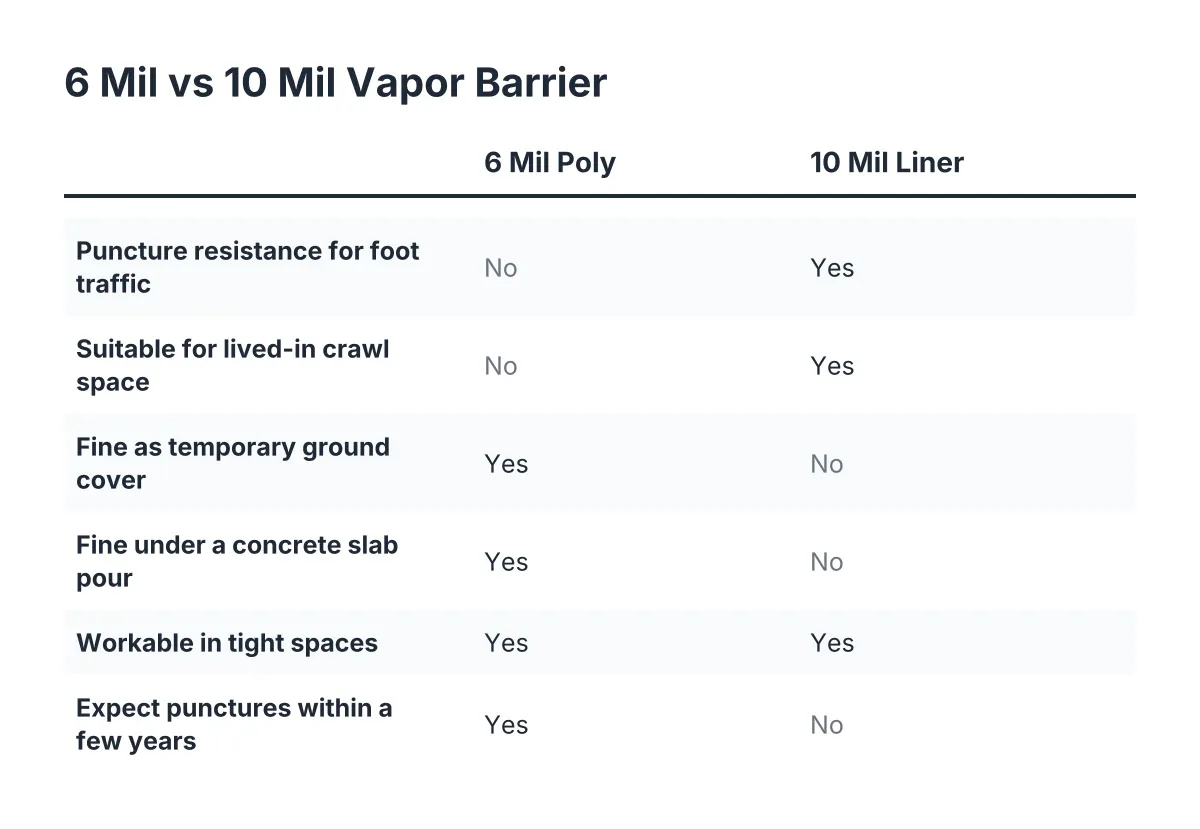
Mil thickness means how thick the plastic sheeting is, measured in thousandths of an inch. A 6 mil sheet is thin and tears easily when someone crawls on it; thicker sheets in the 10 to 20 mil range hold up to foot traffic and sharp debris. Thicker plastic costs more, so this spec is one honest reason two quotes for the same house can differ. Always ask what mil the contractor plans to use, and whether it's rated for crawl spaces.
Encapsulation
Encapsulation means sealing the entire crawl space, floor and walls, with vapor barrier material, closing the vents, and usually adding a dehumidifier. It turns a damp, vented space into a dry, conditioned one. A vapor barrier alone covers the ground; encapsulation treats the whole environment. If your crawl space smells musty in August or drips with condensation, a contractor will likely talk encapsulation, and the price reflects the bigger scope.
Moisture Barrier vs. Vapor Barrier
A moisture barrier is, in everyday contractor talk, the same thing as a vapor barrier: plastic sheeting that blocks water vapor from the ground. Some people use "moisture barrier" loosely for any waterproofing layer, so if a quote uses both terms, ask the contractor to point at what each line covers. The important details are the material's thickness, how the seams are handled, and how far it extends up the walls, not which name it goes by.
Moisture, Air, and Why Charleston Is Different
Relative Humidity
Relative humidity is the amount of moisture in the air compared to the most it could hold at that temperature. Above about 60 percent, wood stays damp enough for mold to grow and floors to swell. Charleston's coastal air runs humid for most of the year, so a vented crawl space here pulls in moist outside air almost constantly. Contractors measure relative humidity during an inspection to show you where your crawl space stands.
Ground Moisture / Vapor Drive
Vapor drive is the natural movement of water vapor from wet soil up into drier air, which in a crawl space means moisture rising from the ground into your home. Even soil that looks dry on top releases moisture around the clock. On Lowcountry lots with high water tables or flood-zone soil, vapor drive is stronger, which is why bare dirt crawl spaces here stay damp. Blocking vapor drive is the entire job of the plastic on the ground.
Condensation
Condensation is what happens when humid air touches a cooler surface and the moisture in it turns into water droplets. In summer, warm outside air enters through foundation vents, hits cool ductwork and floor framing, and leaves the wood wet. That wetness feeds mold and rot. If you see water beading on your ducts or joists, condensation is the cause, and a vapor barrier alone won't stop it; that points toward vent sealing and a dehumidifier.
Seam Tape and Overlap
Seam tape and overlap describe how sheets of vapor barrier connect: sheets are laid over each other by several inches and taped so moisture can't sneak between them. Loose, untaped seams are one of the most common shortcuts in cheap installs, and they let ground moisture right back in. Ask any bidder how they handle seams. A good answer includes specific overlap and taping, not "we lay the plastic down."
Mechanical Fasteners
Mechanical fasteners are the pins or anchors that hold vapor barrier material against foundation walls and piers so it doesn't sag or peel over time. Tape alone loses grip in a humid crawl space. In the raised pier-and-beam homes common around Charleston, the barrier gets cut and sealed around every pier, and fasteners keep those cuts tight. Their presence on a quote signals a wall-height install, not just floor coverage.
Vent Sealing
Vent sealing means closing off the foundation vents so humid outside air can't flow into the crawl space. Older Charleston homes were built with vented crawl spaces on the theory that airflow dries them out, but in our climate the vents mostly pull in moisture. Sealing vents is standard in encapsulation and usually paired with a dehumidifier, since the space needs a new way to stay dry once outside air is shut out.
Equipment and Water Management
Dehumidifier
A crawl space dehumidifier is a machine that pulls moisture out of the air and drains the water away, keeping the sealed space dry year-round. It's the workhorse of an encapsulated crawl space, especially through Charleston's humid summers and hurricane-season moisture swings. A quote that includes a dehumidifier is aiming for controlled humidity, not just a covered floor. Ask where the unit will drain and how you'll know it's running.
Sump Pump
A sump pump is an electric pump set in a low basin that collects water and pumps it out of the crawl space before it can pool. On lots with high water tables or heavy storm runoff, plastic sheeting alone can't handle standing water. If a contractor recommends a sump pump, they're telling you liquid water reaches your crawl space, not just vapor, and that changes the scope of the job.
French Drain
A French drain is a gravel-filled trench with a perforated pipe that collects groundwater and channels it away from the crawl space. It works alongside a sump pump to manage water that seeps in during storms or high tides. Seeing a French drain on a quote means the contractor found active water intrusion, which no vapor barrier can fix on its own. Drainage handles liquid water; the barrier handles vapor. You need both solved.
Scope, Paperwork, and What Comes First
Vapor Barrier vs. Full Encapsulation (Scope)
Scope means exactly what work a quote covers, and the biggest scope question in this trade is vapor barrier only versus full encapsulation. A floor-only barrier is the smaller job; encapsulation adds sealed walls, closed vents, and usually dehumidification. Neither is wrong, but they solve different problems, and comparing a barrier-only bid against an encapsulation bid is comparing two different jobs. Our cost guide walks through what drives the price difference.
Crawl Space Inspection and the Glossary
A crawl space inspection is the walkthrough where a contractor checks moisture levels, mold, standing water, insulation, and framing before quoting the work. A quote written without anyone crawling under the house is a guess. During an inspection, ask to see photos of what they find; a specialist should show you damp insulation, condensation, or mold rather than just describe it.
Mold Remediation
Mold remediation means cleaning and removing existing mold growth before the space gets sealed up. Sealing a crawl space over active mold traps the problem instead of fixing it. If your crawl space already has visible growth or a strong musty smell, remediation should appear on the quote before the barrier goes down. Its absence on a moldy job is a red flag worth asking about.
Structural Support / Sagging Floors
Structural support means reinforcing the beams and joists under your house, often with support jacks, after moisture has weakened them. Years of damp air can rot or soften framing, which shows up upstairs as sagging floors, bouncy spots, or doors that stick. If a contractor mentions structural repair alongside a vapor barrier, they found damage the moisture already caused. Fixing the framing and stopping the moisture are separate line items, and both matter.
Using the Crawl Space Vapor Barrier Glossary to Read Quotes
What this reference gives you is the ability to read a quote line by line instead of skimming to the total. You can now ask what mil the plastic is, how seams get taped, whether the vents get sealed, and why a sump pump made the list. When a Charleston contractor hears those questions, the conversation gets more honest fast.
If you need crawl space encapsulation, Low Country Crawl Space Repair can help.
Prefer to talk it through? Call +18542013678 — a quick call is usually the fastest way to get a straight answer for your situation.