How Much Does Crawl Space Vapor Barrier Cost?
How much does crawl space vapor barrier cost? The honest answer depends on three things: the size and layout of your crawl space, the thickness and quality of the liner you choose, and how much prep work your crawl space needs before anyone can lay plastic. A dry, open crawl space under a small Charleston bungalow is one job. A tight, wet, debris-filled space under a raised pier-and-beam home near the marsh is another. This guide walks you through what actually moves the price, so by the end you will know how to get a real number for your home instead of a guess from the internet.
What Drives the Cost of Crawl Space Vapor Barrier
Any contractor who quotes you a firm price without seeing your crawl space is guessing. Here are the factors that decide where your job lands.
Square footage and layout
The bigger the crawl space, the more liner, more seam tape, and more labor hours the job takes. But raw square footage is only half the story. Charleston's older pier-and-beam homes often have dozens of brick piers, and every pier has to be wrapped and sealed individually. A 1,500 square foot crawl space with six piers costs less to line than the same footage with thirty. Count your piers with a flashlight from the access door. Lots of obstructions means more cutting, taping, and time.
Liner thickness and quality
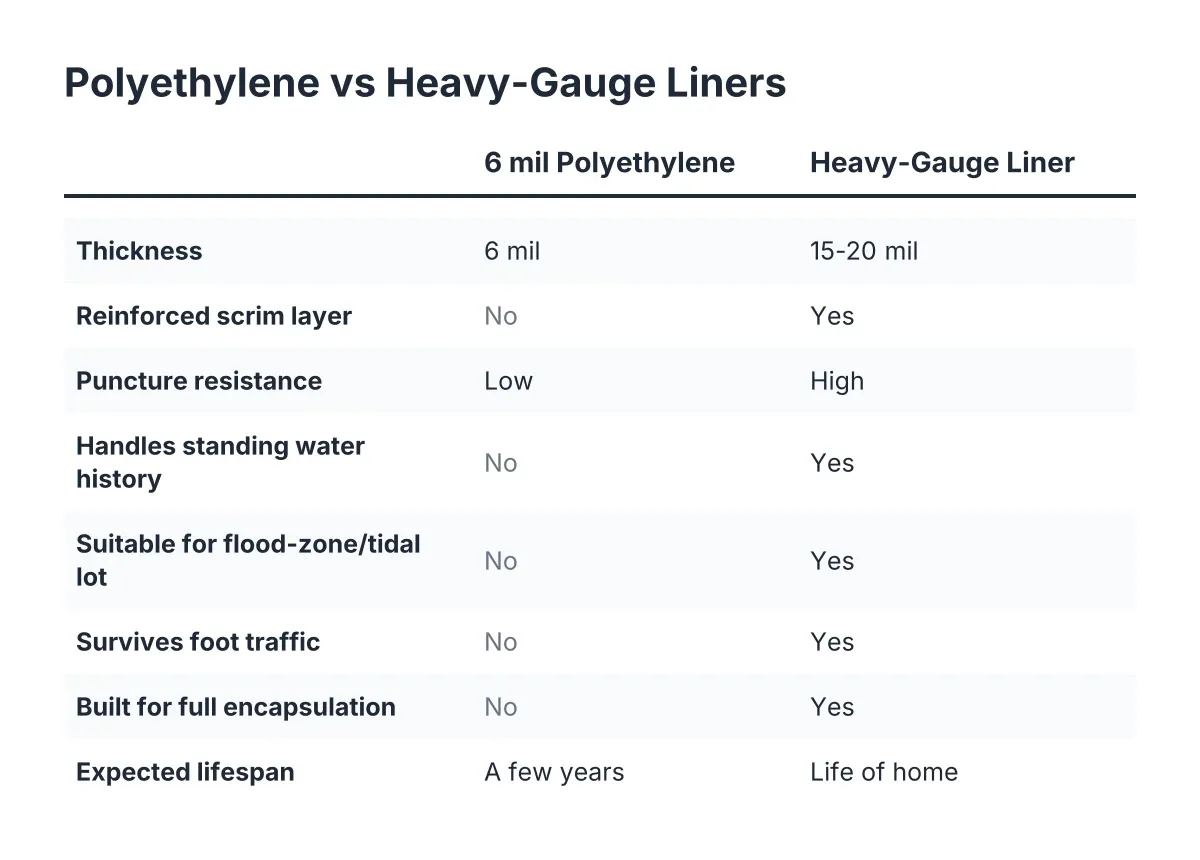
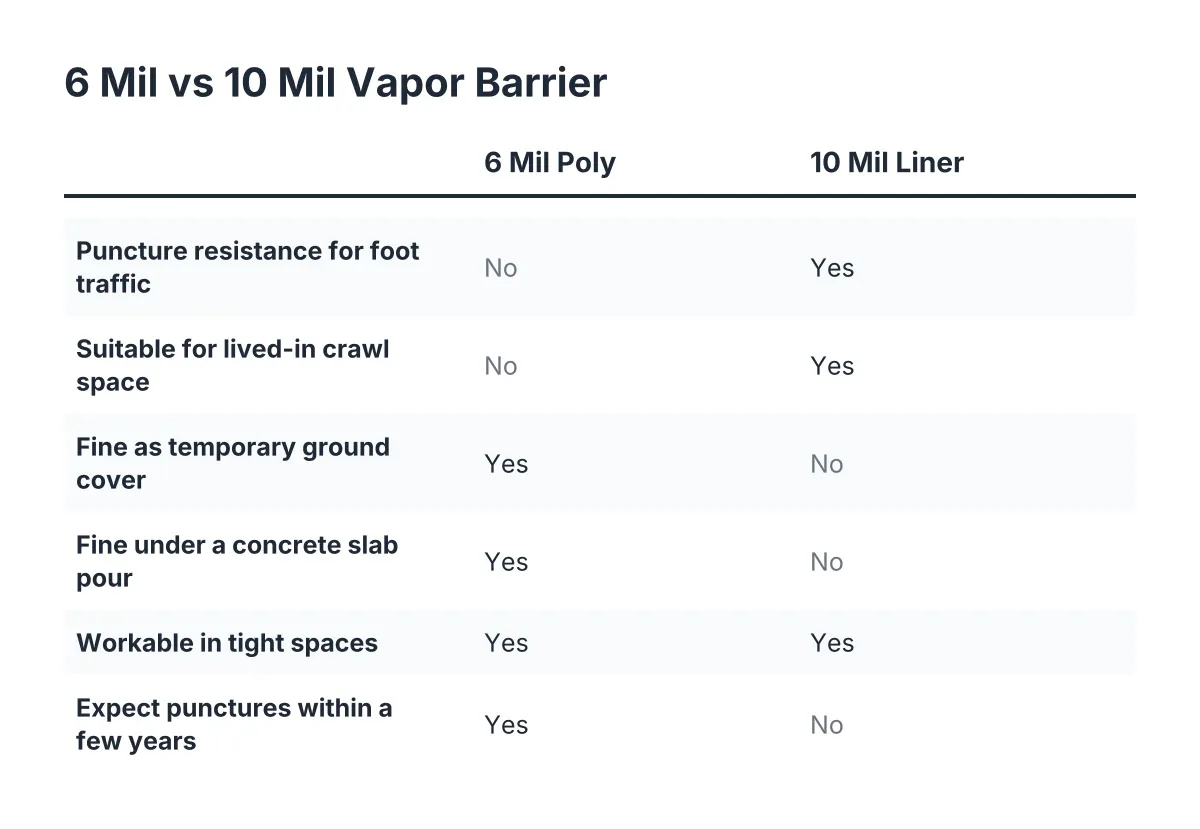
Vapor barrier liner comes in different thicknesses, measured in mils. Thin builder-grade plastic costs less up front but tears when someone crawls across it to service your HVAC or plumbing. Thicker, reinforced liner costs more per square foot but holds up under foot traffic and stays sealed for years. In the Lowcountry, where humidity works on your crawl space year-round, the thicker material usually earns its keep. Ask any contractor quoting you what mil liner they use and whether the seams get taped and sealed or just overlapped.
Prep work: cleanup, debris, and old plastic
A vapor barrier goes on the ground, so the ground has to be ready. Old torn plastic, construction debris, fallen insulation, and sharp rock all have to come out first. If a previous owner left a mess down there, cleanup and debris removal gets added to the job. You can check this one yourself: shine a light through the access door. A clean dirt floor keeps the price down. A junkyard raises it.
Standing water and drainage problems
This is the big one in Charleston. High water tables, tidal lots, and hurricane-season rain mean plenty of local crawl spaces hold standing water part of the year. A vapor barrier laid over a wet crawl space traps the problem instead of fixing it, so an honest contractor will address the water first. That can mean grading, a French drain, or a sump pump. Drainage work raises the total, but skipping it wastes the money you spend on the liner. If you see puddles, water stains on the piers, or a white powdery residue on the brick, budget for drainage.
Mold and moisture damage
Where moisture has been sitting, mold often follows. If the inspection turns up mold on the joists or subfloor, mold remediation should happen before the liner goes down, and that adds to the cost. Same goes for moisture-damaged wood that needs structural support or beam repair. The tell-tale sign from inside the house is a musty smell, especially after rain, or floors that feel soft or saggy underfoot.
Vapor barrier alone vs. full encapsulation
A ground vapor barrier covers the dirt floor. Full crawl space encapsulation lines the walls too, seals the vents, and usually adds a dehumidifier to control humidity year-round. Encapsulation costs more because it uses more material and more labor, and the dehumidifier is its own line item. In Charleston's climate, many homeowners who start out pricing a basic liner end up choosing encapsulation, because coastal humidity gets in through the vents whether the floor is covered or not. Knowing which scope you want before you call keeps quotes comparable.
Cost Factor Table
| Factor | Pushes the price down when… | Pushes it up when… |
|---|---|---|
| Crawl space size and layout | The space is small and open with few piers | The footprint is large or crowded with piers, ducts, and pipes |
| Liner thickness | You choose a thinner, basic-grade liner | You choose thick, reinforced liner with fully sealed seams |
| Prep and cleanup | The floor is clear and the old plastic is minimal | Debris, fallen insulation, or torn old liner must come out first |
| Water and drainage | The crawl space stays dry through the wet season | Standing water calls for a French drain or sump pump first |
| Mold and wood damage | Joists and subfloor are clean and sound | Mold remediation or beam repair has to happen before the liner |
| Scope of work | You only need a ground vapor barrier | You choose full encapsulation with sealed vents and a dehumidifier |
Getting an Accurate Crawl Space Vapor Barrier Estimate
The only accurate price comes from someone who has looked under your house. Here is how to make that visit count.
Have this ready before anyone quotes you:
- Your home's square footage, or better, the crawl space footprint
- What you have noticed: musty smell, high humidity, standing water, sagging floors, or visible mold
- Whether there is old plastic or debris down there now
- How the space drains after a hard rain, if you know
A good quote should spell out:
- The liner thickness in mils, and whether seams and piers get sealed
- Any prep work included: cleanup, debris removal, or old liner removal
- Whether drainage, mold remediation, or a dehumidifier is part of the price or a separate line
- What is not included, so nothing surprises you later
Estimates differ between providers for real reasons, not just markup. One contractor may quote a thin liner laid loose over the dirt. Another may quote a thick reinforced crawl space vapor barrier with taped seams, sealed piers, and the standing water handled first. Those are different jobs at different prices, and the cheaper one is not always the better buy. When quotes vary widely, ask each provider to walk you through their scope line by line. You can read more about what a proper installation includes in our guide to crawl space vapor barrier installation in Charleston.
Ways to Keep the Cost Down
You cannot control Charleston's humidity, but you can control a few things that shape the price.
Fix the problem while it is small. A damp crawl space today becomes a moldy one next summer. Vapor barrier installation alone costs less than vapor barrier plus mold remediation plus beam repair. The longer moisture sits, the more the job grows.
Clear what you can yourself. If the access is safe and the debris is light, hauling out old boxes or trash before the inspection can trim the prep work. Leave old plastic, insulation, and anything moldy to the pros.
Match the scope to the problem. If an inspection shows your crawl space is dry and the only issue is ground moisture, a quality vapor barrier may be all you need. Do not pay for full encapsulation if the evidence does not call for it. But the reverse holds too: do not buy a bare liner when standing water needs drainage first, or you will pay twice.
Get two or three itemized quotes. Comparing line items, not just totals, shows you where each estimate differs and gives you room to ask questions. A contractor who explains their price plainly is usually the one who does the work plainly too.
Schedule ahead of the wet season. Crawl space work is easier and faster in a dry space. Getting the job done before hurricane-season rains saturate the ground can keep the work simpler.
Cost Questions People Ask
Is a thicker vapor barrier worth the extra price?
Usually, yes, in a coastal climate. Thin liner tears under foot traffic and at pier edges, and a torn barrier stops doing its job. Thicker reinforced liner costs more up front but tends to stay sealed for years, which matters when Charleston humidity never takes a season off.
Why did one quote come in far higher than the others?
Most of the time, the scopes are different. One estimate may cover a basic ground liner while another includes drainage, mold remediation, or sealed vents and a dehumidifier. Set the quotes side by side and compare what each one actually includes before deciding anyone is overcharging.
Does a vapor barrier lower my energy or repair bills?
It can help. Controlling ground moisture reduces the humidity load your HVAC fights all summer, and it protects joists and subfloor from the slow damage that leads to expensive structural repair. Think of the cost less as an upgrade and more as protection for the wood holding your house up.
Can I just install the plastic myself to save money?
You can buy liner at a hardware store, and for a dry, open crawl space a careful homeowner can lay basic plastic. The savings disappear if the seams are not sealed, the piers are not wrapped, or there is a water or mold problem underneath that plastic then hides. At minimum, get a professional inspection first so you know what you are covering up.
The Bottom Line
The cost of a crawl space vapor barrier comes down to your square footage, the liner quality you choose, and how much water, mold, or debris has to be dealt with first. No page on the internet can price that sight unseen, and any page that tries is guessing. Get two or three itemized quotes from crawl space specialists who inspect before they price, and you will have a real number instead of an average that fits nobody's house.
If you need crawl space encapsulation, Low Country Crawl Space Repair can help.
Prefer to talk it through? Call +18542013678 — a quick call is usually the fastest way to get a straight answer for your situation.