Crawl Space Flooding Terms Explained: A Plain-English Glossary
If you own a home in Charleston with a damp or flooded crawl space, you will hear a lot of unfamiliar terms from contractors and inspectors. This crawl space flooding glossary explains those terms in plain English so you can read a quote line by line, ask sharper questions, and spot problems before they grow. Each entry starts with a simple definition, then tells you why the term matters for your home and your budget. No jargon, no sales pitch, just the words you need to understand.
- Crawl Space Encapsulation: sealing the whole crawl space against moisture
- Vapor Barrier: heavy plastic sheeting over the ground
- Sump Pump: a pump that moves water out
- French Drain: a gravel trench that collects and redirects water
- Crawl Space Dehumidifier: a machine that dries the air
- Standing Water: water that pools and stays
- Water Table: the level of water in the ground
- Hydrostatic Pressure: water pushing against your foundation
- Grading: the slope of the ground around your house
- Vented Crawl Space: a crawl space with open-air vents
- Condensation: moisture forming on cool surfaces
- Relative Humidity: how much moisture the air holds
- Wood Rot: fungal decay in damp framing
- Mold Remediation: removing mold and fixing its cause
- Sagging Floors: floors that dip from weakened supports
- Crawl Space Inspection: a professional look at what is going on down there
- Scope of Work: the written list of what a contractor will do
- Moisture Reading: a measured number, not a guess
Water and Where It Comes From
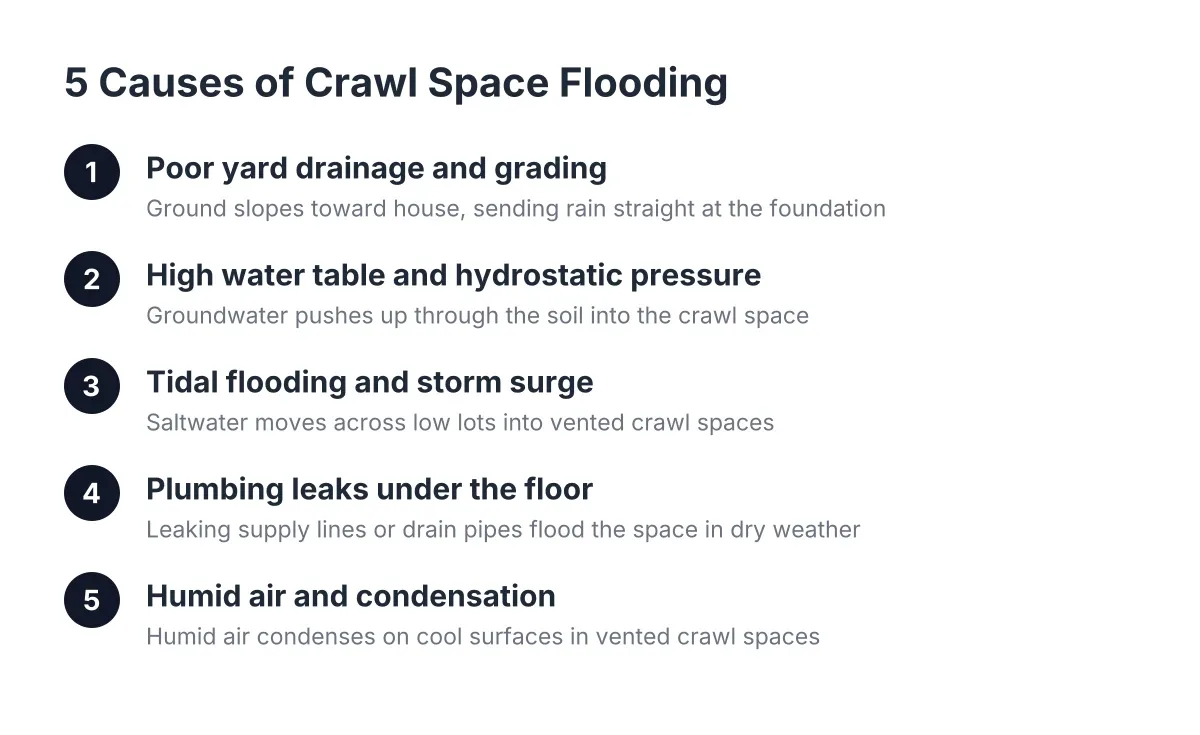
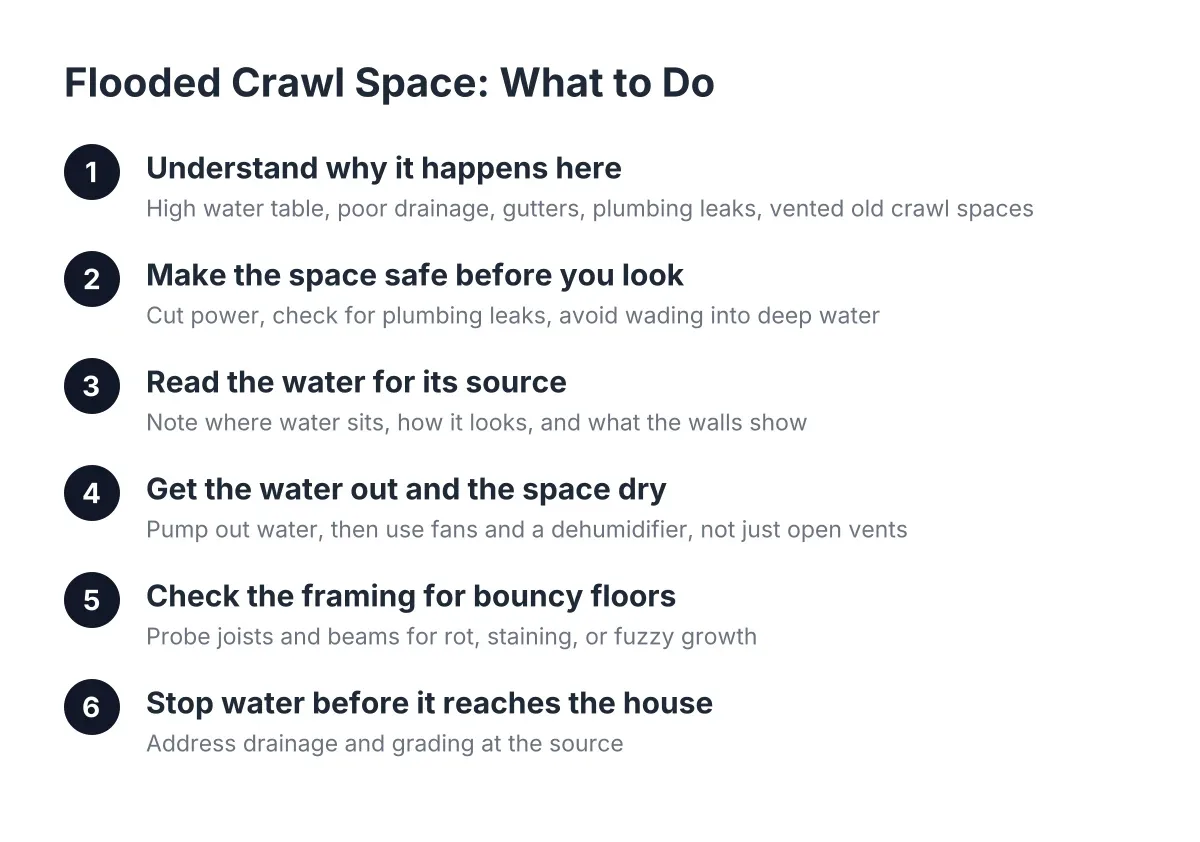
Most of the terms in this crawl space flooding glossary trace back to one question: where is the water coming from? In the Lowcountry, the answer is often the ground itself. High water tables, tidal lots, and hurricane-season downpours all push water toward the space under your home.
Standing Water
Standing water is water that pools in a crawl space and does not drain away on its own. It is the clearest sign of crawl space flooding, and it never fixes itself. Standing water soaks insulation, feeds mold, and keeps humidity high under your floors long after the rain stops. If a contractor mentions standing water, expect the quote to include drainage work, not just a vapor barrier. Costs vary with the source and volume of water, and this guide to crawl space flooding costs walks through the main factors.
Water Table
The water table is the level below the ground where the soil is fully saturated with water. In much of the Charleston area, the water table sits close to the surface, and it rises after heavy rain or high tides. When the water table rises above your crawl space floor, water seeps in from below even if your gutters and grading are perfect. A high water table usually means a drainage system and sump pump belong in the plan, because you cannot lower the ground water itself.
Hydrostatic Pressure
Hydrostatic pressure is the force that water in saturated soil exerts against a foundation or crawl space floor. Think of it as the ground squeezing water toward the driest available space, which is often the space under your house. This pressure pushes water through small cracks and gaps that stay dry in normal weather. It explains why a crawl space can flood without a single visible leak. Waterproofing and drainage work relieve this pressure by giving the water an easier path away from the house.
Grading
Grading is the slope of the ground around your home's foundation. Good grading slopes away from the house so rainwater runs off instead of pooling against it. On flat Lowcountry lots, poor grading is a common reason water ends up under the house after every storm. Fixing grading is often one of the cheaper items on a quote, so it is worth asking whether it would reduce the drainage work needed inside.
Equipment and Fixes for Crawl Space Flooding
Crawl Space Encapsulation
Crawl space encapsulation is the process of sealing a crawl space from ground moisture and outside air using a heavy vapor barrier, sealed vents, and usually a dehumidifier. It turns a damp, vented space into a dry, controlled one. Encapsulation is the most complete fix for chronic moisture, and it costs more than spot repairs because it addresses the whole space. If flooding is part of your problem, drainage must be handled first; encapsulating over standing water traps the problem instead of solving it.
Vapor Barrier
A vapor barrier is a thick plastic liner installed over the dirt floor of a crawl space to block ground moisture from rising into the air. In coastal soil, the ground releases moisture year-round, so the barrier works every day, not just during storms. Thickness matters: heavier material resists tears from crawling, stored items, and settling debris. A vapor barrier alone stops ground vapor, but it will not stop liquid water from flooding in, which is why quotes often pair it with drainage.
Sump Pump
A sump pump is an electric pump set in a pit at the low point of a crawl space that automatically pushes collected water out and away from the house. It is the workhorse of any flooding fix in a high-water-table area. When a contractor specifies a sump pump, ask where the discharge line goes and whether a battery backup is included, since storms that flood crawl spaces also knock out power. A pump without good drainage feeding it can only handle the water that happens to reach the pit.
French Drain
A French drain is a gravel-filled trench with a perforated pipe that collects ground water and carries it to a sump pit or a discharge point away from the house. Inside a crawl space, it runs along the footing where water tends to enter. A French drain and sump pump together form a complete interior drainage system. Seeing both on a quote signals the contractor is treating the water at its entry points rather than just drying the air above it.
Crawl Space Dehumidifier
A crawl space dehumidifier is a machine built to pull moisture out of the air in a low, enclosed space and drain the collected water away automatically. Charleston humidity does not take a season off, so a dehumidifier gives an encapsulated crawl space year-round control instead of hoping the weather cooperates. It handles airborne moisture only; it cannot keep up with liquid water entering the space. Here is more on dehumidifier installation and how it fits into a moisture plan.
Moisture, Mold, and Crawl Space Flooding Structure
Vented Crawl Space
A vented crawl space is a crawl space with open vents in the foundation walls, built on the old idea that outside air would keep the space dry. In a humid climate like Charleston's, those vents often do the opposite: they pull in muggy summer air that condenses on cool surfaces under the house. Many older raised pier-and-beam homes here were built vented. Sealing the vents is a standard part of encapsulation, and a contractor who mentions it is addressing the humidity source, not just the symptom.
Condensation
Condensation is moisture that forms when humid air touches a surface cooler than the air, like ductwork, pipes, or floor joists in summer. It is why a crawl space can be soaking wet without a drop of rain. Condensation drips onto insulation and framing, feeding mold and rot over time. Controlling it means controlling humidity, usually by sealing vents and running a dehumidifier as part of a broader moisture control plan.
Relative Humidity
Relative humidity is the amount of moisture in the air compared to the maximum it could hold at that temperature, expressed as a percentage. It is the number contractors watch to judge whether a crawl space is healthy. Sustained high humidity supports mold growth and wood decay even without flooding. Ask a provider what humidity level their system is designed to maintain and how they will verify it after the work is done.
Wood Rot
Wood rot is decay in wood framing caused by fungi that need sustained moisture to grow. In a crawl space, rot attacks floor joists, beams, and subflooring from below, where you never see it. Left alone, it weakens the structure that holds up your floors. If an inspection finds rot, the fix may include structural support work like beam repair or support jacks alongside the moisture fix, which expands the scope and cost of the job.
Mold Remediation
Mold remediation is the process of removing mold growth and correcting the moisture conditions that caused it. Wiping visible mold without fixing the moisture is cleanup, not remediation; the mold returns. A musty smell upstairs often traces to mold under the house, since a share of the air in your living space rises from the crawl space below. A quote for mold remediation should name both the removal method and the moisture fix that keeps it from coming back.
Sagging Floors
Sagging floors are floors that dip, bounce, or slope because the joists or beams beneath them have weakened or shifted. In damp crawl spaces, the usual cause is moisture-weakened wood or settling supports. Sagging is a structural symptom, so fixing it means fixing both the framing and the moisture that damaged it. A specialist will typically propose support jacks or beam repair plus moisture control, not one without the other.
Paperwork and Crawl Space Flooding Process
Crawl Space Inspection
A crawl space inspection is a professional assessment of the conditions under your home, covering moisture, mold, drainage, insulation, and structural framing. It is the starting point for any honest quote, because nobody can price a fix for a space they have not seen. A good inspection produces photos and specific findings, not a generic checklist. If you are buying a home in a flood-prone Charleston neighborhood, an inspection before closing can save you from inheriting an expensive problem.
Scope of Work
A scope of work is the written list of exactly what a contractor will do, what materials they will use, and what the job includes and excludes. It is the document that prevents "I thought that was included" arguments later. Compare scopes, not just totals, when you get multiple quotes; a cheaper bid that skips drainage or uses thinner vapor barrier material is not the same job. Every term in this glossary should appear in a scope with enough detail that you understand it.
Moisture Reading
A moisture reading is a measurement of the moisture content in wood or the humidity in air, taken with a meter rather than judged by eye. Readings turn "it feels damp down there" into a number you can track before and after the work. A contractor who takes readings during the inspection and again after the job gives you proof the fix worked. Wet framing can also mean soaked or failed insulation that needs replacing, which readings help confirm.
Using These Terms
What this glossary gives you is the ability to read a quote the way a contractor writes one. You can now ask where the water enters, how it will leave, and what number proves the space is dry. Understanding crawl space flooding issues puts you and the provider on the same page before any work starts.
If you need crawl space encapsulation, Low Country Crawl Space Repair can help.
Prefer to talk it through? Call +18542013678 — a quick call is usually the fastest way to get a straight answer for your situation.