
Crawl Space Flooding — Complete Guide
If you just found standing water under your house after a storm, you are dealing with one of the most common and most urgent problems Charleston homeowners face: crawl space flooding. Water under the house is never normal, and in the Lowcountry it rarely fixes itself, because the same tides, storms, and high water tables that put it there will keep putting it there. This guide explains why crawl space flooding happens so often around Charleston, what to do in the first hours after you discover it, and how to stop the water from coming back. You will also find links to in-depth articles on causes, emergency steps, repair costs, and the moisture control systems that keep a coastal crawl space dry for good.
What You'll Find in This Guide
- Crawl Space Flooding Causes: How Water Gets Under Charleston Homes
- Why Crawl Space Flooding Happens in Charleston, and What to Do Right Now
- Crawl Space Insulation in Charleston, SC
- How Much Does Crawl Space Flooding Repair Cost?
- Crawl Space Flooding Terms Explained: A Plain-English Glossary
- Crawl Space Moisture Control in Charleston, SC
Why Crawl Space Flooding Is a Charleston Problem First
Charleston homes flood from below more often than homes almost anywhere else in the country. Much of the Lowcountry rests only a few feet above sea level, with water tables sitting inches below the soil surface. When heavy rain or tropical systems arrive, saturated ground pushes water sideways and upward into the lowest open space available—usually your crawl space.
Tides worsen the problem. According to NOAA Tides and Currents, Charleston recorded 17 high-tide flood days during the 2023-24 meteorological year. On those days, water can rise under homes even without rain. If your home sits in a flood zone or near a tidal creek, groundwater alone may flood your crawl space.
Older Charleston houses compound the issue. Built on raised pier-and-beam foundations with vented crawl spaces designed for a different era, these homes let in humid coastal air year-round and allow storm-driven rain and runoff during weather events. Decades of settling, grading changes, and clogged perimeter drainage create easy paths for surface water under the house.
While more than 60% of U.S. homes experience water or moisture problems in basements or crawl spaces, according to the American Society of Home Inspectors, Charleston's combination of tidal flooding, hurricane-season rainfall, and vented crawl space construction means local homeowners face this problem more often and severely.
Water under your house always has a specific source. Surface runoff, poor grading, failed gutters, plumbing leaks, and rising groundwater each leave different clues and demand different solutions. Our full guide to crawl space flooding causes in Charleston walks through each source and how to identify them, so you can stop guessing and start solving.
What to Do When You Find Water Under Your House
The moment you spot standing water in your crawl space, the clock starts. Standing water begins damaging wood framing, insulation, ductwork, and wiring within days. Beyond that, the moisture it leaves behind feeds mold growth for weeks after the visible water is gone. Acting quickly does not just protect your house. It also keeps a manageable drainage project from turning into structural repair.
The First 24 Hours
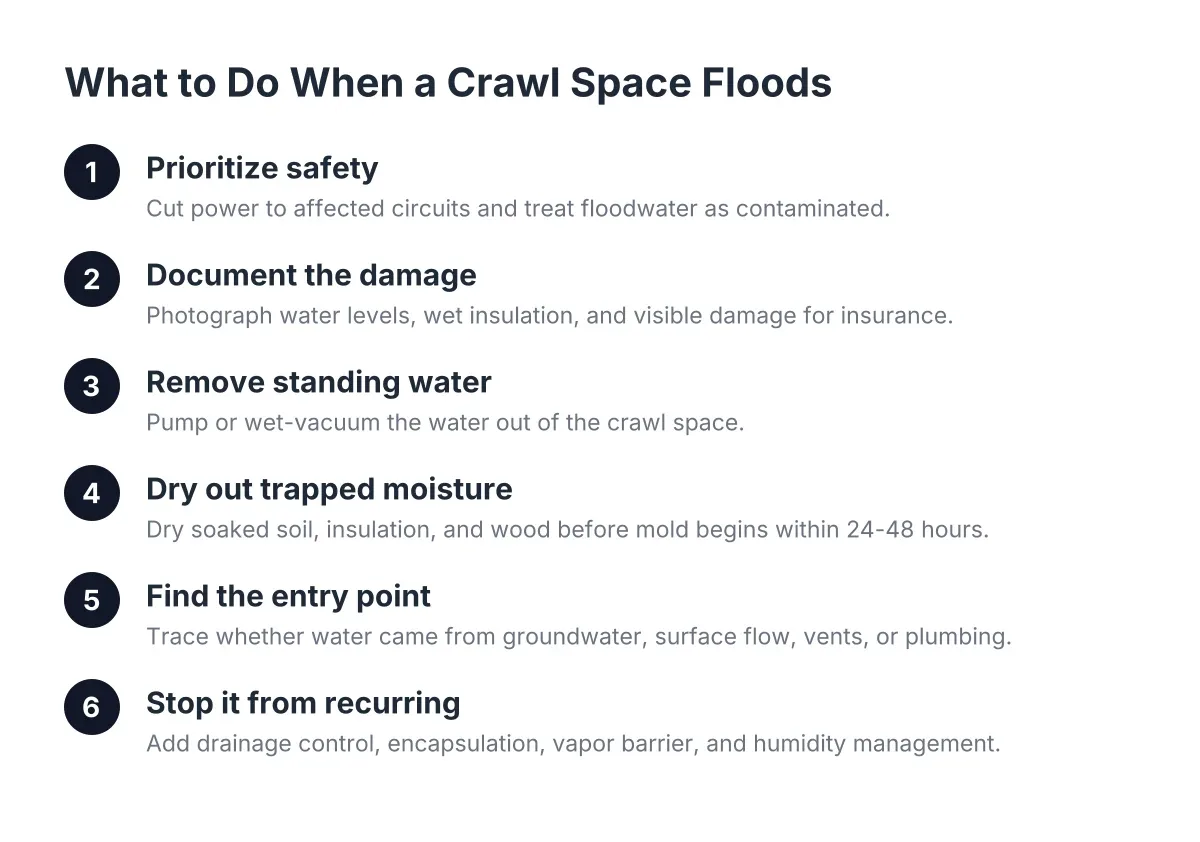
Start with safety. Never enter a flooded crawl space if there is any chance of electrical contact, and shut off power to crawl space circuits if you can do so safely. Next, document what you see with photos and video, including the water line on piers and walls. This record helps with insurance claims and gives a contractor a clear picture of how high the water rose.
After that, focus on getting the water out. Depending on volume, that may mean a portable pump, a wet vac, or professional water extraction. However, removing the water is only half the job. The wet soil and framing underneath will keep releasing moisture for weeks, so drying and dehumidification matter just as much as pumping. For a complete walkthrough of these steps in order, see why crawl space flooding happens in Charleston and what to do right now.
Watch for Water Damage Signs
Sometimes you never see the water itself. Instead, you notice the symptoms upstairs: musty odors, cupping hardwood floors, sagging or bouncy spots, condensation on windows, or a spike in allergy symptoms. Each of these can signal water or chronic moisture below. With this in mind, treat any of them as a reason to inspect the crawl space or schedule a professional inspection, especially after a named storm or a week of heavy rain.
Cost is usually the next question, and it varies widely based on how much water got in, how it entered, and what it damaged on the way. Our crawl space flooding repair cost guide breaks down the pricing factors so you can budget with real numbers instead of worst-case fears.
How to Stop Crawl Space Flooding Before the Next Storm
Pumping out water solves today's emergency. It does nothing about next month's king tide or next season's tropical system. To put it simply, a Charleston crawl space stays dry only when a system of defenses works together: drainage to move water away, barriers to block moisture, and mechanical equipment to control humidity year-round.
Drainage Comes First
Water follows gravity, so the first job is giving it somewhere better to go than under your house. That usually means a combination of exterior grading corrections, working gutters and downspout extensions, and interior solutions like French drains and sump pumps that capture groundwater and discharge it away from the foundation. On low-lying or tidal lots, a properly sized sump pump with a battery backup is often the difference between a dry crawl space and a flooded one during a power outage.
Sealing and Controlling Moisture
Once drainage handles liquid water, the next layer addresses moisture vapor. A sealed vapor barrier across the crawl space floor and walls blocks ground moisture from evaporating into the air under your home. Additionally, a crawl space dehumidifier holds humidity at safe levels through Charleston's long, damp summers. Full encapsulation combines both, along with sealed vents that keep humid outside air and storm-driven rain out. These systems are the core of our crawl space moisture control service, and they are what turn a chronically wet crawl space into a permanently dry one.
A dry, sealed crawl space also opens the door to improvements that a wet one cannot support. For example, crawl space insulation only performs well when moisture is under control, and installing it in a sealed space cuts energy bills and warms cold floors upstairs.
Prepare Before Hurricane Season
Finally, timing matters. The best month to fix a flooding crawl space is any month before June. Before hurricane season, have your drainage tested, your sump pump serviced, and your vapor barrier inspected for tears or gaps. If a contractor's terminology gets confusing along the way, our plain-English crawl space flooding glossary defines every term you will hear, from hydrostatic pressure to encapsulation, so you can compare quotes with confidence. For storm and flood preparedness beyond the crawl space, FEMA's flood preparedness resources are a solid starting point.
Ready to Get Started?
If there is water under your Charleston home right now, or you want it handled before the next storm season, Low Country Crawl Space Repair can inspect your crawl space, find the water's source, and build a drainage and moisture control plan that fits your lot and your budget. We work on crawl spaces exclusively, and we know how Lowcountry tides, soils, and storms behave. Reach out today to schedule your inspection and get a dry crawl space on the calendar.