Crawl Space Foundation Repair Terms Explained: A Plain-English Glossary
If you own a Charleston-area home with a damp, musty crawl space, the quotes and inspection reports can read like another language. This crawl space foundation repair glossary translates the terms you keep running into, so you can read an estimate line by line, ask a provider sharper questions, and spot problems before they get expensive. Every definition here stands on its own and takes less than thirty seconds to understand. Use it before, during, and after any inspection.
- Crawl Space: the short space under a raised home
- Pier-and-Beam Foundation: posts and beams holding the house up
- Sill Plate: the wood resting on the foundation
- Floor Joist: the boards under your floor
- Girder (Main Beam): the big beam joists sit on
- Support Jack: an adjustable steel post that lifts sagging floors
- Sistering: bolting new wood beside damaged wood
- Shimming: small spacers that close gaps under beams
- Encapsulation: sealing the crawl space against moisture
- Vapor Barrier: heavy plastic that blocks ground moisture
- Dehumidifier: a machine that dries crawl space air
- Sump Pump: a pump that removes standing water
- French Drain: a gravel trench that carries water away
- Relative Humidity: how damp the air is
- Wood Moisture Content: how wet the framing lumber is
- Mold Remediation: removing mold and fixing its cause
- Crawl Space Inspection: a documented look at what is wrong
- Scope of Work: the written list of what a quote covers
The Structure Under Your Floor
Most of the confusion in understanding crawl space foundation repair starts with the framing itself, so these are the parts of the structure a contractor will point to first.
Crawl Space Foundation Repair Framing Glossary
A crawl space is the shallow, unfinished area between the ground and the first floor of a raised home, usually one to four feet tall. Older Charleston houses were built raised on purpose, to lift living space above flood-prone soil and let coastal air move underneath. That design works until year-round humidity and a high water table load the space with moisture. Almost every term below describes either the structure inside this space or the effort to keep it dry.
Pier-and-Beam Foundation
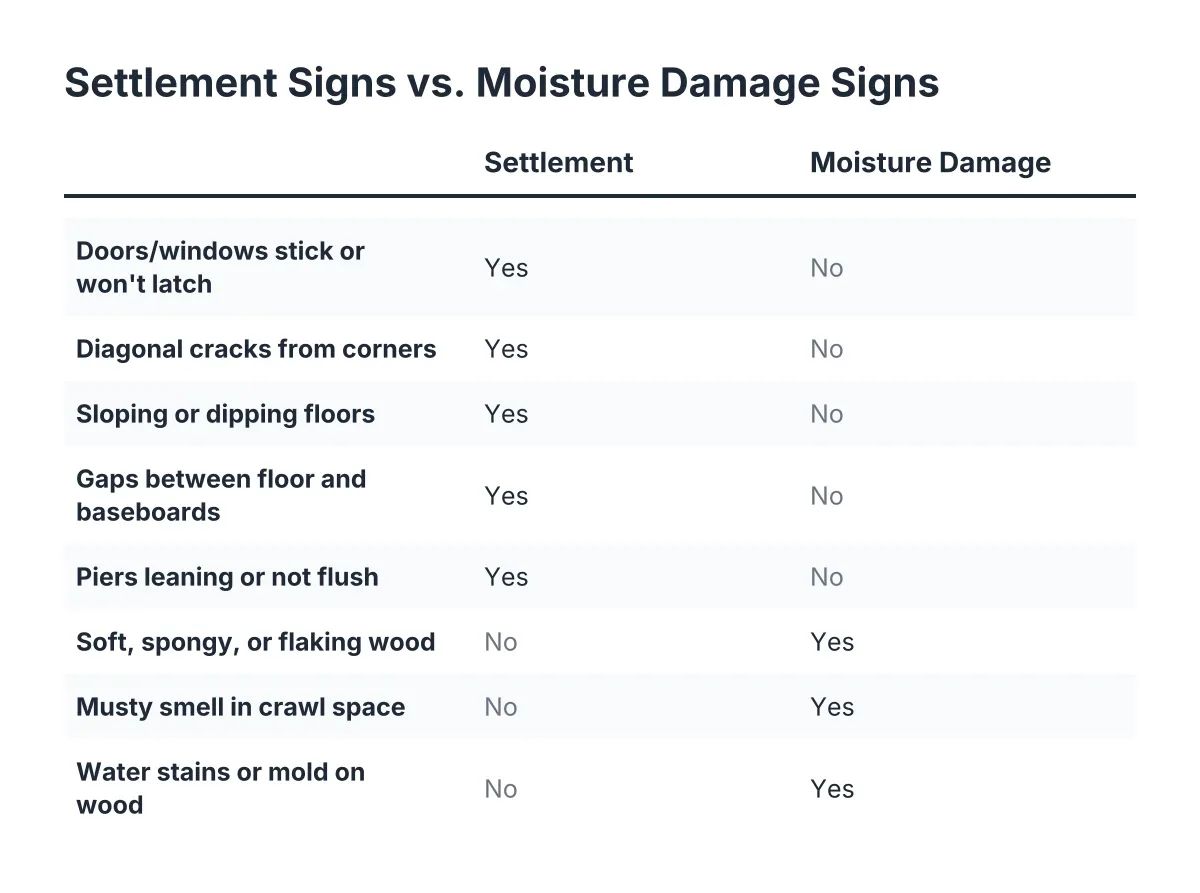
A pier-and-beam foundation is a system of masonry or concrete posts (piers) that hold up horizontal beams, which in turn carry the floor of the house. It is the classic foundation for older Lowcountry homes, and it is why you have a crawl space at all instead of a slab. When piers settle in soft coastal soil or beams rot from moisture, floors sag and doors stick. If a quote mentions pier work, the provider is addressing the structure itself, not just the moisture around it.
Sill Plate
A sill plate is the horizontal wood member that sits directly on top of the foundation wall or piers, where the wood framing meets the masonry. Because it sits closest to damp ground and masonry, it is often the first framing member to rot in a humid Charleston crawl space. Sill repair usually means jacking the structure to take weight off before replacing the wood, so it adds labor and cost compared to surface fixes.
Floor Joist
A floor joist is one of the parallel framing boards that directly support your floor from below. Joists run between beams or foundation walls, and when they absorb moisture over years of humidity, they can soften, sag, or grow mold. Bouncy or sloping floors upstairs often trace back to weakened joists downstairs. An inspector should tell you which joists are damaged and whether they need reinforcement or replacement.
Girder (Main Beam)
A girder is the large main beam that carries the floor joists and transfers their weight down to the piers. Because one girder supports many joists, damage here matters more than damage to a single joist. Beam repair or replacement is heavier structural work, so a quote that includes girder work signals a bigger job than joist fixes alone. Our Charleston crawl space foundation repair service page explains how structural repairs like this typically proceed.
Repairs and Structural Fixes
Support Jack
A support jack is an adjustable steel post installed under a sagging beam or joist to lift and permanently hold it at the correct height. Jacks sit on footings so they do not sink into soft soil, which matters on Charleston's low, wet lots. They are a common fix for sagging floors caused by settled piers or weakened framing. The number of jacks in a quote is a quick read on how much of the floor system needs support.
Sistering
Sistering means fastening a new board alongside a damaged joist or beam so the new wood carries the load the old wood no longer can. It is often cheaper than full replacement because the damaged member stays in place. Sistering works when the original wood is weakened but not destroyed; badly rotted framing needs replacement instead. Ask which approach the estimate assumes, because the difference affects both cost and how long the fix lasts.
Shimming
Shimming means inserting thin, load-rated spacers between a support and the beam above it to close small gaps and level the structure. It is a normal part of jack installation and pier repair, not a shortcut, as long as the shims are steel or hardwood rated for the load. If a floor is only slightly out of level, shimming during a larger repair may be all the leveling you need.
Moisture Control and Encapsulation
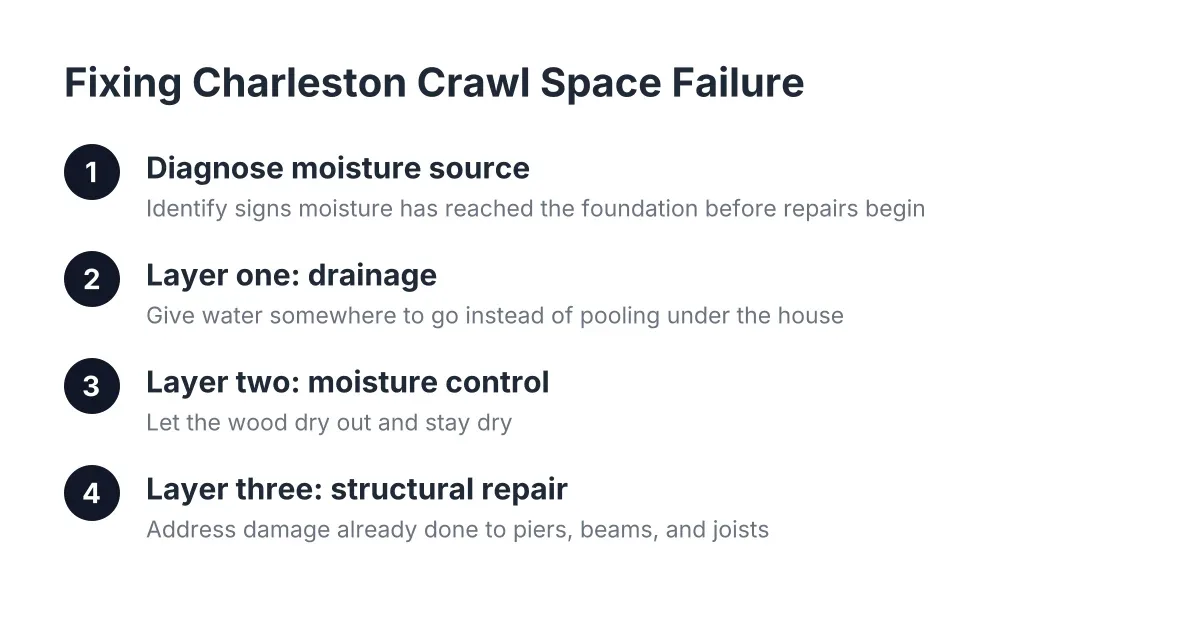
In the Lowcountry, structural damage and moisture are the same story. High water tables, tidal lots, and hurricane-season rain push water at your crawl space from below and outside, and humid air attacks it from within. These terms cover how providers stop that cycle, and understanding these crawl space foundation repair glossary solutions helps you interpret every line of a repair estimate.
Encapsulation
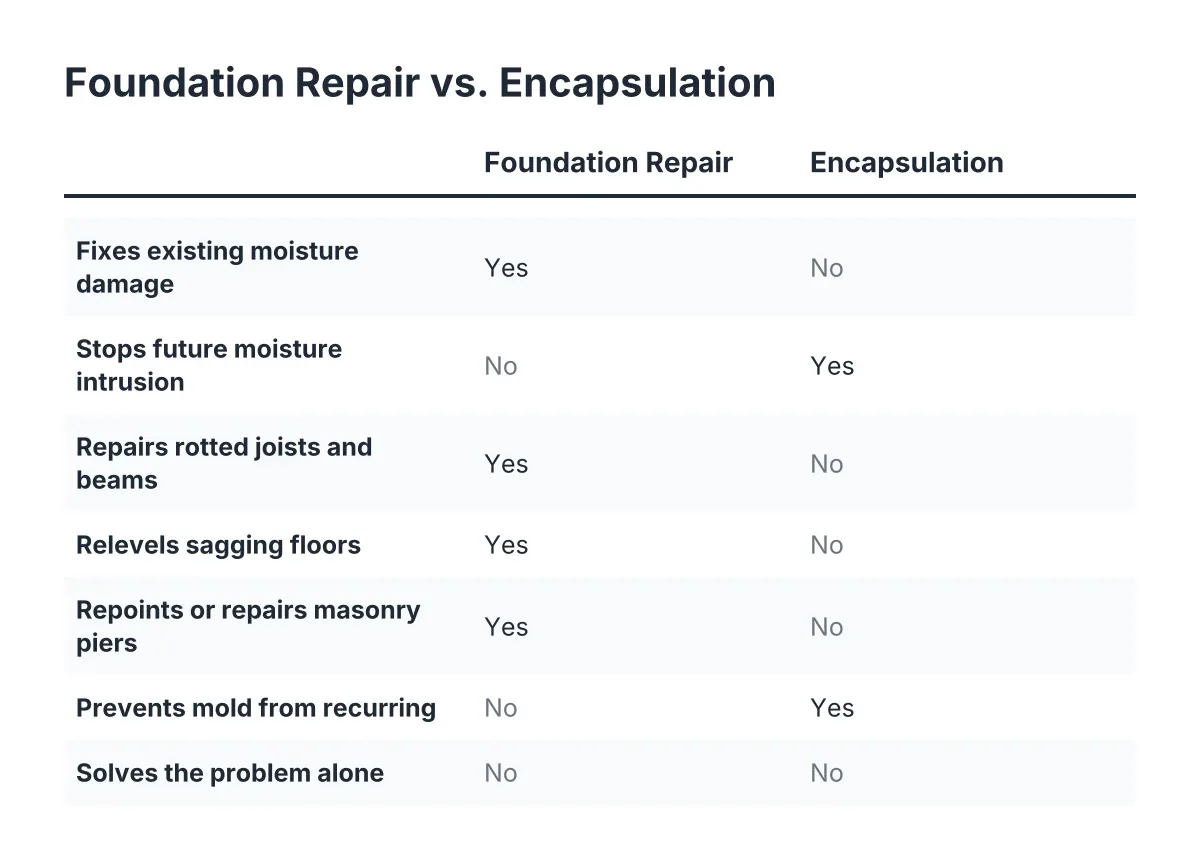
Crawl space encapsulation means sealing the entire crawl space from ground moisture and outside air with a heavy liner on the floor and walls, sealed vents, and usually a dehumidifier. It turns a damp, vented space into a dry, controlled one. In Charleston's climate, open vents pull in humid air most of the year, so encapsulation is often the long-term answer rather than more ventilation. It costs more than a basic vapor barrier but addresses the moisture problem at its source.
Vapor Barrier
A vapor barrier is a thick plastic sheet laid over the crawl space dirt floor to block ground moisture from evaporating into the space. Thickness is measured in mils; thicker liners resist tears from crawling and settling debris. A vapor barrier alone slows moisture but does not seal the space the way full encapsulation does. If a quote says "vapor barrier" and you expected encapsulation, ask exactly what gets sealed.
Dehumidifier
A crawl space dehumidifier is a machine sized for the space that pulls water out of the air and keeps humidity in a safe range. It is the mechanical half of an encapsulated system: the liner blocks ground moisture, and the dehumidifier handles what remains in the air. In coastal Charleston, a sealed space without a dehumidifier can still run damp in summer. Ask how the unit drains, since it needs somewhere to send the water it collects.
Sump Pump
A sump pump is an electric pump set in a basin at the low point of the crawl space that automatically pushes standing water outside. On flood-zone and high-water-table lots, groundwater can rise into the crawl space no matter how well the air is sealed, and a sump pump is the defense against that. A pump in your quote means the provider found, or expects, liquid water, not just damp air. That distinction changes the whole shape of the job.
French Drain
A French drain is a gravel-filled trench with a perforated pipe that collects groundwater and carries it to a sump pump or a discharge point away from the house. Inside a crawl space, it intercepts water before it pools under your home. French drains and sump pumps usually appear together on drainage quotes because the drain collects water and the pump removes it.
Relative Humidity
Relative humidity is the percentage of moisture the air holds compared to the most it could hold at that temperature. Crawl space pros watch this number because sustained high humidity feeds mold and wood rot. Charleston's outdoor air runs humid most of the year, which is why venting rarely dries a crawl space here. If a provider quotes a target humidity range, that is a sign they measure results instead of guessing.
Wood Moisture Content
Wood moisture content is the percentage of water inside the framing lumber, measured with a handheld meter pressed into the wood. It tells you whether the joists and beams themselves are wet, not just the air around them. Wet framing invites rot and mold even when the space looks dry. A good inspection report includes these readings so you can compare before and after the work.
Mold, Inspections, and Paperwork
Mold Remediation
Mold remediation means removing existing mold growth and correcting the moisture conditions that caused it, not just wiping surfaces clean. In a crawl space, that usually pairs mold removal with encapsulation, drainage, or dehumidification, because mold returns wherever humidity stays high. A musty smell upstairs is often the first clue that mold is growing below. If a quote lists removal without any moisture fix, ask what stops the mold from coming back.
Crawl Space Inspection
A crawl space inspection is a documented walkthrough (or crawl-through) where a provider checks the framing, moisture levels, drainage, and air quality and reports what they find. Photos and moisture readings should back up every recommendation. A thorough inspection protects you from paying for repairs you do not need and from missing damage that gets worse in the dark. Treat the inspection report as the foundation of any quote you compare.
Glossary Terms for Scope of Work and Foundation Repair
A scope of work is the written section of a quote that lists exactly what the provider will do, what materials they will use, and what the price covers. It is where you catch differences between bids: one may include a dehumidifier and drainage while another quotes only a liner. Reading the scope line by line, with this crawl space foundation repair glossary open, is the single best way to compare estimates fairly. For what typically drives those line items up or down, see our crawl space foundation repair cost guide.
Using These Terms
What this crawl space foundation repair glossary gives you is footing: you can now read a scope of work line by line, ask why a bid includes a sump pump or skips a dehumidifier, and tell a structural fix from a moisture fix. When two quotes look different, the terms above will show you whether they describe different jobs or just different words for the same one. That knowledge alone makes every conversation with a provider shorter and more useful.
If you need crawl space encapsulation, Low Country Crawl Space Repair can help.
Prefer to talk it through? Call +18542013678 — a quick call is usually the fastest way to get a straight answer for your situation.