Crawl Space Inspections Terms Explained: A Plain-English Glossary
If you own or are buying a home around Charleston, an inspection report full of terms like "hygrometer readings" and "differential settlement" can feel like a foreign language. This crawl space inspections glossary translates that jargon into plain English so you can read a report, understand a quote, and ask sharper questions before you sign anything. Each entry gives you a clear definition first, then explains why the term matters for a Lowcountry home sitting on damp coastal soil. Use it to spot real problems and skip the guesswork.
- Crawl Space Inspection: a professional look under your house
- Vented Crawl Space: the old-school design with foundation vents
- Pier-and-Beam Foundation: the raised structure holding up older Charleston homes
- Vapor Barrier: plastic sheeting that blocks ground moisture
- Encapsulation: sealing the whole crawl space off from moisture
- Relative Humidity: how much moisture the air is holding
- Moisture Meter: a tool that measures dampness in wood
- Wood Moisture Content: how wet your floor framing actually is
- Condensation: water forming on cool surfaces
- Standing Water: pooled water that should not be there
- Sump Pump: a pump that moves water out of the crawl space
- French Drain: a gravel trench that redirects water
- Dehumidifier: a machine that dries the crawl space air
- Mold Remediation: the process of removing mold safely
- Joist: a horizontal board that supports your floor
- Sagging Floors: floors that dip because framing has weakened
- Support Jack: an adjustable post that shores up sinking framing
- Scope of Work: the written list of what a quote includes
The Basics: What Is Down There
Before you can make sense of a report, it helps to know what an inspector is actually looking at. This part of the glossary covers the structure itself and the inspection process.
Crawl Space Inspection and Glossary Essentials
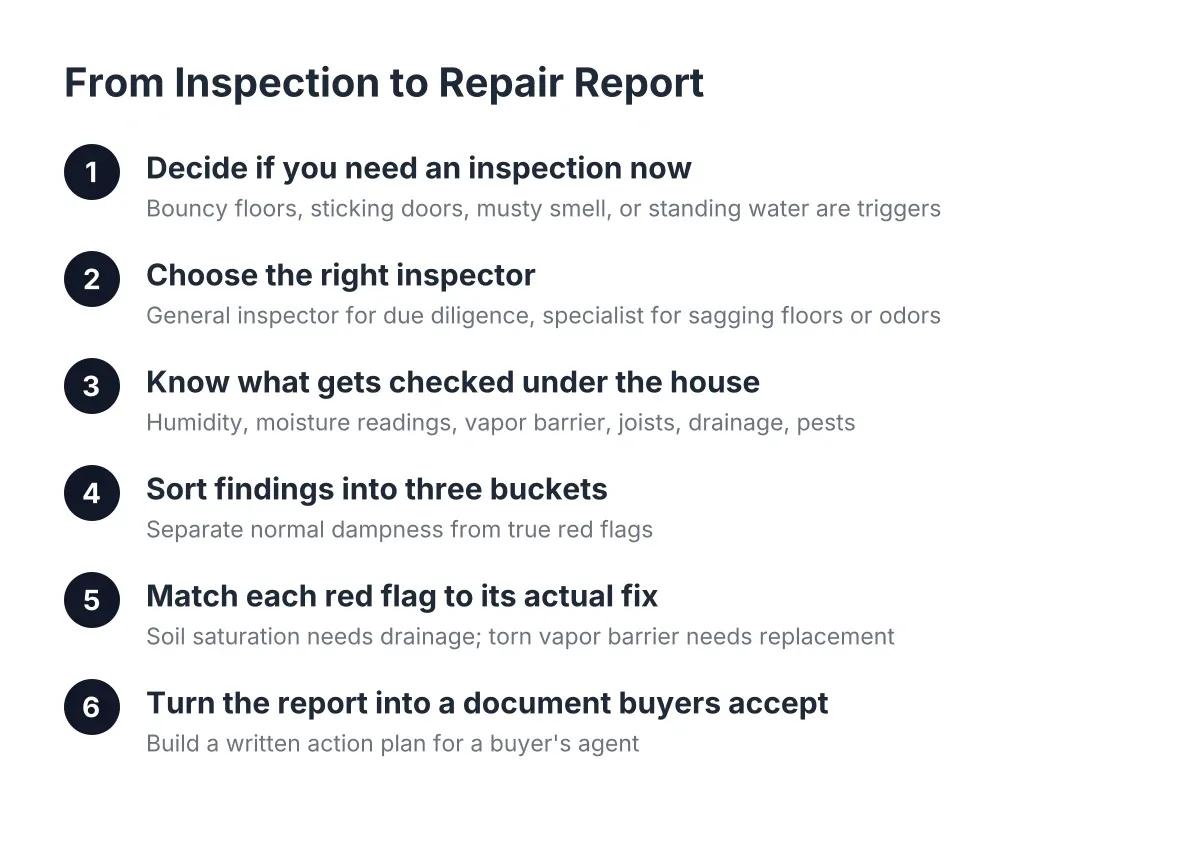
A crawl space inspection is a professional evaluation of the space under your home, checking for moisture, mold, structural damage, and drainage problems. In Charleston, crawl space inspections matter more than in drier regions because year-round humidity and high water tables push moisture into the space almost constantly. A good inspection covers wood condition, humidity levels, insulation, and any signs of standing water or pests. If you are weighing whether to get one, our guide on how much crawl space inspections cost breaks down what to expect.
Vented Crawl Space
A vented crawl space is a crawl space with openings in the foundation walls meant to let outside air flow through. The idea was that airflow would keep the space dry. In humid coastal climates like the Lowcountry, it often does the opposite; warm, moist summer air enters, hits cooler surfaces, and turns into condensation. If an inspector notes yours is vented and damp, expect the conversation to turn toward sealing the vents and controlling moisture another way.
Pier-and-Beam Foundation
A pier-and-beam foundation is a raised foundation where the house rests on wooden beams supported by masonry or concrete piers. Many older Charleston homes use this design, which creates the crawl space in the first place. It handles flood-prone lots well, but the wood framing is exposed to whatever moisture collects below. Inspectors pay close attention to the beams and piers because they carry the whole house.
Moisture and Air: The Heart of Every Report
Most crawl space problems in the Lowcountry come back to water in some form. These terms show up in nearly every report and quote.
Vapor Barrier
A vapor barrier is a heavy plastic sheet laid over the crawl space floor to block moisture rising from the ground. Even dry-looking soil releases water vapor daily, and that vapor feeds mold and rots wood over time. A thin, torn, or missing barrier is one of the most common findings in Charleston-area inspections. If a quote mentions vapor barrier installation, ask about the thickness of the material and whether seams and piers will be sealed.
Encapsulation
Crawl space encapsulation means sealing the entire crawl space, floor and walls, with a durable vapor barrier and closing off outside vents. It turns a damp, vented space into a controlled one, usually paired with a dehumidifier. Encapsulation costs more than a simple vapor barrier, but it addresses humidity, musty smells, and moisture at the source rather than patching one symptom. It is the fix providers recommend most often for chronically damp Lowcountry crawl spaces.
Relative Humidity
Relative humidity is the amount of moisture in the air compared to the maximum it could hold at that temperature, expressed as a percentage. Inspectors measure it because sustained high humidity lets mold grow and wood absorb water even without a leak. Charleston's coastal air keeps outdoor humidity high most of the year, so a vented crawl space rarely stays dry on its own. When a report flags high relative humidity, moisture control, not just cleanup, is the real fix.
Moisture Meter
A moisture meter is a handheld tool that measures how much water is inside wood or other materials. Inspectors press or pin it against joists and beams to get a number instead of a guess. It matters because wood can look fine on the surface while holding enough moisture inside to invite rot and mold. A provider who quotes meter readings is showing you evidence, which is a good sign.
Wood Moisture Content
Wood moisture content is the percentage of a piece of wood's weight that is water. Dry framing sits at a low percentage; once the number climbs high enough, mold can grow and rot can start. This is the single measurement that tells an inspector whether your floor framing is at risk right now. If your report lists elevated wood moisture content, ask what is driving it: ground moisture, humidity, or a drainage problem.
Condensation
Condensation is water that forms when humid air touches a cooler surface, like ductwork, pipes, or floor joists in summer. In a vented Charleston crawl space, condensation can drip steadily all season without a single plumbing leak. It is a leading cause of the musty smell homeowners notice upstairs. Fixing it means controlling the air, usually through encapsulation and a dehumidifier, not just wiping surfaces dry.
Standing Water
Standing water is any pooled water sitting on the crawl space floor instead of draining away. On low-lying and flood-zone lots around Charleston, it often shows up after heavy rain or during hurricane season. Standing water is an urgent finding because it raises humidity, feeds mold, and can undermine piers. Expect a quote to include drainage work, such as a French drain or sump pump, before any encapsulation happens.
Fixes and Equipment You Will See Quoted
Once an inspection finds problems, the quote will name specific repairs and equipment. Here is what those line items mean.
Sump Pump
A sump pump is an electric pump set in a pit at the low point of the crawl space that pushes collected water outside. It is the workhorse of crawl space waterproofing on lots where water keeps coming back. If your quote includes one, ask where the discharge line goes and whether the pit has a sealed lid. On tidal and flood-prone Lowcountry lots, a sump pump often pairs with a French drain.
French Drain
A French drain is a gravel-filled trench with a perforated pipe that collects groundwater and carries it to a drainage point or sump pit. Inside a crawl space, it intercepts water before it can pool on the floor. It matters when the problem is water rising from the ground rather than dripping from above. A provider suggesting one has likely found evidence of recurring water, not just dampness.
Dehumidifier
A crawl space dehumidifier is a machine built to pull moisture out of the air in an enclosed crawl space and drain the collected water away. It is what keeps an encapsulated space dry year-round, especially through Charleston's humid summers. A dehumidifier without encapsulation fights a losing battle against outside air, so the two usually appear together in quotes. Ask how the unit drains and how often it needs service.
Mold Remediation
Mold remediation is the process of removing mold growth and treating surfaces so it does not return. It goes beyond wiping visible spots; proper remediation addresses the moisture source, because mold comes back wherever dampness remains. If your report shows mold on joists or subflooring, remediation plus moisture control is the standard pairing. Be cautious of any quote that treats mold without mentioning what caused it.
Structure and Paperwork
These terms cover the bones of the house and the documents you will sign.
Joist
A joist is one of the horizontal boards running under your floor that carries its weight across the crawl space. Joists are usually the first framing members to show moisture damage because they sit closest to the damp air. An inspector will probe them for softness and note any rot, mold, or sagging. Damaged joists can often be repaired or reinforced without replacing the whole floor.
Sagging Floors
Sagging floors are floors that dip, bounce, or slope because the framing or supports underneath have weakened. In damp crawl spaces, the usual causes are rotted joists, failing beams, or piers settling into soft soil. Sagging is a structural warning sign, not a cosmetic one, so it deserves prompt attention. Fixes range from sistering new lumber onto damaged joists to adding support jacks under the beams.
Support Jack
A support jack is an adjustable steel post installed under a beam or joist to lift and hold sagging framing at the correct height. Jacks give crews fine control, so floors can be stabilized or gradually leveled. If a quote includes support jacks, it means the inspector found framing that has already moved. Ask how many jacks are planned, what they will rest on, and whether damaged wood will be repaired too.
Scope of Work in Crawl Space Inspections Glossary
A scope of work is the written section of a quote that lists exactly what the provider will do, with what materials, and where. It is the part worth reading twice, because two "encapsulation" quotes can cover different things: one may include drainage and a dehumidifier while another does not. Comparing scopes line by line, not bottom-line prices, is how you compare quotes fairly. If something you discussed is missing from the scope, ask before you sign.
Using These Terms
You now have the working vocabulary to read an inspection report without stopping every third line, and to compare quotes on what they actually include. That is what this crawl space inspections glossary is for: turning jargon back into plain sense so the decisions are yours to make. When a provider walks you through their findings, you will know exactly what to ask next.
If you need crawl space encapsulation, Low Country Crawl Space Repair can help.
Prefer to talk it through? Call +18542013678 — a quick call is usually the fastest way to get a straight answer for your situation.