Crawl Space Maintenance Terms Explained: A Plain-English Glossary
If you own a home around Charleston, you will eventually get a quote or an inspection report full of crawl space jargon. This crawl space maintenance glossary explains the terms in plain English, so you can read that quote line by line, ask better questions, and spot real problems under your house. Each entry starts with a simple definition you can understand in seconds. Nothing here requires a construction background.
- Crawl Space Encapsulation: sealing the whole space against moisture
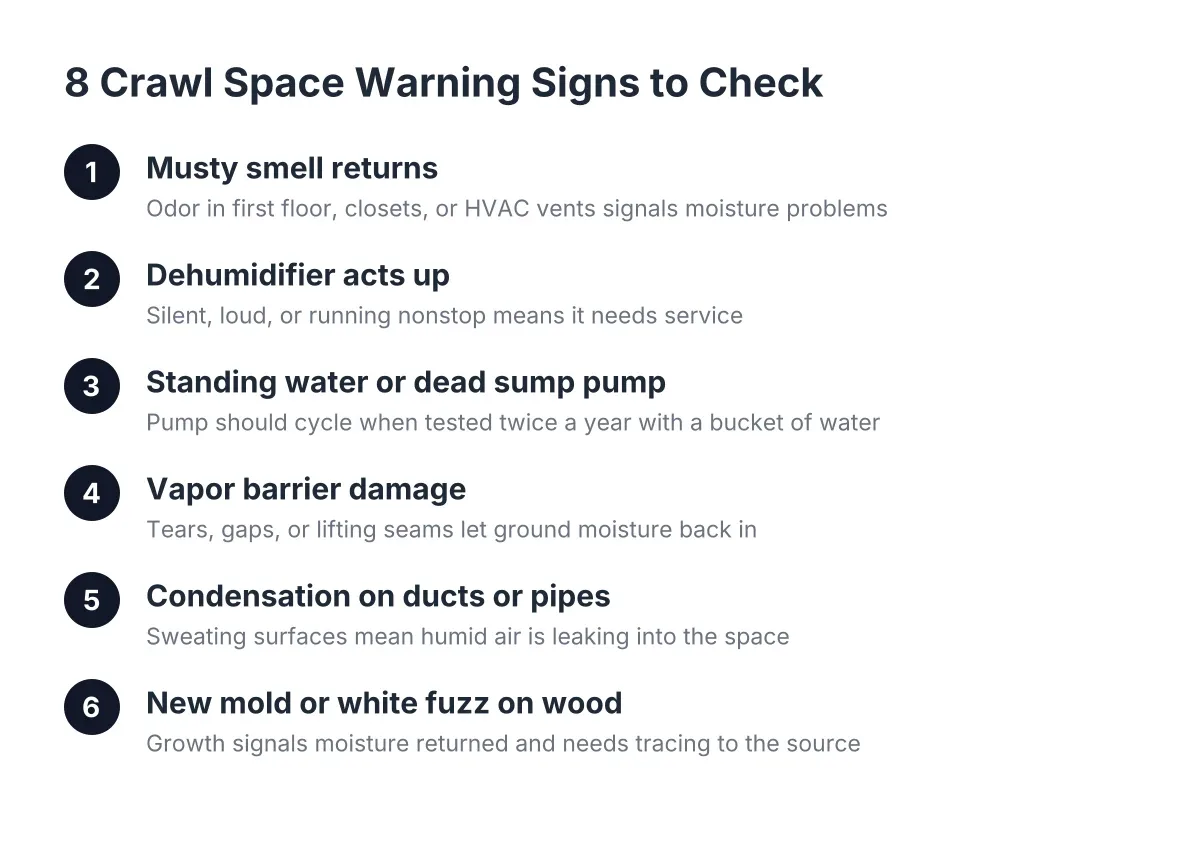
- Vapor Barrier: heavy plastic sheeting over the dirt floor
- Dehumidifier: a machine that dries the air down there
- Moisture Control: the overall plan to keep things dry
- Relative Humidity: how damp the air is, as a percentage
- Condensation: water forming on cool surfaces
- Sump Pump: a pump that moves standing water out
- French Drain: a gravel trench that channels water away
- Crawl Space Waterproofing: stopping water from getting in at all
- Vented Crawl Space: the old open-vent design common in Charleston
- Pier-and-Beam Foundation: a raised foundation on posts and beams
- Support Jacks: adjustable steel posts that lift sagging floors
- Joist and Beam Repair: fixing the wood framing that holds up your floors
- Mold Remediation: removing mold and fixing what caused it
- Wood Rot: fungal decay that weakens framing
- Crawl Space Inspection: a documented look at everything under the house
- Scope of Work: the written list of exactly what a contractor will do
Moisture and Air: The Core Vocabulary
Most of the words in this crawl space maintenance glossary trace back to one problem: water. Charleston sits on high water tables, tidal lots, and a climate that stays humid most of the year, so moisture terms come up in nearly every quote.
Understanding Crawl Space Maintenance Glossary Terms for Moisture
Crawl Space Encapsulation
Crawl space encapsulation means sealing the entire crawl space with a heavy plastic liner on the floor and walls, closing the vents, and controlling the air inside. Think of it as turning a damp dirt cave into a clean, dry, semi-conditioned space. Encapsulation is the most complete moisture fix and usually the biggest line item on a quote. If a provider proposes it, they are treating the crawl space as a whole system, not patching one symptom. It often pairs with a dehumidifier, since a sealed space still needs its air managed.
Vapor Barrier
A vapor barrier is a sheet of heavy plastic laid over the dirt floor of a crawl space to block ground moisture from rising into the air above it. Thickness matters; thin liners tear and fail, thicker ones last. A vapor barrier alone is cheaper than full encapsulation, but it only handles moisture coming up from the soil, not humid outside air pouring in through vents. If your quote lists a vapor barrier without vent sealing, ask why, and ask what happens during Charleston's summer humidity.
Dehumidifier
A crawl space dehumidifier is a machine sized for the space under your house that pulls moisture out of the air and drains it away automatically. Household closet units are not built for this job. In the Lowcountry, a dehumidifier is usually the piece that keeps an encapsulated crawl space dry year round, including through hurricane-season moisture swings. On a quote, it signals ongoing protection rather than a one-time fix, and it needs a power source and a drain line.
Moisture Control
Moisture control means the full set of steps used to keep a crawl space dry, which can include drainage, a vapor barrier, sealing vents, and a dehumidifier. It is a plan, not a single product. A good provider explains where your water is coming from, ground, air, or plumbing, before recommending anything. If a quote says "moisture control" without listing the specific pieces, ask for the breakdown.
Relative Humidity
Relative humidity is the amount of moisture in the air, shown as a percentage of the most the air can hold at that temperature. Contractors care about it because sustained high humidity in a crawl space feeds mold and wood rot. Inspectors often measure it with a meter and note the reading in their report. If someone quotes you a number, ask what target they aim for after the work is done and how they will keep it there.
Condensation
Condensation is water that forms on a cool surface when humid air touches it, the same way a cold drink sweats on a summer porch. In a vented Charleston crawl space, warm outdoor air hits cool ductwork and floor joists and leaves water behind. That water drips, soaks insulation, and feeds mold. If an inspector mentions condensation on your ducts or pipes, the real problem is humid air getting in, not the ducts themselves.
Water Management and Drainage
Sump Pump
A sump pump is an electric pump set in a pit at the low point of a crawl space that automatically pushes collected water outside. On flood-zone or low-lying lots, it is often the difference between a puddle that drains and a pond that sits for weeks. A pump on your quote means the provider expects liquid water, not just damp air. Ask where the discharge line goes and whether a backup option makes sense for storm outages.
French Drain
A French drain is a gravel-filled trench with a perforated pipe inside that collects groundwater and carries it away, usually to a sump pit or a lower spot on the lot. It handles water in the soil before that water pools under your house. Interior French drains run along the crawl space perimeter; exterior ones intercept water before it reaches the foundation. Seeing one on a quote tells you the provider found active water intrusion, not just humidity.
Crawl Space Waterproofing
Crawl space waterproofing means stopping liquid water from entering the crawl space in the first place, through drainage, grading, sealing, or a combination. It targets standing water and seepage, while moisture control targets damp air. Many Charleston crawl spaces need both, since a lot can flood in a storm and stay humid the rest of the year. On paper, waterproofing line items usually mean digging, pipes, or pumps, so expect them to affect the price more than plastic sheeting does. Costs vary by home, and this guide to crawl space maintenance costs explains what drives the numbers.
Structure and Foundation Terms
Essential Crawl Space Maintenance Glossary for Foundation Issues
Vented Crawl Space
A vented crawl space is the traditional design with open vents in the foundation walls, built on the old theory that outside air would keep the space dry. In a humid coastal climate, those vents often do the opposite, letting in moist air that condenses on cool surfaces. Many older Charleston homes were built this way, which is why encapsulation quotes usually include sealing the vents. If a provider wants to keep vents open, ask how they plan to handle summer humidity.
Pier-and-Beam Foundation
A pier-and-beam foundation is a raised foundation where the house sits on posts, called piers, that support horizontal beams under the floor. It creates the crawl space itself and is common in older Lowcountry homes, partly because raising the house helps in flood-prone areas. The upside is access; a contractor can reach plumbing, wiring, and framing. The downside is exposure, since all that wood sits above damp ground.
Support Jacks
Support jacks are adjustable steel posts installed under sagging beams or joists to lift and hold the floor at the right level. They are a common fix for bouncy or sloping floors caused by moisture-weakened framing or failing piers. Jacks on a quote mean the provider found a structural support problem, not just a moisture problem. Ask how many they plan to install, what each one sits on, and whether the moisture source gets fixed too, since jacks under rotting wood only buy time.
Joist and Beam Repair
Joist and beam repair means replacing or reinforcing the wood framing members that carry your floors, the joists that run under the floorboards and the beams that support them. Long-term moisture, wood rot, or termite damage are the usual causes. This is real structural work, so it belongs with a crawl space specialist, and it explains why sagging floors upstairs often trace back to problems below. A quote that includes framing repair should describe which members get replaced and which get sistered, meaning a new board fastened alongside the old one.
Inspection, Mold, and Paperwork
Mold Remediation
Mold remediation means removing mold growth from a space and correcting the moisture conditions that let it grow, so it does not simply come back. It goes beyond wiping surfaces; proper remediation includes containment, cleaning or removing affected materials, and fixing the water source. Mold in a crawl space often announces itself upstairs as a musty smell, since crawl space air drifts up into the living space. If a quote lists mold removal without any moisture fix, that is a gap worth questioning.
Wood Rot
Wood rot is decay caused by fungi that feed on damp wood, softening and weakening it over time. In a crawl space, rot attacks joists, beams, and subflooring that stay wet from ground moisture or condensation. You might notice it as soft spots in the floor, sagging floors, or crumbling wood an inspector can push a screwdriver into. Rot findings often turn a moisture quote into a repair quote, which is why catching it early matters.
Crawl Space Inspection
A crawl space inspection is a documented walkthrough, or crawl-through, of the space under your home that checks for moisture, mold, wood damage, drainage problems, and structural issues. A useful inspection comes with photos and specific findings, not just a sales pitch. It is the starting point for any honest quote and a smart step before buying an older Charleston home with a vented crawl space. Regular inspections are also the cheapest part of crawl space maintenance, since they catch small problems before they become framing repairs.
Scope of Work
A scope of work is the written section of a quote or contract that lists exactly what the contractor will do, what materials they will use, and what is excluded. It is your best protection against surprises. Compare scopes, not just totals; a cheaper quote that skips vent sealing or drainage is not the same job. If anything in a scope of work is vague, ask the provider to spell it out before you sign.
Using These Terms
What this crawl space maintenance glossary gives you is a working vocabulary, enough to read a quote line by line and know what each item does. You can now ask a provider why they chose a vapor barrier over full encapsulation, or where a sump pump will discharge, and understand the answer. That is usually all it takes to tell a thorough proposal from a thin one.
If you need crawl space encapsulation, Low Country Crawl Space Repair can help.
Prefer to talk it through? Call +18542013678 — a quick call is usually the fastest way to get a straight answer for your situation.