How Much Does Crawl Space Repair for Home Sale Cost?
How much does crawl space repair for home sale cost?
The honest answer depends on three things: what the inspection actually found, how much of the crawl space needs work, and how fast your closing date is coming. Understanding what crawl space repair for a home sale costs requires looking at these factors individually. A Charleston crawl space with a torn vapor barrier is a different job than one with standing water and a sagging beam, and no page on the internet can price yours without seeing it. What we can do is show you exactly what drives the price up or down, so a quote makes sense when you get one. By the end of this guide, you will know how to get an accurate number for your own house.
What Drives the Cost of Crawl Space Repair for Home Sale
Every crawl space under a raised Charleston home tells its own story. These are the factors that decide whether your repair bill is small, moderate, or serious.
What the Inspection Found
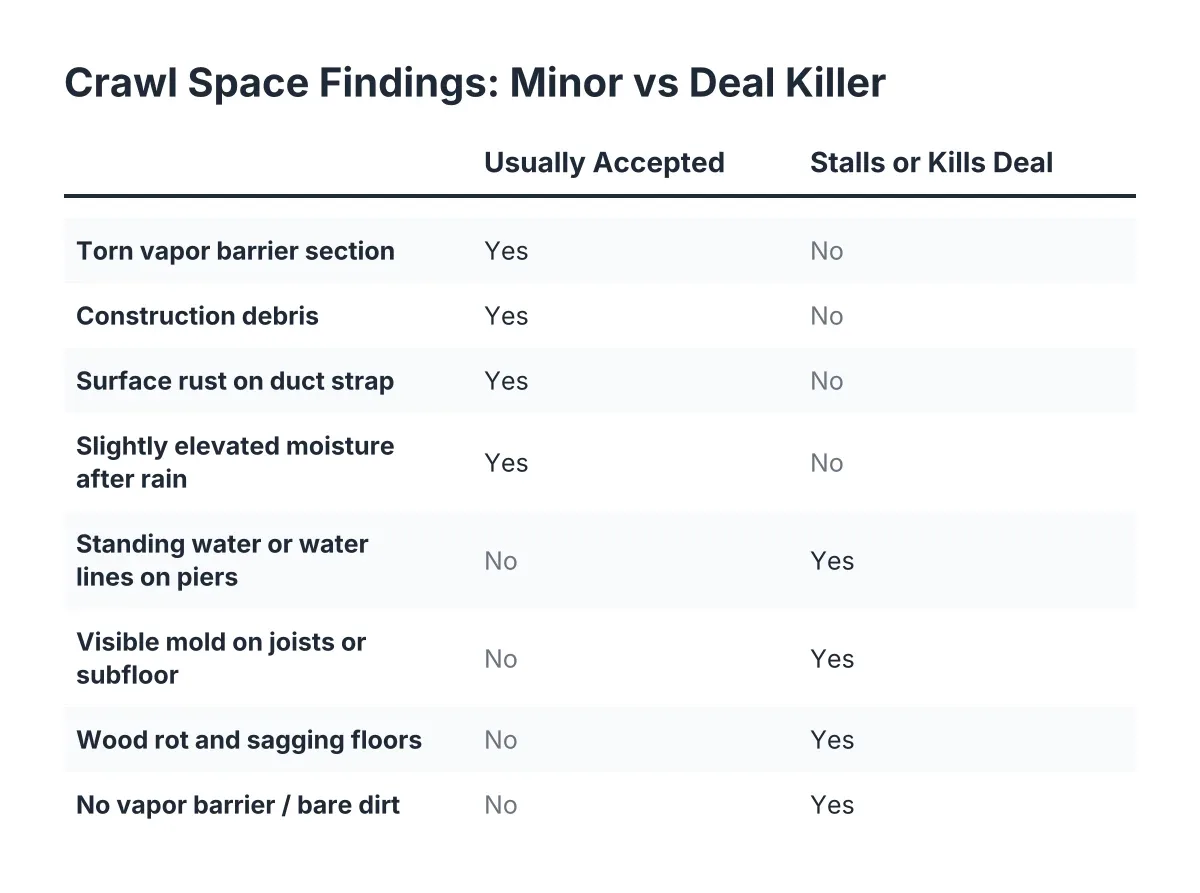
The buyer's inspection report is the starting line. If it flags a musty smell and a worn vapor barrier, the fix is limited and the price stays low. If it flags mold on the joists, standing water, or floors that sag over the crawl space, the scope grows and the price grows with it. Read the report closely. The difference between "elevated moisture readings" and "wood rot at the sill beam" is the difference between a moisture control job and a structural repair.
Moisture: The Charleston Problem
Coastal humidity, high water tables, and flood-zone lots mean most Lowcountry crawl spaces have a moisture problem to some degree. The question is how far it has gone. A dry crawl space that just needs a fresh vapor barrier sits at the low end. A crawl space that holds water after every summer storm may need drainage, a sump pump, or a dehumidifier, and each added system raises the price. Crawl under there with a flashlight, or look at the inspection photos. Puddles, damp soil, and condensation on the ductwork all point toward the higher end.
Structural Damage
Wood and water do not get along, and vented crawl spaces in older pier-and-beam homes give humidity years to work on the framing. If joists or beams have rotted or the floors above feel soft and uneven, you are paying for structural support: jacks, sistered joists, or beam repair. This is the single biggest cost swing in crawl space work. Solid, dry framing keeps the job cheap. Rot moves it into a different category entirely. Sagging floors, doors that stick, and cracks above door frames are the signs you can spot from inside the house.
Size and Access
A bigger footprint means more vapor barrier, more insulation, more drainage line, and more labor hours, so a larger home costs more to fix than a smaller one. Access matters too. A crawl space with decent clearance and a workable entry is faster to repair than one with tight clearance, ductwork in the way, or years of debris that has to come out first. If your crawl space needs cleanup and debris removal before the real work starts, that adds time and cost.
Repair Versus Encapsulation
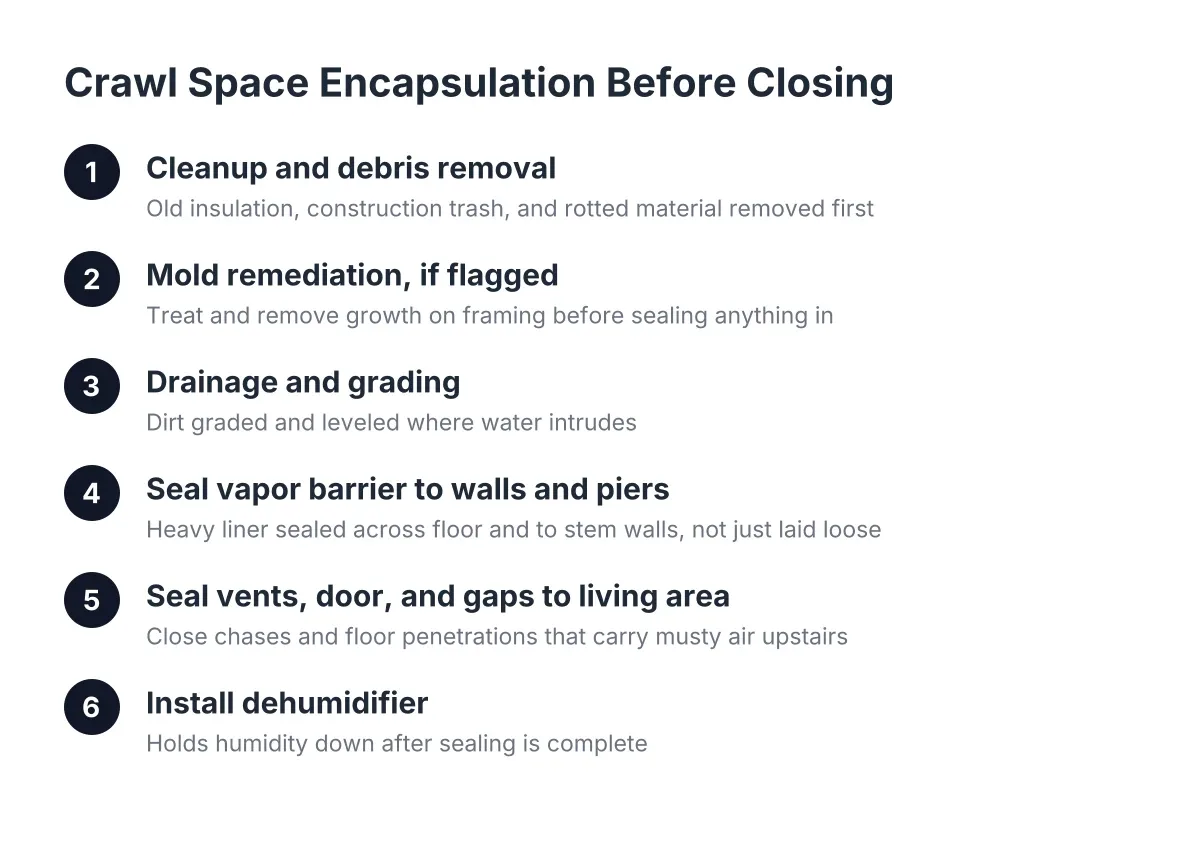
There are two ways to answer an inspection report. The narrow way is to fix only what the report flags: remediate the mold, replace the damaged section of vapor barrier, repair the rotted joist. The complete way is crawl space encapsulation, which seals the whole space with a heavy vapor barrier, controls humidity with a dehumidifier, and stops the moisture cycle that caused the damage. Encapsulation costs more upfront. It also gives buyers more confidence and stops you from paying for the same repair again in a few years. Which path fits depends on your timeline and how you plan to negotiate with the buyer.
Timeline Pressure
A closing date changes the math. If you have weeks, you can gather quotes, compare scopes, and schedule at a normal pace. If the buyer's repair addendum gives you ten days, you have less room to shop and less flexibility on scheduling. Selling a home does not raise the price of the work itself, but a rushed timeline limits your options, and options are how you keep costs down.
Cost Factor Table
| Factor | Pushes the price down when… | Pushes it up when… |
|---|---|---|
| Inspection findings | The report flags moisture readings or a worn vapor barrier only | The report flags mold, standing water, or wood rot |
| Moisture level | The crawl space is dry or mildly damp | Water pools under the house and drainage or a sump pump is needed |
| Structural condition | Joists and beams are solid and floors are level | Framing has rotted and needs jacks or beam repair |
| Size and access | The footprint is small with clear, workable access | The home is large, clearance is tight, or debris must come out first |
| Scope choice | You fix only what the buyer's report requires | You encapsulate the full crawl space with dehumidification |
| Timeline | You have weeks to compare quotes and schedule | A repair addendum forces the work into days |
How to Get an Accurate Crawl Space Repair Estimate for Your Home Sale
The only real number comes from someone who has been under your house. Here is how to make that visit count.
Have this ready before the estimate:
- The buyer's inspection report, especially the crawl space pages and photos
- Your closing date and any repair deadline in the contract
- What you already know: musty smell, past flooding, soft floors, or previous repairs
- The rough square footage of your home
A good quote should include:
- A written scope that names each problem and the fix for it, line by line
- Materials specified by name and thickness, especially the vapor barrier
- Whether mold remediation, drainage, or structural support is included or excluded
- A schedule that works with your closing date
- Documentation you can hand to the buyer's agent showing the work was done
Estimates differ between providers for real reasons. One contractor may quote a patch job on the flagged items while another quotes full encapsulation, and those are honest answers to two different questions. Materials vary too; a thin vapor barrier and a heavy sealed liner are not the same product. Compare scopes line by line, not bottom lines, and ask any contractor to explain what a cheaper quote leaves out.
Ways to Keep the Cost Down
You cannot negotiate away a rotted beam, but you can control more of the price than you might think.
- Get an inspection before you list. A crawl space inspection before the house goes on the market lets you fix problems on your schedule, not the buyer's. Repairs made under deadline pressure almost always cost more in stress and lost negotiating room.
- Match the scope to the contract. If the repair addendum requires mold remediation and a new vapor barrier, price that scope on its own before deciding whether to add more. You can present full encapsulation to the buyer as an upgrade rather than absorbing it by default.
- Compare two or three written quotes. Scope differences between quotes teach you more about your crawl space than any single estimate can. If one quote includes drainage and another does not, ask both contractors why.
- Fix the moisture, not just the symptom. Paying for mold removal without addressing humidity invites the mold back, and a buyer's re-inspection can catch it. Moisture control done once beats remediation done twice.
- Handle the small stuff early. A dehumidifier and an intact vapor barrier cost far less than the structural repair they prevent. If you are years from selling, this is the cheapest version of this entire page.
Cost Questions People Ask
Does the seller have to pay for crawl space repairs?
Not automatically. Repairs are negotiated in the contract, so you might pay for the work, offer a credit at closing, or split the difference with the buyer. Many sellers find that fixing the problem with documentation in hand keeps the deal moving better than a credit does, because buyers trust a completed repair more than a discount.
Is it cheaper to offer a credit than to do the repair?
Sometimes, but credits carry a hidden cost. Buyers tend to estimate high when they price unknown crawl space work, and a lender may balk at large credits or at defects flagged in the appraisal. Getting your own quote first tells you whether the buyer's number is fair, and that knowledge is free.
Will crawl space problems kill the sale if I do nothing?
They can stall it. Mold, standing water, and structural notes in an inspection report make buyers nervous and give them grounds to walk or renegotiate. Homes in Charleston's flood-prone neighborhoods get extra scrutiny under the house, so an unaddressed crawl space tends to resurface with the next buyer too.
Does encapsulation cost more than basic crawl space repair?
Yes, because it covers the whole space rather than the flagged items. Crawl space repair for a home sale often starts as a short punch list, and encapsulation extends that into a sealed liner, humidity control, and moisture protection going forward. Whether the extra cost pays off depends on how bad the moisture is and whether the sale gives you room to invest in the house before handing over the keys.
The Bottom Line
The cost of crawl space repair before a home sale comes down to what the inspection found, how much moisture is under the house, and whether the framing is still sound. Nobody can price that from a web page, and anyone who tries is guessing. Get the inspection report in front of two or three crawl space specialists, compare written scopes line by line, and you will have a real number instead of an internet estimate.
If you need crawl space encapsulation, Low Country Crawl Space Repair can help.
Related guide: crawl space repair for home sale — Complete Guide
Prefer to talk it through? Call +18542013678 — a quick call is usually the fastest way to get a straight answer for your situation.