Crawl Space Repair for Home Sale Terms Explained: A Plain-English Glossary
If you're selling or buying a home around Charleston, crawl space terms start showing up fast: in inspection reports, repair quotes, and closing negotiations. This crawl space repair for home sale glossary explains those terms in plain English so you can read a quote line by line, ask providers the right questions, and spot real problems without a translator. Each entry starts with a definition you can use on its own, then tells you why the term matters when a sale is on the line. No jargon, no scare tactics, just what the words mean.
- Crawl space encapsulation: sealing the whole space against moisture
- Vapor barrier: the plastic liner on the ground
- Moisture control: keeping humidity at safe levels
- Dehumidifier: a machine that dries the air
- French drain: a buried channel that moves water away
- Sump pump: pumps out water that collects below
- Crawl space waterproofing: stopping water from getting in
- Mold remediation: professional mold removal and prevention
- Musty smell: the odor sign of a moisture problem
- Wood rot: fungus damage to floor framing
- Sagging floors: floors dipping from weak support below
- Support jacks: adjustable posts that lift and hold beams
- Sill plate and band joist: the wood where your house meets its foundation
- Vented crawl space: the older open-vent design common in Charleston
- Crawl space inspection: a documented look at conditions below
- Repair addendum: the contract paperwork listing agreed fixes
- Scope of work: the itemized list of what a quote covers
- CL-100 (wood infestation report): the South Carolina report lenders often require
Moisture and Water Terms
Most Charleston crawl space problems start with water, whether it rises from a high water table, blows in during hurricane season, or hangs in the air as coastal humidity. These are the terms you'll see most often in a crawl space repair for home sale glossary because moisture drives the bulk of repair quotes.
Crawl Space Encapsulation and Home Sale Repairs
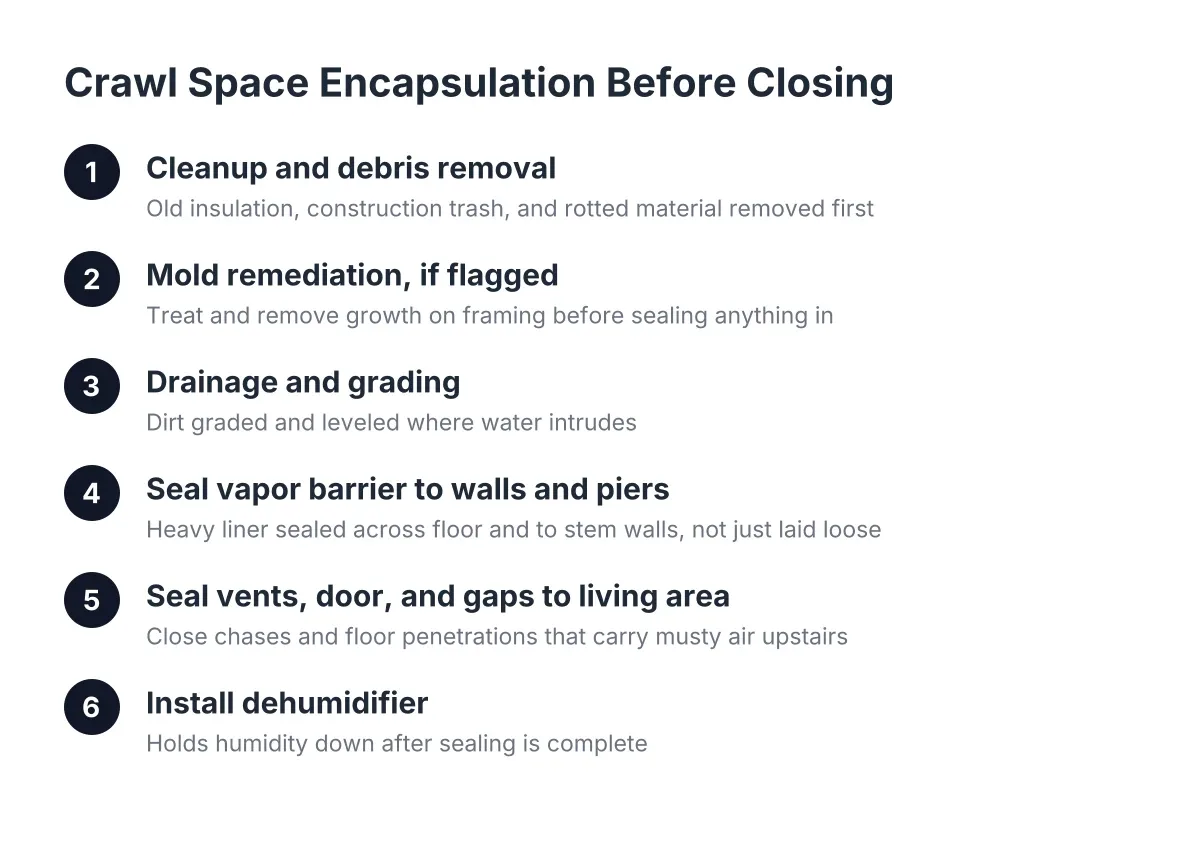
Crawl space encapsulation is the process of sealing a crawl space with a heavy liner on the ground and walls, closing off outside vents, and usually adding a dehumidifier to control the air. Think of it as turning a damp, open dirt space into a clean, dry, sealed one. In a sale, encapsulation is the most complete fix a provider can quote, so it costs more than spot repairs but also carries more weight with buyers and inspectors. If a quote says "encapsulation," ask exactly what is included: liner thickness, sealed vents, and dehumidification are the usual pieces.
Vapor Barrier
A vapor barrier is a thick plastic sheet laid over the crawl space floor to stop ground moisture from rising into the space. It is the most basic moisture defense, and many older Charleston homes have a thin, torn, or missing one. A vapor barrier alone is cheaper than full encapsulation, but it does not seal the walls or vents. If a repair quote lists "vapor barrier installation," that usually means the ground gets covered, not the whole space sealed.
Moisture Control and Crawl Space Repair
Moisture control means keeping the humidity and standing water in a crawl space at levels that will not feed mold or rot wood. It is an umbrella term that can include a vapor barrier, drainage, a dehumidifier, or all three. When a provider talks about moisture control, ask which specific measures they mean, because the scope, and the price, varies with the answer. In the Lowcountry, year-round humidity means moisture control is rarely a one-item fix.
Dehumidifier
A crawl space dehumidifier is a machine that pulls water out of the air to keep the space dry after it has been sealed. It matters in Charleston because sealing out ground moisture does not stop humid coastal air from condensing under the house. A quote that includes a dehumidifier signals the provider is planning for ongoing dryness, not just a one-time cleanup. Ask where the unit drains and how it will be powered.
French Drain
A French drain is a gravel-filled trench with a perforated pipe that collects groundwater and carries it away from the crawl space. On flood-zone and high-water-table lots, drainage is often the difference between a dry space and a repeat problem. If a provider adds a French drain to a quote, water is likely entering from below or from the sides, not just hanging in the air. That is a bigger scope than a moisture-only fix.
Sump Pump
A sump pump is a pump set in a low basin in the crawl space that automatically pushes collected water out and away from the house. It works with drainage, catching water the drains gather and moving it off the lot. Seeing a sump pump on a quote tells you the provider expects standing water at times, which is common on low-lying Charleston lots during heavy rain. Ask where the discharge line runs so the water does not circle back.
Crawl Space Waterproofing
Crawl space waterproofing means stopping liquid water from entering the crawl space, usually through drainage, sump pumps, grading, or sealing entry points. It is different from moisture control, which also deals with humid air. If your inspection report shows standing water or water stains, waterproofing is the term to look for in the quote. A provider who quotes waterproofing without saying where the water comes from has skipped a step; ask.
Damage and Structural Terms
Mold Remediation
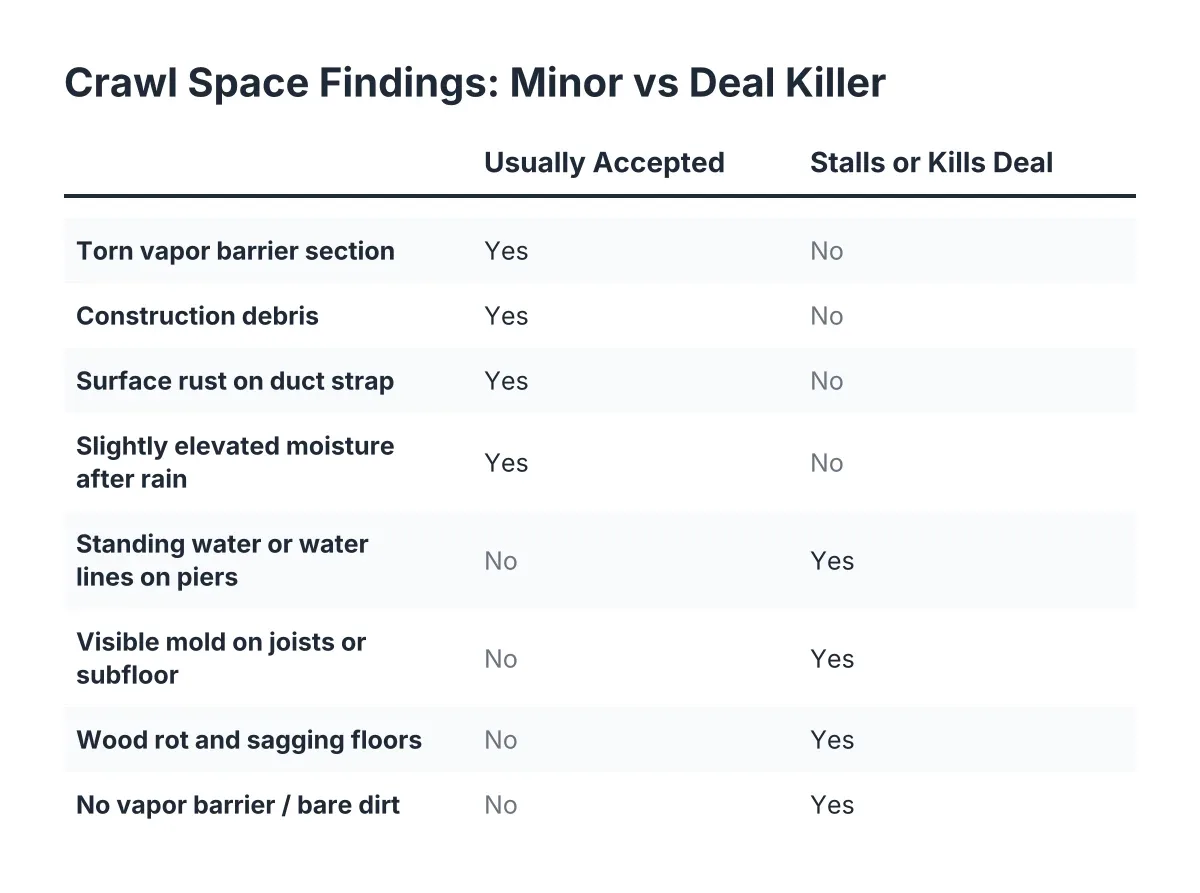
Mold remediation is the professional process of removing mold growth and correcting the moisture conditions that caused it. Mold removal alone treats the symptom; remediation includes fixing the source so it does not come back. Buyers and inspectors in humid markets like Charleston take crawl space mold seriously, so documented remediation can keep a sale on track. A quote for remediation should name both the cleanup method and the moisture fix.
Musty Smell
A musty smell is the earthy, damp odor caused by mold and mildew growth, and in a raised Charleston home it often drifts up from the crawl space into the living area. It matters in a sale because buyers notice it in the first minute of a showing, before any inspector does. Air fresheners mask it; fixing the moisture below removes it. If a provider mentions odor and air quality treatment, ask whether the moisture source is being fixed too.
Wood Rot
Wood rot is decay in wooden framing caused by fungus that feeds on damp wood. In a crawl space, rot attacks floor joists, beams, and the sill plate, weakening the structure that holds up your floors. Rot findings turn a moisture quote into a structural one, so expect the scope and cost to grow if a provider finds it. The cost guide for crawl space repair before a home sale walks through how these findings change a quote.
Sagging Floors
Sagging floors are floors that dip, bounce, or slope because the joists or beams beneath them have weakened or lost support. They are one of the few crawl space problems a buyer can feel with their feet, which makes them a common negotiation point. Fixing them usually means structural support work below, such as support jacks or beam repair. If your floors sag, ask for a structural assessment, not just a moisture quote.
Support Jacks
Support jacks are adjustable steel posts installed in a crawl space to lift and hold up sagging beams and floor joists. They sit on footings and can be adjusted to level floors over time. On a quote, jacks signal structural work, which is a different trade skill than moisture control, so make sure the provider handles both if you need both. Pier-and-beam homes common in older Charleston neighborhoods often rely on this kind of support when original piers settle.
Sill Plate and Band Joist
The sill plate is the wood member that sits on top of the foundation wall, and the band joist is the board that runs around the edge of the floor framing above it. Together they are the first wood a rising moisture problem reaches, so inspectors check them closely. Repairs here mean cutting out and replacing structural wood, a bigger job than laying a liner. If these terms appear in your report, expect the quote to include beam or framing repair.
Vented Crawl Space
A vented crawl space is the traditional design with open vents in the foundation walls, built on the old theory that outside air keeps the space dry. In Charleston's humid climate, those vents often pull damp air in rather than drying anything out, which is why encapsulation typically closes them. If your home has a vented crawl space, expect providers to discuss sealing the vents as part of any moisture fix. This design is standard in older raised Lowcountry homes, so it is not a defect by itself.
Process and Paperwork Terms
Crawl Space Inspection for Home Sale Glossary
A crawl space inspection is a documented, in-person look at the conditions under a home: moisture levels, mold, wood damage, insulation, and structural support. In a sale, the buyer's home inspector flags problems, and a crawl space specialist then scopes the fix. Getting your own inspection before listing lets you handle repairs on your schedule instead of during a tense negotiation window. Ask for photos with any inspection report so you can see what the inspector saw.
Repair Addendum
A repair addendum is the contract document where buyer and seller list the specific repairs the seller agrees to complete before closing. Vague addendum language like "address crawl space moisture" invites disputes, while specific language like "install vapor barrier and dehumidifier per attached quote" protects both sides. Attach the provider's written scope so everyone agrees on what "done" means. Keep the completion paperwork for the closing file.
Scope of Work
A scope of work is the itemized list in a quote that spells out exactly what the provider will do, with what materials, in which areas. It is the single most useful document for comparing quotes, because two "encapsulation" bids can cover different work. Read it line by line and question anything missing, such as mold remediation, drainage, or debris removal. A specialist should be able to explain every line in plain words.
CL-100 (Wood Infestation Report)
A CL-100 is South Carolina's official wood infestation report, which documents termite activity, wood-destroying fungus, and excess moisture found during a licensed inspection. Lenders often require one before closing, so a wet or rotting crawl space can hold up financing, not just negotiations. Moisture and fungus findings on a CL-100 are exactly what crawl space moisture control and repair address. If your report notes moisture readings above acceptable levels, a crawl space specialist can quote the fix that clears it.
Using These Terms
You can now read a crawl space quote line by line and know whether it covers moisture, structure, or both. Use what this glossary gives you to ask sharper questions: where is the water coming from, what does the scope include, and what paperwork will you get for the closing file. A provider who answers those questions plainly is the one worth talking to.
If you need crawl space encapsulation, Low Country Crawl Space Repair can help.
Related guide: crawl space repair for home sale — Complete Guide
Prefer to talk it through? Call +18542013678 — a quick call is usually the fastest way to get a straight answer for your situation.