Crawl Space Repair Quote Breakdown: What Contractors Include Before Closing
Your inspector flagged moisture intrusion in the crawl space, the buyer's agent wants it fixed before closing, and now you need a crawl space repair quote fast. The problem is that quotes from different contractors rarely look alike. One lists a vapor barrier and a dehumidifier. Another includes drainage, mold remediation, and structural work. A third is just a number on a one-page form. This guide walks you through what a legitimate quote should include, how to compare two quotes that do not match, and what documentation the buyer's agent will expect at the closing table.
If you are selling a home in Charleston, none of this is unusual. More than 60% of U.S. homes have had water or moisture problems in their basement or crawl space, according to the American Society of Home Inspectors. In the Lowcountry, with its year-round humidity, high water tables, and vented crawl spaces under older raised homes, crawl space findings show up on inspection reports constantly. The sale does not have to fall apart. You just need to understand what you are buying, and what you are handing the buyer when the work is done.
Why Crawl Space Findings Show Up in Charleston Inspections
Charleston homes are built for a wet climate, but the crawl space is where that climate collects. Many older homes here sit on pier-and-beam foundations with vented crawl spaces, a design that lets humid coastal air flow under the house all summer. That air hits cooler framing and ducts, condenses, and feeds the exact things inspectors write up: moisture on the subfloor, a musty smell, and visible mold on joists.
The water table makes it worse. Charleston set a record of 17 high-tide flood days during the 2023 to 2024 meteorological year, according to NOAA Tides and Currents. On low-lying or flood-zone lots, groundwater pushes moisture up into the crawl space even when the yard looks dry. Hurricane-season rain cycles add standing water on top of that.
So when your inspection report says "evidence of moisture intrusion" or "fungal growth on floor framing," the inspector is describing a common Lowcountry condition, not a condemned house. About 15% of American homes have a crawl space foundation, according to JSE Labs, and in coastal South Carolina that share runs higher. Buyers' agents here see these reports weekly. What they want to see next is a clear scope of work and a receipt from a company that specializes in crawl spaces.
What a Complete Crawl Space Repair Quote Includes
A complete crawl space repair quote names the specific problems found, the exact work that will fix each one, the materials used, and the documentation you will receive when the job is done. If any of those four pieces is missing, the quote is not ready to hand to a buyer's agent, and you should ask the contractor to fill the gap before you sign.
Here is what each section should contain when the work is tied to a pending sale.
The inspection findings, restated in the quote
The quote should respond directly to your home inspection report. If the inspector flagged moisture readings in the subfloor, mold on three joists, and a torn vapor barrier, the quote should name those three items and state what will be done about each. A quote that says "crawl space moisture repair, lump sum" gives the buyer's agent nothing to verify against the report. That vagueness is what reopens negotiations.
A good contractor starts with their own crawl space inspection, including moisture readings and measurements of the space. Accurate measurements matter more than they sound. Square footage drives material quantities for the vapor barrier, and a mismeasured space leads to change orders and delays you cannot afford with a closing date set.
Scope of work, line by line
The core of the quote is the scope. Depending on what the inspector found, a Charleston crawl space scope can include:
- Cleanup and debris removal, clearing old insulation, fallen plastic, and construction scraps
- Mold remediation on affected framing, with the treatment method named
- Vapor barrier installation, with the thickness of the liner specified in mils
- Full crawl space encapsulation, if the moisture problem calls for it
- Drainage, such as an interior perimeter drain and sump pump, for standing water
- Dehumidifier installation, with the unit sized to the space
- Structural support, such as support jacks, sistered joists, or beam repair for sagging floors
- Insulation at the stem walls or rim joists, depending on the system
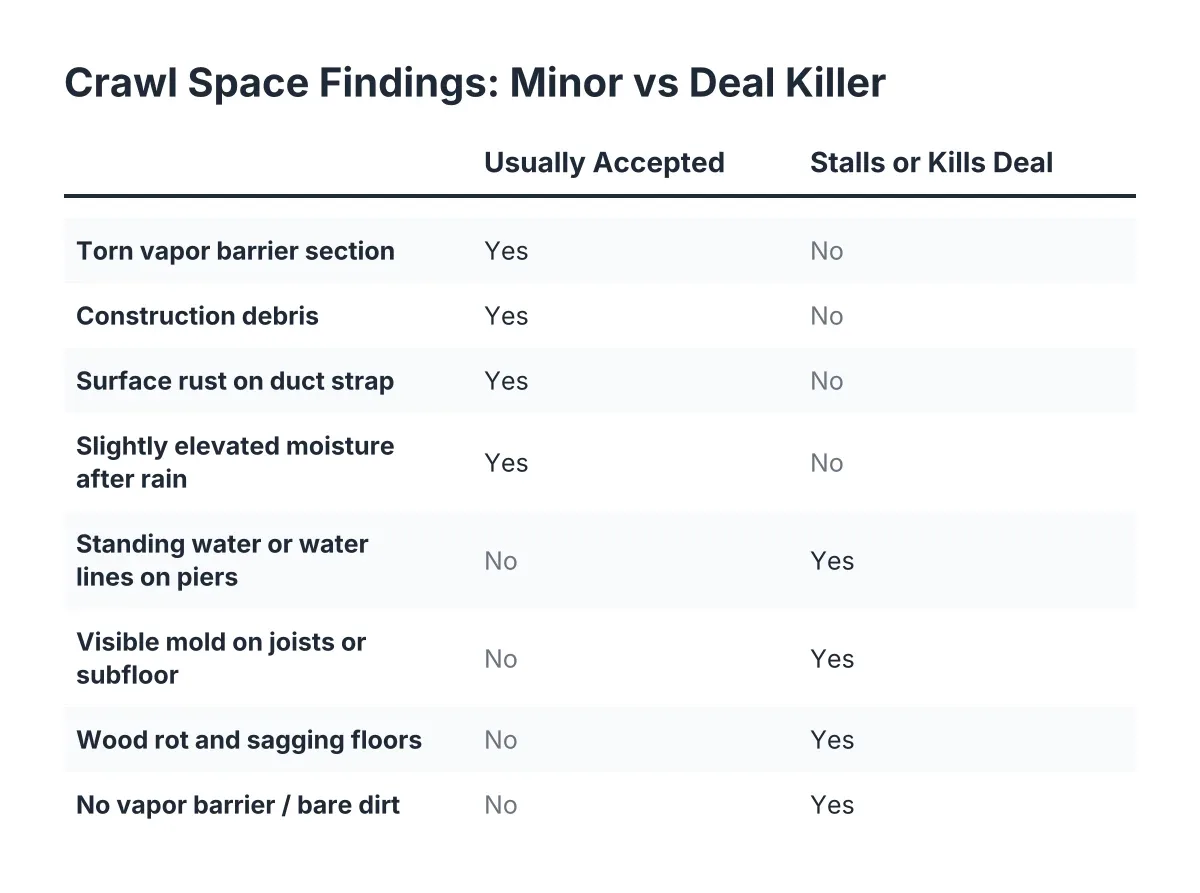
You will not need all of these. A torn vapor barrier with surface mold on a few joists is a smaller job than standing water with rotted beams. The point is that each line should map to a finding, so you can see what you are paying for and the buyer can see what was fixed.
Materials and methods, not just labor
Encapsulation is where quotes differ most, and where the cheapest number often hides the thinnest materials. Real encapsulation means running plastic sheeting across the entire crawl space floor and sealing it to the stem walls and around support piers, according to the U.S. Department of Energy. That is different from laying loose plastic on the dirt, which some low bids quietly substitute.
The quote should state the liner thickness, how seams are sealed, and how high the material runs up the foundation walls. On a concrete stem wall, some contractors also apply a waterproofing membrane for concrete surfaces where water is actively coming through the wall; a foundation waterproof membrane is a separate line item from the floor liner, so check whether the quote includes it or excludes it.
For drainage work, look for grading detail. Leveling the crawl space dirt and sloping it slightly toward the drain helps water reach the perimeter drain and sump pump instead of pooling in the middle, according to the Building America Solution Center. A quote that includes a sump pump but no grading or perimeter drain may leave water sitting under your new liner.
One code note specific to this region: some states require a termite inspection strip near the top of the foundation wall to be left uncovered by the vapor barrier, according to Stego Industries. In a termite-heavy market like Charleston, a contractor who knows to leave that strip is showing you they understand local requirements. Ask about it.
Documentation for the buyer's agent
This is the section sellers overlook and then scramble for the week of closing. Since the repair exists to satisfy a buyer, the quote should state what paperwork you get at completion. At minimum, ask for:
- A written scope of work matching the inspection findings
- Before and after photos of each repaired area
- Post-remediation moisture readings, if mold removal was performed
- A paid invoice on company letterhead describing the completed work
- Any warranty terms on materials or workmanship, in writing
That package is your crawl space repair receipt for closing. Realtors pass it to the buyer's agent, who passes it to the buyer, and the item comes off the repair addendum. Without photos and a described scope, a bare receipt invites the buyer to send their inspector back under the house, which costs you days.
How to Compare Crawl Space Repair Quotes Under a Deadline
Compare crawl space repair quotes by matching scope to scope, not number to number. Get at least three quotes if your timeline allows, confirm each one addresses every inspection finding, and check materials, permits, and documentation before comparing price. The lowest bid usually wins on price by cutting one of those items, and the cut shows up at the reinspection.
Three quotes is the standard advice, and it holds even under deadline pressure, because the spread between bids tells you which number is realistic. If two quotes land near each other and one is half the price, the cheap one is likely missing scope. Read it line by line against the others and find what was dropped. Often it is the drainage, the dehumidifier, or the sealing detail that makes encapsulation work.
However, do not assume the biggest scope is automatically right either. A graduated approach can be the honest answer. If the inspection flagged a failed vapor barrier and elevated humidity but no standing water and no structural damage, a new sealed liner and a dehumidifier may resolve the findings without a full drainage system. A contractor who explains why you do not need something is worth more than one who quotes everything.
For example, suppose a seller on James Island gets an inspection report citing moisture intrusion, mold on four joists, and a deteriorated vapor barrier, with closing set in three weeks. In that scenario, a reasonable crawl space repair estimate might cover cleanup, mold remediation on the affected framing, a sealed vapor barrier, and a dehumidifier, landing somewhere in the low-to-mid thousands as an illustrative range. A quote for a full encapsulation with perimeter drains and a sump pump might run several thousand more. Whether the bigger scope is justified depends on whether the inspector found standing water or just humidity damage, and a good contractor will tie the recommendation to the readings, not to the closing deadline.
Questions that separate a fair quote from a padded one
When the contractor is on the phone or standing in your driveway, ask these three questions:
- Which specific findings from my inspection report does this quote address, and are any excluded?
- What documentation do I receive at completion, and will it include photos and moisture readings?
- Can you complete the work before my closing date, and what happens to the schedule if you find hidden damage under the house?
The third question matters because crawl spaces hide problems. A crew pulling old insulation may uncover a rotted beam the inspector could not see. A fair quote tells you up front how change orders are handled, so a surprise under the house does not blow up your timeline or your budget.
How Fast Can Crawl Space Repair Be Done Before Closing?
Most inspection-driven crawl space repairs fit inside a typical repair window between inspection and closing. Cleanup, mold remediation, and vapor barrier installation are usually measured in days, not weeks, once work starts. Full encapsulation with drainage and structural repairs takes longer, and scheduling, permits, and weather can stretch any job, so share your closing date in the first phone call.
Timeline drives everything in a crawl space repair for home sale, so build the schedule backward from closing. The work has to finish, the documentation has to be assembled, and the buyer's side may want time for a reinspection. Leave a buffer. A job that finishes the day before closing leaves no room for the buyer's inspector to confirm the fix.
Permits are a factor Charleston sellers sometimes skip under pressure. Structural work such as beam replacement or adding support jacks can require sign-off from the local building authority, and contractors should verify code and permit requirements before starting. An unpermitted structural repair can become a bigger problem in the transaction than the original moisture finding, because now the buyer's agent is asking about code compliance instead of mold.
Weather matters too. During hurricane season, heavy rain can push the water table up and put standing water in a crawl space mid-job. Drainage work in particular may need the space to dry out between steps. A local crew that works Charleston crawl spaces year-round plans around this; a generalist may not.
What You Can Handle Yourself, and What Needs a Pro
In a pending sale, almost nothing in the crawl space is worth doing yourself. The buyer is not just asking for the problem to be fixed; they are asking for proof a qualified company fixed it. A homeowner-installed vapor barrier comes with no invoice, no remediation documentation, and no warranty, which means it may not satisfy the repair addendum at all.
There are small things you can do that help. Clear storage out of the crawl space access. Fix downspouts dumping water at the foundation. Trim back vegetation blocking vents or access doors. These cost nothing and make the contractor's inspection and the work itself faster.
Everything else belongs with a specialist. Mold remediation needs containment and treatment records. Encapsulation is long, physical work in a dark, tight space with sealing details that determine whether the system holds. Structural repairs such as joist sistering or beam work should always go to a licensed contractor, both for safety and because the buyer's lender may ask who performed structural work. Note also that crawl space contractors typically stop at structural wood; if moisture damaged finished flooring above, that is a separate trade hired after the structural repair is done.
One more honest trade-off: if your buyer is sophisticated, they may prefer a repair credit over seller-managed work, since sellers under deadline tend to pick the cheapest bid. Negotiating a credit and letting the buyer hire their own contractor after closing is sometimes the cleaner path for both sides. Talk it through with your realtor before committing either way; a well-documented repair from a crawl space specialist satisfies most buyers, but a credit can rescue a negotiation that has gone sideways.
Getting a Crawl Space Repair Quote You Can Hand to the Buyer
Treat the quote itself as part of the repair. In a transaction, the paperwork is half the product. A detailed crawl space repair quote that restates the inspection findings, lists the scope line by line, names the materials, and commits to completion photos and a final invoice is a document your realtor can forward to the buyer's agent the same day you receive it. That alone can calm a spooked buyer before any work starts.
As of 2026, Charleston-area sellers dealing with inspection findings have one real advantage: this is the most common repair category in the local market, and specialists here see these transactions every week. A company that works only on crawl spaces, encapsulation, moisture control, drainage, mold remediation, and structural support, already knows what a buyer's agent expects in the completion package and how to schedule around a closing date.
If your inspection report just came back with crawl space moisture, mold, or vapor barrier findings and your closing date is set, the next step is simple. Get a crawl space inspection and a written quote from a Charleston crawl space specialist, share your closing date up front, and ask for the documentation package in writing. Low Country Crawl Space Repair handles exactly this situation for Charleston-area sellers; reach out to schedule an inspection and get a detailed quote you can put in front of the buyer's agent.
If you need crawl space encapsulation, Low Country Crawl Space Repair can help.
Prefer to talk it through? Call +18542013678 — a quick call is usually the fastest way to get a straight answer for your situation.