Crawl Space Encapsulation Cost in Charleston: A 2026 Breakdown of Materials, Labor, and More
If a storm just pushed water under your Charleston home, or that musty smell got worse after the last week of rain, you are probably asking two questions at once. First, what is actually wrong down there? Second, what is this going to cost me? This guide walks through the encapsulation cost breakdown in plain terms—breaking down what the money pays for, which parts of the job drive the price up, and why Charleston homes, especially older peninsula houses on pier-and-beam foundations, sit at the harder end of the price range. No invented quotes, no scare tactics, just a clear breakdown so you can judge any estimate you get.
Why Charleston Crawl Spaces Cost More to Fix Than the National Articles Suggest
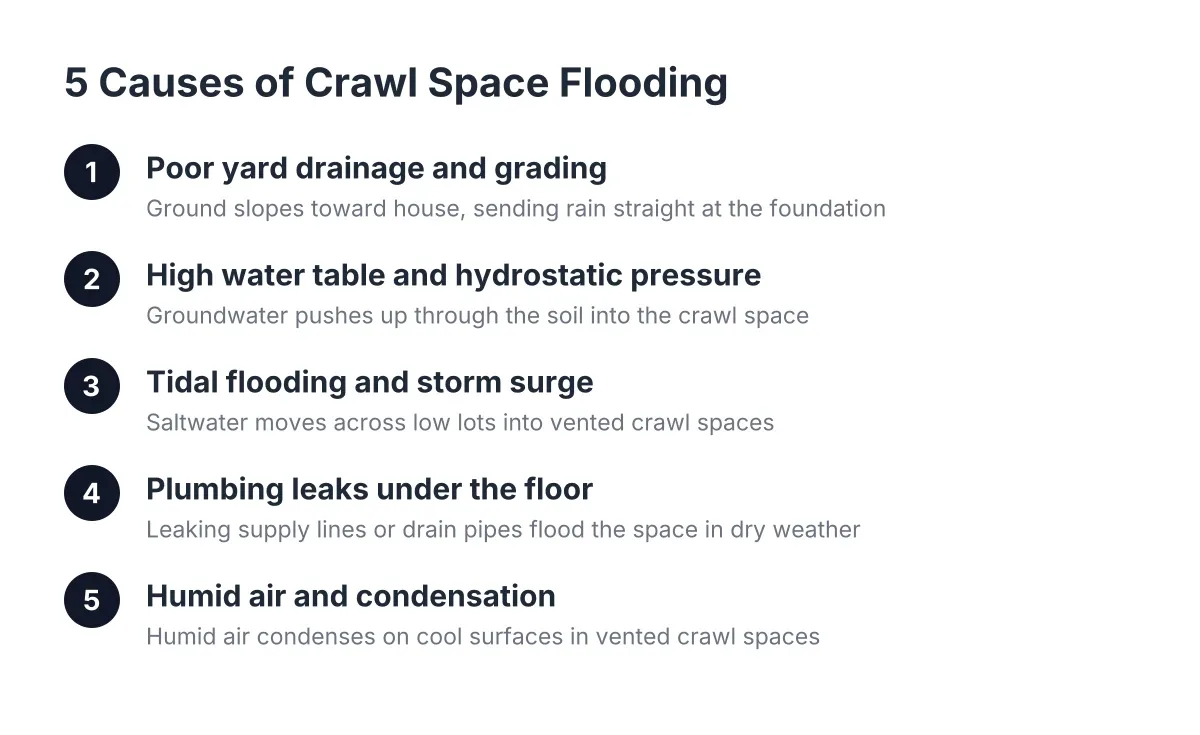
Most cost guides you find online are written for a generic American crawl space: dry climate, low water table, easy access. Charleston is none of those things. We sit on a high water table, we get year-round coastal humidity, and the 2023-24 meteorological year set a record of 17 high-tide flood days in Charleston, according to NOAA Tides and Currents. Water does not need a hurricane to get under your house here. It just needs a king tide and a low lot.
That matters for cost because encapsulation here is rarely just a plastic job. A liner alone does not stop groundwater. In fact, sealing a crawl space without a plan to remove water is one of the most common mistakes in this trade. A sealed crawl space with no drainage traps water like a pool. The Building America Solution Center, a program of the Department of Energy, describes a sump pump at the lowest point of an encapsulated crawl space as the emergency release for exactly this reason. So in Charleston, a real encapsulation quote often includes drainage, and drainage is where a chunk of the money goes.
You are not imagining it if your situation feels common. More than 60% of U.S. homes have had water or moisture problems in their basement or crawl space, according to the American Society of Home Inspectors. The difference here is frequency. Our moisture problems come back every summer, every tropical system, and every tide cycle.
What Crawl Space Encapsulation Actually Includes
Crawl space encapsulation means sealing the entire crawl space, floor and walls, against ground moisture and outside air. According to the U.S. Department of Energy, true encapsulation runs plastic sheeting across the entire crawl space floor and seals it to the stem walls and around support beams, rather than laying plastic loosely on the dirt. That distinction matters for both results and price.
A complete job in a Charleston crawl space typically covers this sequence:
- Inspection and cleanup. Someone crawls the whole space, checks for standing water, wood rot, mold, and sagging floors, then clears out debris and any old failed vapor barrier.
- Mold remediation if needed. If the musty smell traces back to mold on the joists, cleaning and treating the wood comes before any sealing. Sealing mold inside a crawl space does not fix the smell; it concentrates it.
- Repairs. Rotten beam sections, failing piers, and sagging floors get addressed before the liner goes down, because nobody wants to cut open a new vapor barrier six months later.
- Drainage. On wet lots, this means grading the dirt, installing perimeter drains, and setting a sump pump at the low point. The Building America Solution Center notes that sloping the crawl space floor slightly toward the drain keeps water moving to the sump instead of pooling in the middle.
- Vapor barrier installation. Heavy liner across the floor, up the walls, wrapped around piers, with seams taped and the barrier mechanically fastened to the masonry.
- Sealing vents and the access door. Those old foundation vents in pre-1950s Charleston homes pull humid outside air in all summer. Sealing them is part of the fix.
- Dehumidifier installation. A crawl space dehumidifier holds the sealed space at a steady humidity level year-round.
One code note worth knowing: some states require a termite inspection strip near the top of the foundation wall to be left uncovered by the vapor barrier, according to Stego Industries. A local crew that works Charleston homes will know what the inspector expects here. A national franchise working from a template may not.
Encapsulation Cost Breakdown: Materials, Labor, and Permits
The cost of crawl space encapsulation splits into three buckets: materials, labor, and the smaller line items like permits and disposal. As illustrative estimates, materials often account for a third or less of the total, labor carries the rest, and permits are a minor cost unless structural or electrical work triggers them. Here is what sits in each bucket.
Materials
The visible material is the liner itself, and thickness matters. A thin barrier tears under knees, tools, and settling debris. Thicker reinforced liner costs more per square foot but survives decades under the house. Beyond the liner, materials include seam tape, fasteners, sealant for the rim joists and vents, gravel or drainage stone where the floor gets built up, drain pipe, a sump basin and pump, and the dehumidifier.
The dehumidifier deserves its own mention because it is the piece skeptics fixate on. You may be thinking, why not skip the $6,000-plus job and just run a dehumidifier down there? Here is the honest answer: a dehumidifier in a vented, unsealed crawl space fights the entire Charleston atmosphere. Humid outside air pours in through the vents faster than the machine can dry it. The unit runs constantly, burns electricity, and loses. A dehumidifier only works as designed inside a sealed space. That is the whole logic of encapsulation.
If the crew insulates as part of the job, that adds material cost too. In a conditioned crawl space, insulation goes at the exterior stem walls and rim joists rather than between the floor joists, according to the Building America Solution Center. One common method is taped rigid foam on the interior of the stem walls, sealed at the rim joist with expanding foam. The payoff is real: sealing and insulating the crawl space envelope reduces heating and cooling loads, which means your HVAC runs less.
Labor
Labor is the biggest driver of encapsulation cost, and Charleston conditions push it higher. Crews work long hours lying down or crouching in a dark, tight, often wet space, hauling debris and old liner out through a small access door. Low clearance under an old peninsula home can cut productivity in half compared to a modern crawl space with three feet of headroom.
This is also why DIY rarely pencils out. The work demands specialty tools, protective gear, and materials you will not find at a typical home improvement store. Homeowners who start the job themselves often discover that the clearing, grading, and sealing takes weeks of miserable evenings, and the result still leaks air at the seams.
Labor also scales with scope. A dry, accessible crawl space that needs cleanup and a liner is a short job. Add mold removal, a French drain, a sump pump, beam repair, and support jacks, and the encapsulation cost breakdown shows the same square footage can take a typical crew several times as long.
Permits and Code Items
Encapsulation itself usually involves minimal permitting, but related work can trigger it. Electrical circuits for the sump pump and dehumidifier, structural repairs to beams or piers, and drainage tied to the lot's stormwater path may each require sign-off depending on the jurisdiction. For historic peninsula properties, preservation review can also shape how exterior vents and access doors get modified. Budget these as a small percentage of the total, but do not ignore them; unpermitted structural work surfaces at resale.
How Much Does Crawl Space Encapsulation Cost for a Typical Charleston Home?
Crawl space encapsulation costs for Charleston homes commonly land between $6,000 and $20,000 as a realistic estimate, with most of the spread explained by drainage needs, mold remediation, structural repairs, and crawl space size and access. A small, dry, accessible crawl space sits at the low end. A flood-prone historic home needing drains, a sump pump, and beam work sits at the top.
Square footage is the starting point, which is why searches like crawl space encapsulation cost for a 1,500 square foot house are so common. However, size alone tells you less than condition. Two 1,200 square foot crawl spaces can differ by $8,000 or more depending on what the inspection finds under there.
Suppose a homeowner on the peninsula owns a 1920s pier-and-beam house, about 1,600 square feet, with a crawl space that smells musty every August and takes on water during king tides. In that scenario, an illustrative estimate might break down like this:
- Cleanup, debris removal, and old barrier disposal
- Mold remediation on the floor joists where the smell originates
- Grading the dirt floor and installing a perimeter drain with a sump pump
- Reinforced vapor barrier sealed to the stem walls and wrapped around every brick pier
- Sealing the vents and access door
- A crawl space dehumidifier sized for the space
That full scope could plausibly run in the $12,000 to $18,000 range as an estimate, with the drainage and mold work accounting for the jump above a basic liner job. Strip out the water management and remediation, and the same house might see a quote under $8,000. That gap is exactly why a quote without an itemized scope is impossible to evaluate.
One honest trade-off: encapsulation is a moisture control system, not flood protection. If your lot takes on serious water during tropical storms, the drainage and sump system manages it, but no liner stops a storm surge. For homes with recurring deep flooding or visible foundation movement, bring in a structural engineer before committing to any encapsulation scope.
Factors That Affect Your Encapsulation Cost Breakdown
Every Charleston crawl space quote moves on the same handful of variables. Knowing them lets you read an estimate line by line instead of reacting to the bottom number.
- Standing water or a history of crawl space flooding. Water means drainage, grading, and a sump pump. This is the single biggest price swing, and skipping it to save money is how liners end up with water pooling on top of them.
- Mold. Active mold growth means remediation before sealing, which adds labor and treatment costs.
- Structural damage. Rotten beams, failing sills, and sagging floors need repair or support jacks first. On pre-1950s homes with original framing, this can rival the encapsulation itself in cost.
- Clearance and access. Tight crawl spaces slow everything down. Some historic Charleston homes have sections under 18 inches.
- Pier count. Pier-and-beam homes require wrapping and sealing the barrier around every pier. A house with 40 brick piers takes longer than one with 12.
- Liner quality. Thicker reinforced barrier costs more upfront and lasts longer.
- Insulation scope. Adding stem wall insulation and rim joist sealing raises the price and the energy payoff.
Material layering comes up on older homes too. Crews sometimes leave an intact existing ground barrier in place and install the new system over it, ending with a combined thickness greater than any single layer. That approach saves disposal labor without cutting corners, and it is worth asking about if your crawl space already has old plastic down there.
How to Compare Quotes Without Getting Burned
If you have never hired for this work before, the skepticism is reasonable. Crawl space work happens where you cannot easily see it, which is exactly where corner-cutting hides. A few ground rules protect you.
First, get at least three quotes from different crawl space companies, and make sure each one is itemized. A single number on a page tells you nothing. You want line items for cleanup, remediation, drainage, barrier, sealing, and dehumidification so you can compare scope, not just price.
Next, ask every estimator the same question: what is your plan for groundwater? If the answer is a liner and a dehumidifier with no mention of drainage, grading, or a sump pump, and your lot has any flooding history, that quote is incomplete for Charleston conditions. The cheapest bid is often cheap because it skips the water plan.
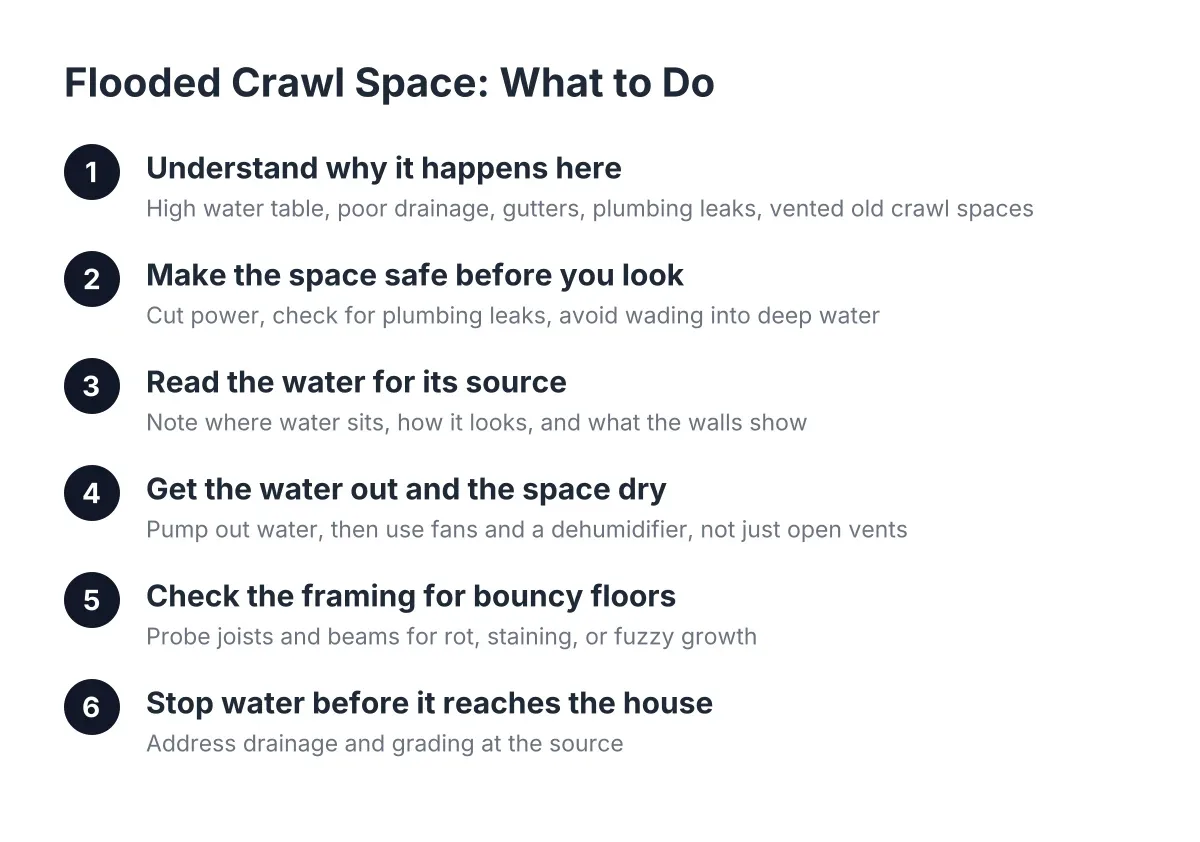
In addition, ask who found the moisture source. A good inspection names where the water and the musty smell come from: ground vapor, vented humid air, a plumbing leak, or surface runoff. Encapsulation fixes the first two. It does not fix a leaking pipe or a downspout dumping against the foundation, and an honest contractor will say so.
Finally, be wary of day-one pressure. About 15% of American homes sit on a crawl space foundation, according to JSE Labs, and in Charleston that share runs higher among older housing stock, so this is routine work for a local specialist. Routine work does not require a sign-today discount. A contractor confident in the scope will let the itemized quote speak for itself.
Is the Cost Worth It? A Straight Answer for the Skeptic
For a Charleston homeowner with a persistent musty smell, recurring moisture, or an aging pier-and-beam foundation, encapsulation is usually worth the cost because it fixes the source instead of masking symptoms. Candles and air fresheners treat the air upstairs. The smell regenerates downstairs because the humidity and mold food source never changed.
The value case has three parts. The smell actually goes away, because sealed, dehumidified crawl spaces stop feeding the mold and bacteria that produce the odor. Additionally, the structure stops degrading, because dry wood does not rot, and rot is what turns a $10,000 problem into a $25,000 one on a historic home. Furthermore, the house runs cheaper, because a sealed, insulated crawl space reduces heating and cooling loads. There is also an air quality angle worth a brief mention: a conditioned crawl space becomes part of the home's interior air system, pressure-balanced with the living space above, according to the Building America Solution Center. The air downstairs and the air you breathe upstairs are connected either way; encapsulation just makes the downstairs air worth sharing.
There are cases where encapsulation is the wrong first move. If the smell traces to a plumbing leak, fix the leak first. If floors are visibly sinking, structural assessment comes before any liner. A trustworthy inspection sorts that out before anyone quotes you a sealed system.
The practical next step costs nothing but an hour: get the crawl space inspected, ask for the moisture source in writing, and collect itemized quotes you can compare side by side. Once you can see what the money buys, the encapsulation cost breakdown question stops being a leap of faith and becomes a line-by-line decision about protecting a house that is probably worth a hundred times the repair.
If you need crawl space encapsulation, Low Country Crawl Space Repair can help.
Prefer to talk it through? Call +18542013678 — a quick call is usually the fastest way to get a straight answer for your situation.