Crawl Space Structural Repair Terms Explained: A Plain-English Glossary
If you own an older Charleston home with a vented crawl space, you have probably heard terms like "sistering," "girder," and "encapsulation" tossed around in quotes and inspection reports. This glossary translates that jargon into plain English so you can read an estimate line by line, ask sharper questions, and spot problems before they grow. Each entry starts with a one-sentence definition you can use on its own. The rest explains why the term matters in the Lowcountry, where humidity and high water tables do most of the damage. Together, these terms form a crawl space structural repair glossary designed to demystify contractor estimates and inspection reports.
- Pier-and-beam foundation: the raised foundation under most older Charleston homes
- Floor joist: the boards your floor sits on
- Girder (main beam): the big beam the joists rest on
- Sistering: bolting a new board alongside a weak one
- Support jack: an adjustable steel post that lifts sagging floors
- Sill plate: the wood that sits on top of the foundation
- Wood rot: fungus eating damp wood
- Sagging floors: floors that dip, bounce, or slope
- Vapor barrier: plastic sheeting that blocks ground moisture
- Crawl space encapsulation: sealing the whole crawl space from moisture
- Dehumidifier: a machine that pulls water out of the air
- Sump pump: a pump that moves collected water outside
- French drain: a gravel trench that redirects water
- Mold remediation: removing mold and fixing what caused it
- Relative humidity: how much moisture the air is holding
- Crawl space inspection: a documented look at everything under your house
- Scope of work: the written list of exactly what gets fixed
- Moisture reading: a measured number, not a guess
Your Complete Crawl Space Structural Repair Glossary
These are the parts of your home a contractor means when they talk about foundation repair, and the terms you will see most in this reference section.
Pier-and-Beam Foundation
A pier-and-beam foundation is a raised foundation where the house rests on beams supported by masonry or concrete columns called piers. Most older Charleston homes sit on this system, with a vented crawl space underneath. It handles our sandy, wet soil better than a slab in many ways, but the piers can settle unevenly over time. If a contractor mentions pier settling, read up on what causes pier-and-beam foundations to settle and when to worry before you sign anything.
Floor Joist
A floor joist is one of the parallel boards that directly support your floor from below. Joists run between the girders and carry the weight of everything in your rooms. In a damp Charleston crawl space, joists are usually the first wood to soften from rot or moisture. A quote that lists "joist repair" or "joist replacement" is addressing the boards your feet stand on every day.
Girder (Main Beam)
A girder is the large main beam that the floor joists rest on, which in turn rests on the piers. Think of it as the backbone of the floor system: piers hold the girder, the girder holds the joists, and the joists hold your floor. When a girder rots or cracks, whole sections of floor can sag at once. Girder repair is a bigger job than fixing a single joist, so expect it to drive the scope and cost of an estimate.
Sistering
Sistering means fastening a new board directly alongside a damaged joist or beam so the two share the load. It is a standard, accepted repair when the original wood is weakened but does not need full replacement. Sistering usually costs less than tearing out and replacing a whole joist. If a quote says "sister joists," the contractor plans to reinforce, not remove.
Support Jack
A support jack is an adjustable steel post installed under a beam to add support or lift a sagging section of floor. Contractors set jacks on stable footings and turn them gradually so the house adjusts without cracking drywall or jamming doors. Jacks are a common fix for bouncy or dipping floors over a long beam span. A quote listing several jacks tells you the contractor found multiple weak points, so ask them to show you each location.
Sill Plate
A sill plate is the horizontal piece of wood that sits on top of the foundation wall or piers and anchors the house framing to the foundation. Because it sits low and close to masonry, the sill is a frequent victim of moisture wicking up from the ground. Sill repair matters in coastal homes, since a rotted sill weakens the connection that helps the house resist storm winds. Replacing sill sections is careful, slow work, which is why it shows up as a separate line on estimates.
Wood Rot
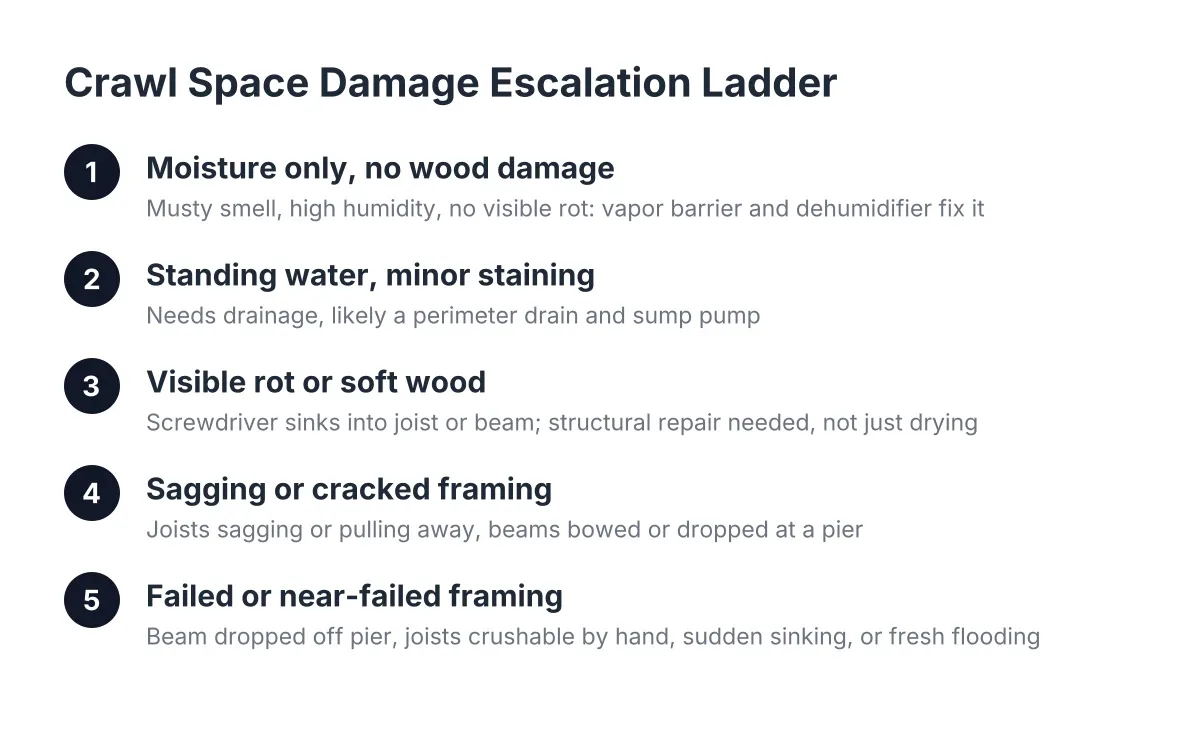
Wood rot is decay caused by fungus that feeds on damp wood, slowly turning solid framing soft and crumbly. Rot needs sustained moisture to grow, which is why it thrives in humid, vented Charleston crawl spaces. The fix always has two parts: repair the damaged wood, and stop the moisture that fed the rot. Here is a practical guide on how to detect, repair, and prevent wood rot in crawl space beams.
Sagging Floors
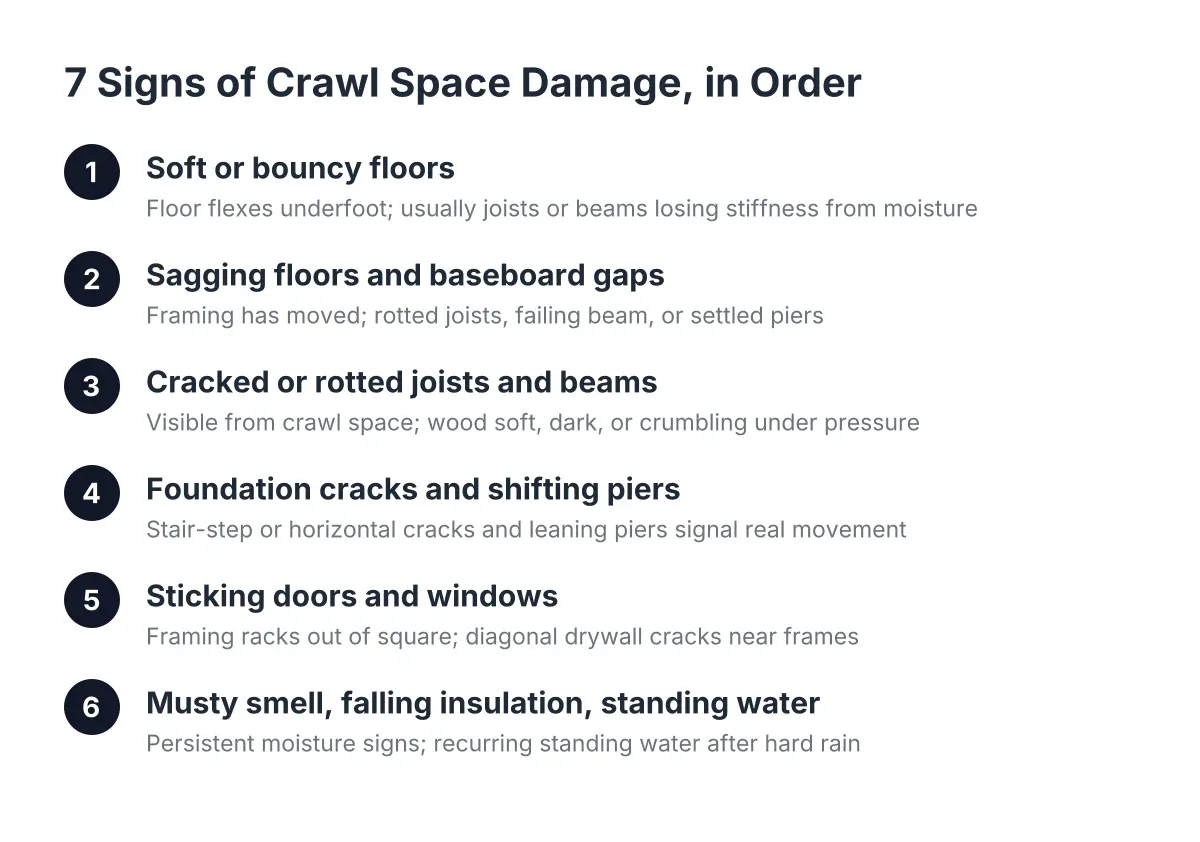
Sagging floors are floors that dip, slope, or bounce because the framing below has weakened or the supports have settled. Common signs include gaps at baseboards, doors that stick, and a soft or springy feel underfoot. Sagging is a symptom, not a diagnosis; the cause could be rot, settled piers, or an undersized beam. A good contractor names the cause before proposing the fix.
Moisture Control and Air Quality in Crawl Space Structural Repair
In the Lowcountry, structural damage almost always starts as a moisture problem. These terms cover the water side of the job.
Vapor Barrier
A vapor barrier is heavy plastic sheeting laid over the crawl space floor to block ground moisture from rising into the air and the wood above. Bare Charleston soil releases moisture year-round, especially on lots with a high water table. Thickness matters: thin plastic tears and gaps, while heavier sheeting with sealed seams holds up. A vapor barrier is the baseline moisture defense, and encapsulation builds on it.
Crawl Space Encapsulation
Crawl space encapsulation means sealing the entire crawl space with a vapor barrier on the floor and walls, closing the vents, and controlling the air inside, usually with a dehumidifier. It converts a damp, vented space into a dry, sealed one. In Charleston's climate, open vents let in humid outdoor air most of the year, which feeds mold and rot instead of drying anything out. Encapsulation is the most complete moisture fix, so it typically anchors the larger end of a quote.
Dehumidifier
A dehumidifier is a machine that pulls water vapor out of the air and drains it away, keeping crawl space humidity at a safe level. In a sealed crawl space, it does the ongoing work of keeping wood dry and the musty smell out. Crawl space units are built tougher than the portable ones sold for bedrooms. If a quote includes a dehumidifier, ask where the unit will drain and how you will know it is working.
Sump Pump
A sump pump is a pump set in a low basin that collects water under your house and pushes it outside. On flood-prone or tidal lots, drainage lines feed water to the sump basin and the pump moves it away from the foundation. Storm season is when a sump pump earns its keep. Tidal flooding and high water tables cause more crawl space damage here than most owners realize; this piece explains how tidal flooding quietly breaks Charleston crawl spaces.
French Drain
A French drain is a gravel-filled trench with a perforated pipe that collects groundwater and carries it away from the crawl space. It handles water moving through the soil, the kind a vapor barrier alone cannot stop. On low Charleston lots, a French drain often pairs with a sump pump: the drain collects, the pump ejects. If standing water shows up under your house after rain, expect drainage to appear in the quote.
Mold Remediation
Mold remediation means removing mold growth and correcting the moisture conditions that allowed it, not just wiping surfaces. Mold in a crawl space feeds on damp wood and often announces itself as a musty smell inside the house. Cleaning without fixing the moisture source means the mold comes back. A remediation line in a quote should always sit next to a moisture control line; if it does not, ask why.
Relative Humidity
Relative humidity is the amount of moisture in the air compared to the maximum the air could hold at that temperature, shown as a percentage. Wood in a crawl space starts absorbing damaging moisture when humidity stays high for long stretches, which describes most of the Charleston year. Contractors use humidity readings to decide whether a space needs a dehumidifier or full encapsulation. Ask to see the number, not just the word "damp."
Quotes, Inspections, and Paperwork
Crawl Space Inspection
A crawl space inspection is a documented visual check of the foundation, framing, moisture levels, insulation, and drainage under your house. A thorough inspector photographs problems and takes moisture readings rather than describing things from the access door. The inspection report becomes the basis of any repair quote, so keep a copy. If two contractors give conflicting reports, a third inspection is a fair tiebreaker.
Scope of Work
A scope of work is the written section of a quote that lists exactly which repairs will be done, with what materials, and where. It is the part of the paperwork that protects you, because it defines what "done" means. Vague scopes like "repair crawl space as needed" invite disputes; specific ones list each joist, jack, and square footage. For a sense of how scope drives price, see this crawl space structural repair cost guide.
Moisture Reading
A moisture reading is a measurement of how much water is in wood or air, taken with a meter instead of estimated by eye or smell. Readings turn "it feels damp down there" into a number you can compare before and after repairs. Serious contractors take readings at multiple spots and record them. If a provider recommends major work without showing readings, ask for them before you commit.
Using These Terms
You now have the vocabulary to read a crawl space quote line by line instead of nodding along. This glossary gives you the questions that matter: where is the moisture coming from, which boards are damaged, and what does the scope of work actually promise. When evaluating crawl space structural repair glossary resources, look for guides that explain both the terms and the real-world reasons each repair matters. If your Charleston home needs a closer look, start with an inspection and repair plan and ask the contractor to walk you through it term by term.
If you need crawl space encapsulation, Low Country Crawl Space Repair can help.
Related guide: crawl space structural repair — Complete Guide
Prefer to talk it through? Call +18542013678 — a quick call is usually the fastest way to get a straight answer for your situation.